





















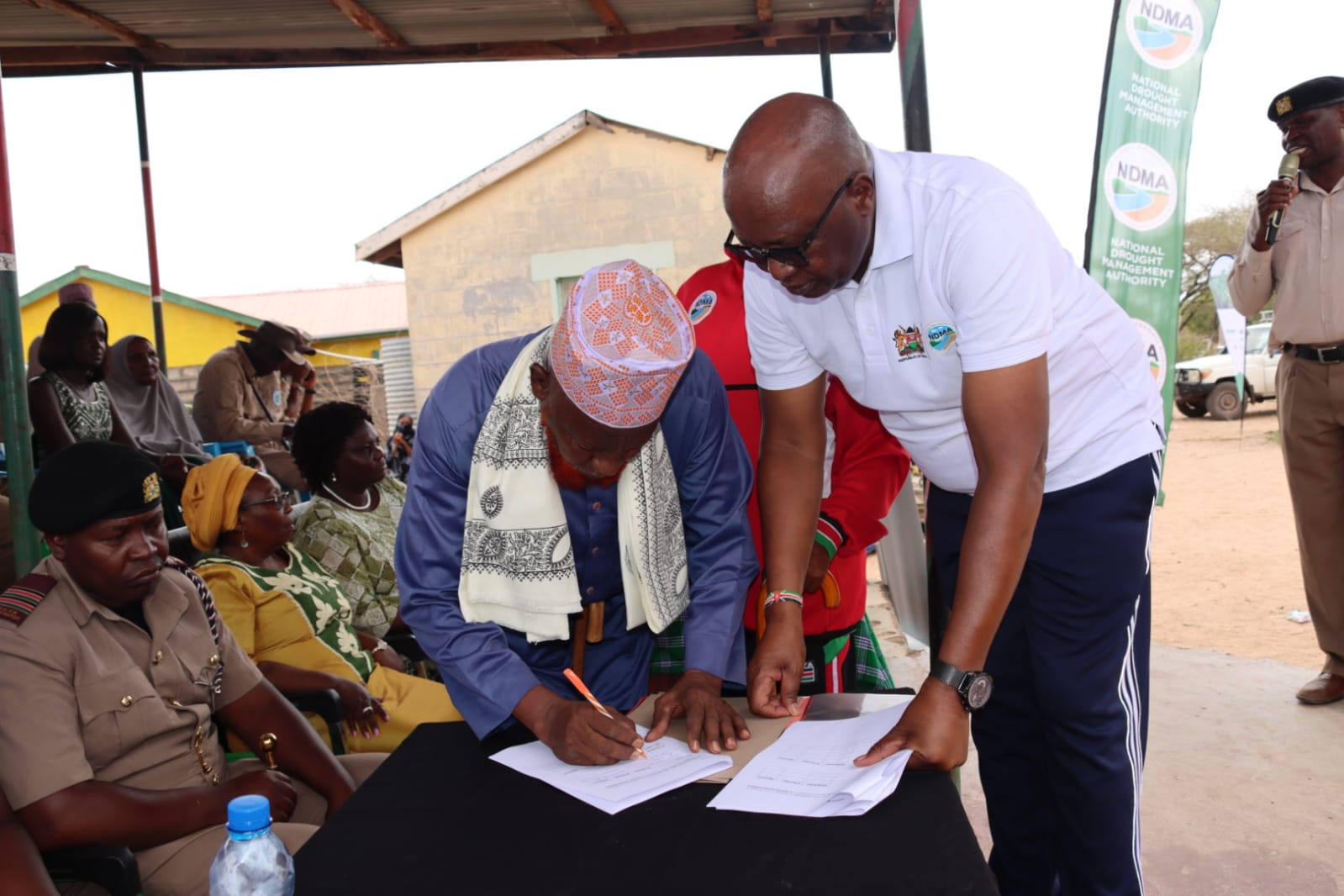

NAIROBI, Kenya, Feb 5 — Communities living along the borders of Isiolo, Garissa and Meru counties have signed a joint resource-sharing agreement aimed at strengthening peaceful coexistence and reducing conflict over grazing land and water points in the arid and semi-arid corridor.
The agreement was endorsed during the final public baraza of the National Drought Management Authority (NDMA) Peace Caravan held at Garbatulla Baraza Park, marking the conclusion of a four-day peace outreach initiative across the region.
The caravan brought together elders, peace committees, local leaders and development partners in a coordinated effort to address long-standing tensions linked to livestock movement, pasture access and water scarcity.
NDMA said the region has historically experienced recurring conflicts driven by competition over dwindling natural resources, particularly during dry seasons when pastoralist communities migrate in search of pasture and water.
Cabinet Secretary for East African Community, ASALs and Regional Development, Beatrice Askul Moe graced the event.
She was accompanied by Principal Secretary for ASALs Harsama Kello, Garissa Deputy Governor Abdi Dagane, Meru Woman Representative Elizabeth Karambu and NDMA Chief Executive Officer Hared Hassan, who briefed her on the Peace Caravan route and community engagements.
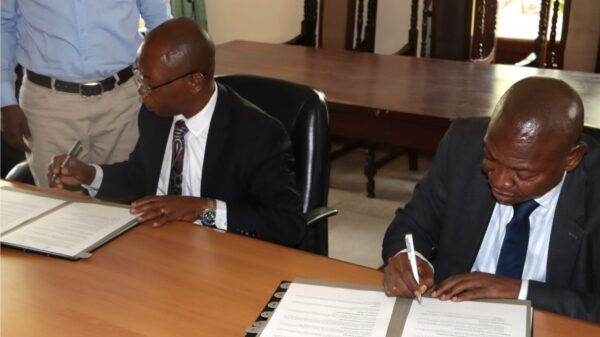
During the baraza, community representatives formally signed a joint communiqué on resource sharing and peaceful coexistence.
The document acknowledges persistent challenges along the shared borders of the three counties, particularly resource-based conflicts linked to water, pasture and livestock mobility.
Peaceful coexistence
Under the agreement, the communities reaffirmed their commitment to peaceful coexistence across county lines, respect for traditional grazing patterns and negotiated migration routes, peaceful sharing of public facilities such as water points and markets, and the use of dialogue and established peace structures to resolve disputes.
NDMA described the initiative as a critical step in preventing drought-related conflict and strengthening resilience in pastoral areas.
“Four days. One corridor. A shared commitment,” the Authority said, noting that the Peace Caravan concluded with a strong show of unity among communities, leaders and partners.
One of the key engagements during the caravan was a community dialogue in Eldere Location, Benane Ward, where elders from Garissa and Isiolo counties met with peace committees and caravan participants.
The session focused on emerging pressures related to pasture and water access.
Through open discussions, participants reaffirmed their commitment to dialogue-based solutions, supported by government interventions, to ease grazing pressures.
NDMA funded the peace caravan through the Towards Ending Drought Emergencies (TWENDE) Project and the EU-funded Dryland Climate Action for Community Drought Resilience Project.
Additional support was provided by Kenya IMPACT, the Kenya Red Cross, PACIDA, MID-P Kenya, Catholic Relief Services and CARE Kenya.
Officials said the agreement and strengthened cross-border cooperation are expected to reduce violence, protect livelihoods and promote stability in one of Kenya’s most climate-vulnerable regions.