


















NAIROBI, Kenya, Mar 21 — At 11pm in a dimly lit apartment in Nairobi, the glow of a phone screen is often the last thing many people see before they try to sleep—if sleep comes at all.
For 28-year-old marketing executive Sharon Njeri, the habit has become routine.
“I’m always on my phone late into the night checking on work emails, then social media,” she says. “Lately, my eyes feel dry, and sometimes I just lie there unable to fall asleep.”
Eye specialists say her experience is increasingly common, as work, entertainment and social life converge on screens.
Optometrist Jacob Odongo of Omega Opticians says prolonged exposure to digital devices is placing sustained, repetitive strain on the eyes, with effects that extend beyond temporary discomfort.
“The human eye was not designed to focus on near objects for extended periods,” he says.
“When you’re on a screen for hours, the eyes are locked into a fixed position, and natural behaviours like blinking are reduced.”

The scale of exposure is striking. Data from GlobalWebIndex shows that Kenyans spend more time on social media each day than any other population globally.
The index reported social media screen time of between three hours and 43 minutes and four hours and 19 minutes on average in 2024 compared with a global average of about two hours and 23 minutes.
When broader screen use is considered, the picture becomes clearer. Total daily internet use in Kenya ranges between six and a half and seven hours—roughly in line with, and in some cases exceeding, global averages.
Over a week, an average user spends nearly two full days online, much of it focused at close range.
Reduced blinking
Blinking rates can drop by as much as half during screen use, leaving the eye’s surface inadequately lubricated.
Patients often describe a gritty, burning sensation, as though fine particles are trapped beneath the eyelid.
But the effects extend beyond irritation.
Digital screens emit blue light, a high-energy wavelength that plays a role in regulating the body’s internal clock.
While its long-term impact on eye health is still being studied, there is growing evidence that excessive exposure—particularly at night—can disrupt sleep cycles.
“Blue light affects melatonin production,” Odongo says. “You may go to bed and take one to two hours to fall asleep because your body is not yet ready for rest.”
Related: Blurred lines: The silent threat of poor driver vision on Kenya’s roads
Related: Blurred lines: Indoor living, screen time and the growing risk of childhood myopia
The result is a feedback loop increasingly familiar in urban life: longer screen time leads to poorer sleep, which in turn reinforces screen-dependent routines.
Clinics are also reporting a shift in the types of conditions patients present with marking a shift from purely genetic disorders to those linked to daily habits.
“Most of the cases we are seeing today are developmental,” Odongo says. “People were not born with these problems—they are developing them over time.”
He points to a condition that is becoming increasingly common: myopia, or nearsightedness, where distant objects blur while those up close remain clear.
A 2024 study published in the African Journal of Empirical Research found that prevalence among children varies sharply by setting with rates reaching as high as 15.6 per cent in urban Nairobi, compared with 1.7 per cent in rural Makueni County.
Researchers attribute the disparity largely to lifestyle differences, particularly increased screen exposure and prolonged near-work in urban environments.
Myopia on the rise
The trend reflects a broader global shift. A large-scale review published in the British Journal of Ophthalmology projects that more than 740 million children and adolescents could be affected by myopia by 2050—driven largely by environmental and behavioural factors rather than genetics.
The implications are already being felt in childhood.
In many households, screens have become both learning tools and digital babysitters, raising concerns about prolonged exposure at an early age.
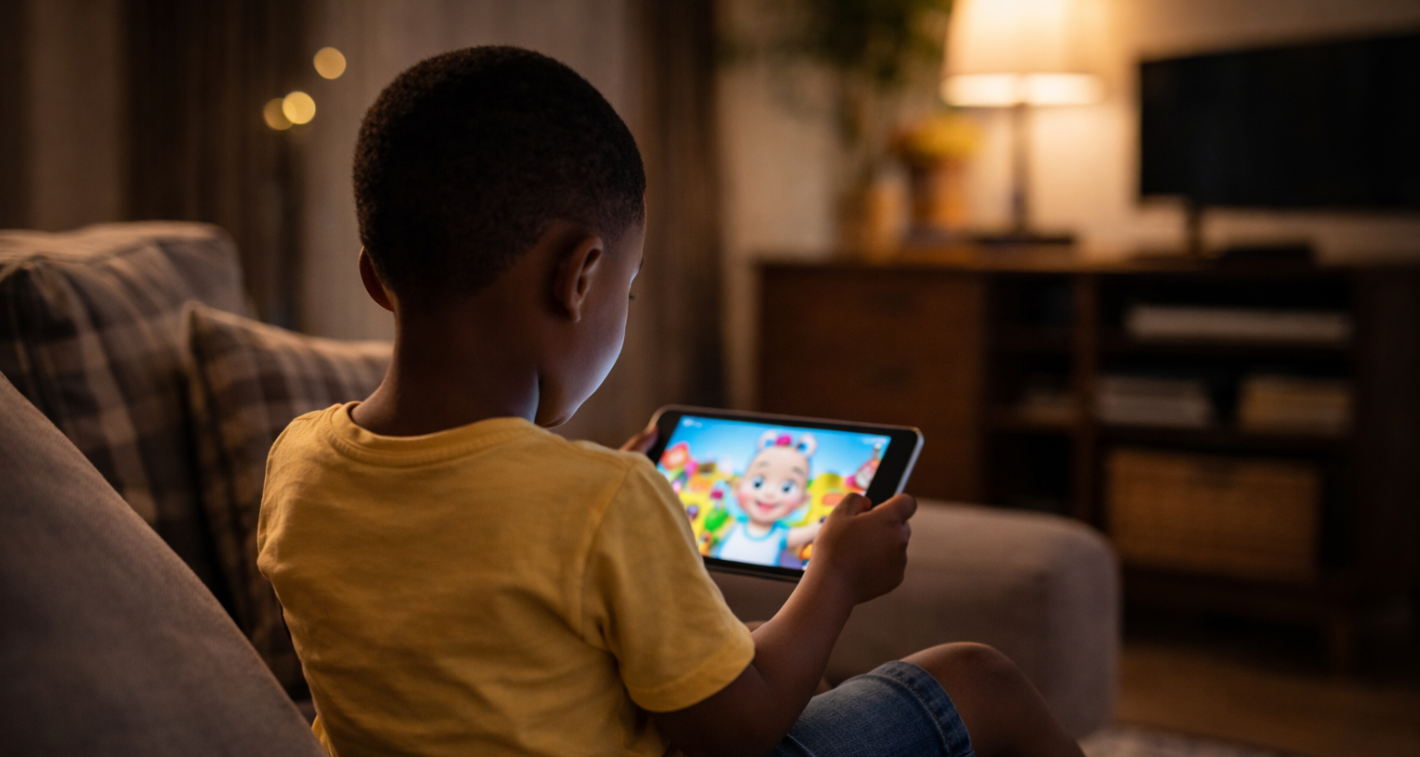
Reduced outdoor activity, combined with extended near-focus tasks, has been linked to worsening vision.
Yet the issue is not simply technological—it is behavioural.
Odongo says relatively simple adjustments can reduce strain: taking regular breaks, ensuring proper lighting, positioning screens at eye level and maintaining a safe viewing distance.
The widely recommended “20-20-20 rule”—looking at something 20 feet away for 20 seconds every 20 minutes—remains one of the most effective measures.
Avoiding screens in dark environments is also important, as dilated pupils allow more light to enter the eye, increasing exposure.
Despite improvements in screen technology, including anti-glare filters and adaptive brightness, specialists caution that devices themselves are only part of the problem.
“Technology has improved,” Odongo says. “But behaviour has not kept up.”
For Sharon, the change is proving difficult. She has tried to cut back on late-night scrolling, but the pull of work and social media often wins.
“I tell myself I’ll sleep early, but I still end up on my phone,” she says.
Back in Nairobi’s late-night glow, the challenge is not simply reducing screen time. It is rethinking how deeply screens have embedded themselves in modern life and what that means for the body’s most overworked sense.