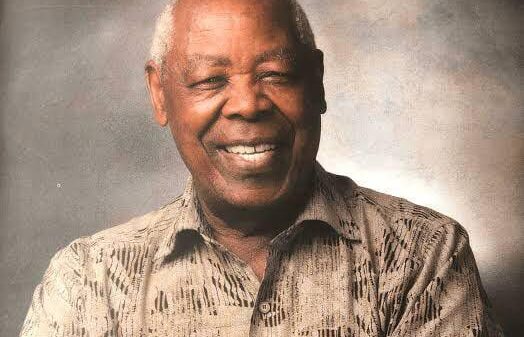
























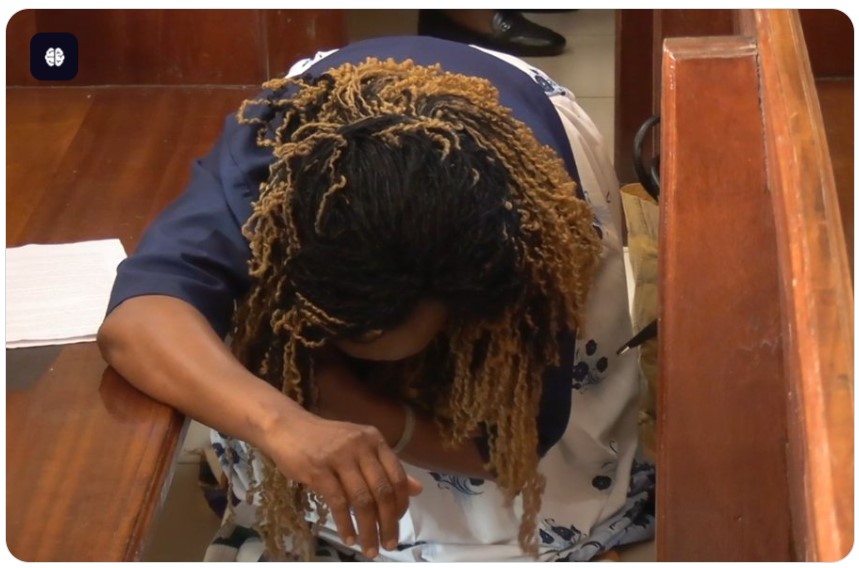

NAIROBI, Kenya, Feb 3 — The mother of missing security analyst Mwenda Mbijiwe broke down in court on Tuesday as she testified in an ongoing habeas corpus hearing, renewing pressure on the government to account for her son’s disappearance nearly five years after he vanished.
Jane Gatwiri emotionally knelt before the court, tearfully calling on God to remember her suffering as she recounted the anguish of searching for her son, who went missing in June 2021 while travelling to Meru to visit her.
Taking the stand, Gatwiri detailed what she described as years of frustration and stonewalling by State agencies, particularly the Directorate of Criminal Investigations (DCI), as she sought answers about Mwenda’s whereabouts.
She reiterated her long-held claim that her son was abducted by State agents along Thika Superhighway.
She told the court that her initial attempts to seek help from Timau Police Station in Buuri West Sub-County yielded no results.
“First of all, I reported the matter on 14th at Timau police station, but I was told the case is not, the matter is not yet 72 hours, so I have to wait for 72 hours to be over so that I can report the person as missing person,” Gatwiri recalled.
Mwenda’s abandoned vehicle was later recovered near Tatu City in Kiambu County, but no further official explanation was provided.
The hearing comes against the backdrop of uncomplied court orders issued in 2025, directing the State to produce Mwenda, dead or alive.
On October 28, High Court judge Justice Martin Muya ordered the DCI and the Office of the Director of Public Prosecutions (ODPP) to produce Mwenda and file a comprehensive report detailing his whereabouts.
ODPP-DCI correspondence
The judge faulted the two agencies for failing to demonstrate respect for court orders and for neglecting their constitutional mandates.
Despite those orders, the family says the government has failed to comply or provide any meaningful update.
During Monday’s proceedings, the family presented a letter they say was written in 2025 by the ODPP to the DCI, inquiring whether the agency had any objections to Mwenda’s release on bond.
The family intriduced the document as a key piece of evidence in the habeas corpus application.
Lawyer Evans Ondieki, appearing for the family, argued that if admitted, the letter could significantly strengthen the case by suggesting Mwenda may at one point have been in police custody—directly contradicting the State’s position that his whereabouts are unknown.
“The communication raises serious questions about the official record and the DCI’s handling of this matter,” Ondieki told the court, noting that engagement between the ODPP and DCI over Mwenda’s possible release is inconsistent with claims that he was never detained.
Ondieki further reminded the court that the order issued in October 2025 to produce Mwenda remains unfulfilled, describing four years without answers as “an unreasonably long time” for the family to live in anguish and uncertainty.
Prosecution and DCI representatives are yet to respond substantively to the family’s claims regarding the letter or to explain the continued non-compliance with previous court orders.
The court will first determine the authenticity and admissibility of the ODPP–DCI correspondence before considering its evidentiary value.
The habeas corpus proceedings will resume on February 11 as the family presses for enforcement of past orders, accountability from State agencies, and clarity on the fate of their son.
The case continues to draw public attention amid growing scrutiny over enforced disappearances and adherence to court directives.