
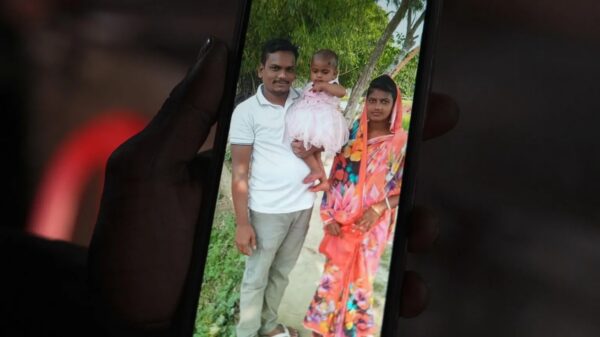














Feb 18 – At first light on what would be his final day, Dipu Chandra Das stepped out of his family’s tin-roofed home in Bangladesh’s Mymensingh city. The narrow lanes outside, branching off the highway from Dhaka, were just stirring to life.
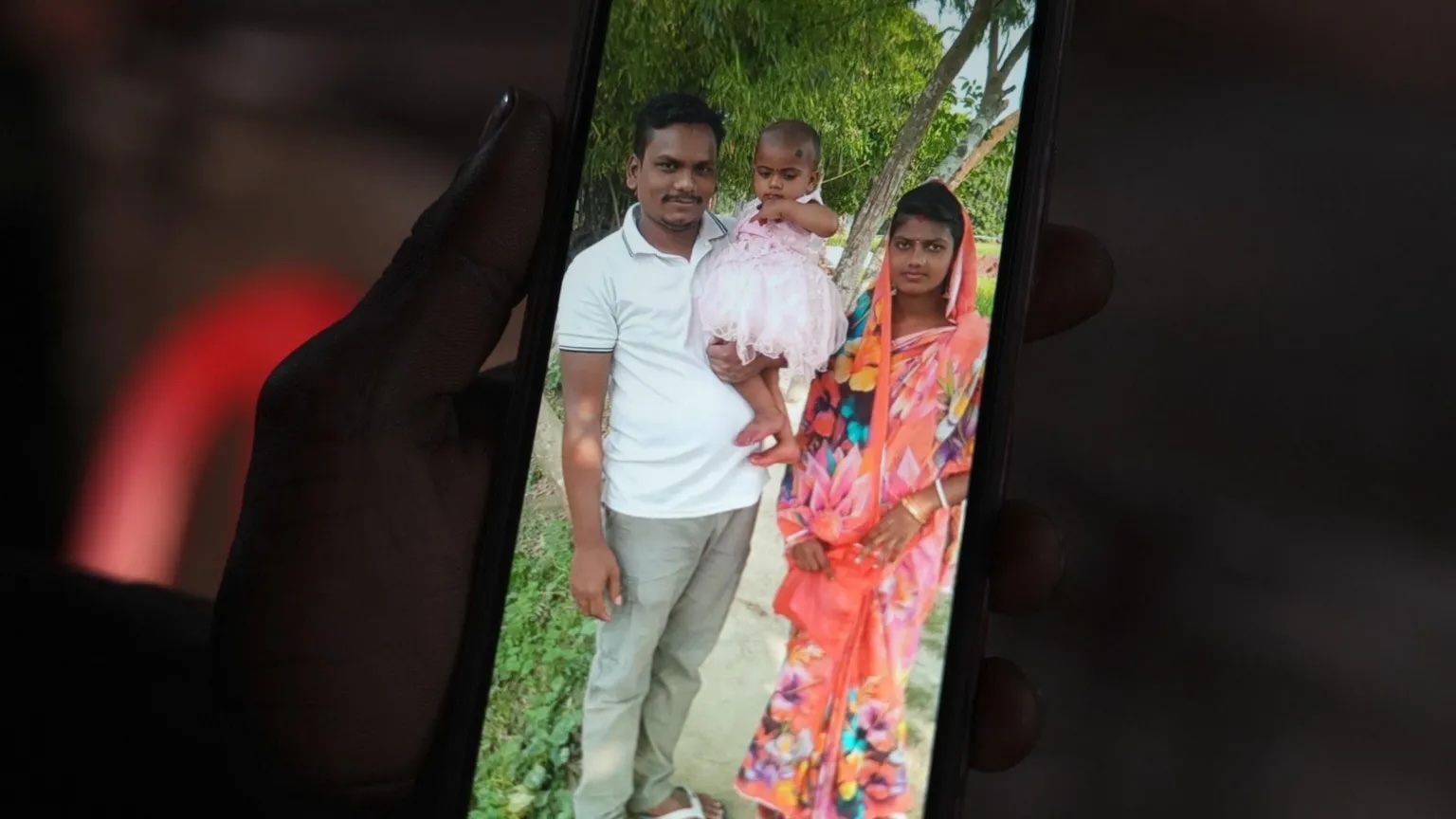
The 28-year-old woke his father, bid farewell to his wife and held his 18-month-old daughter close. Then he boarded a bus for the 60-kilometre journey to the garment factory where he worked as a junior quality inspector, checking sweaters destined for global high-street brands including H&M and Next.
His family would never see him again.
Twenty-four hours later, on 18 December, Das — a Hindu — was dead. Accused of insulting the Prophet Muhammad, he was lynched and burned by a mob.
Dragged from his workplace, beaten, paraded through crowded streets for more than a kilometre, tied to a tree along a busy highway and set alight before hundreds of onlookers, his killing triggered outrage far beyond Bangladesh’s borders.
The incident reignited concerns about the safety of religious minorities in the country, particularly after the 2024 student-led protests that toppled then prime minister Sheikh Hasina. About nine percent of Bangladesh’s 174 million people belong to minority communities, mostly Hindus. Relations with the Muslim majority have long been punctuated by episodes of tension and insecurity.
Fifty days on, global anger has softened. But grief remains raw inside the single-room house Dipu left behind — a dim space with a beaten-earth floor and tin roof where his family has lived for nearly 15 years.
There is little furniture: plastic chairs, sacks of rice, clothes hanging from a single rail. A refrigerator and small television — bought by Dipu on instalments — stand as quiet reminders of a future he was still building.
His mother, Shefali Rani Das, breaks down at the mention of his name.
“Oh Dipu, where is my Dipu?” she cries.
Dipu was the eldest son of Rabi Das, a 54-year-old labourer who earns the equivalent of three to four dollars a day carrying sacks of grain and vegetables at a local market. Years of manual work have left him weathered and frail.
“Now I am working. You rest,” Dipu would often tell his father.
He handed over most of his modest salary — 13,500 taka a month — and spoke frequently of replacing their tin-roofed house with something permanent. He wanted his younger brothers, 22-year-old Apu and 16-year-old Rithick, to be “settled”.
Born and raised in a mixed Hindu-Muslim neighbourhood shaped by quiet hardship, Dipu was known as reserved and focused. He left college during the pandemic as lockdowns strained the family’s finances. By 2024, he was employed at Pioneer Knitwear, part of a major garment export group employing tens of thousands. He was one of 868 Hindu workers at the factory.
His work was unremarkable but steady — checking seams and stitches along one of a hundred production lines supplying markets in Europe and the United States. He returned home from the factory dormitory with chocolates for his daughter and spent evenings watching cartoons with her.
It was an ordinary life — careful, modest and hopeful.
Then came a rumour.
On a December evening, as workers discussed weekend plans near closing time, Dipu allegedly made a remark later described as offensive to the Prophet Muhammad. According to police citing witness accounts, the comment — referred to locally as a “katukti”, or insulting remark — spread rapidly through the factory and into the surrounding neighbourhood.
Bangladesh does not have a formal blasphemy law, but it criminalises acts intended to outrage religious feelings.
There was also CCTV footage showing Dipu clocking out shortly after the alleged exchange, then inexplicably returning to the factory floor two hours later. Outside, word had already spread. A crowd began forming at the gates.
By early evening, several hundred people had gathered, demanding he be handed over. The crowd swelled to more than a thousand. CCTV shows men climbing gates and forcing entry.
Factory management says police were alerted at least 45 minutes before the breach. But at around 8.42pm, according to a senior manager, the mob prised open a side gate and “carried Dipu away like a wave”.
Police say workers opened the gate after the crowd threatened to break it down.
Investigators believe Dipu was beaten to death outside the factory before his body was dragged to a nearby highway, tied to a tree and set on fire.
“By the time I arrived, he was already dead,” said the additional superintendent of police in Mymensingh.
Twenty-two people have been arrested so far, including factory workers, managers and a local imam. Police estimate about 150 individuals directly participated in the attack, with many more present.
Few of those arrested appeared particularly religious, investigators say.
“Some are students, some passersby, some locals. Everyone was beating him, so they beat him too. But we are treating this as a hate crime,” one officer said.
The killing has intensified debate over the scale of violence against minorities in Bangladesh. Government figures suggest most reported incidents involving minorities stem from criminal disputes rather than communal motives. Human-rights groups dispute that characterisation, citing higher numbers of targeted attacks, including killings, arson and temple vandalism.
For Dipu’s family, the political debate is distant.
In their small house in Mymensingh, grief is immediate and unrelenting. The refrigerator hums softly. The television remains unused. His daughter toddles across the earthen floor, too young to understand that the man who left before sunrise that morning will never return.