




















NAIROBI, Kenya, Sept 5 – The Central Bank of Kenya (CBK) wants secondary saccos subjected to the same stringent licensing requirements as primary cooperatives to curb exploitation of regulatory loopholes.
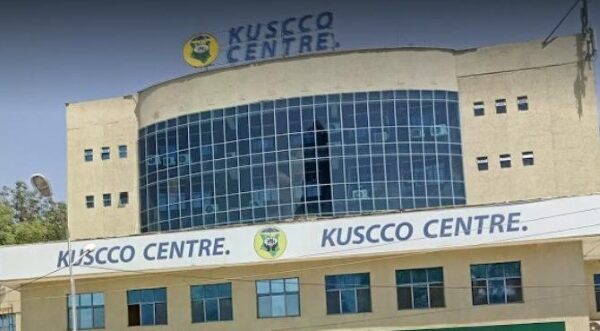
In its latest Kenya Financial Sector Stability Report, CBK recommends long-term legal and regulatory reforms to address gaps that allowed massive losses at the Kenya Union of Savings and Credit Co-operatives Limited (Kuscco).
Currently, under the Sacco Societies Regulatory Authority’s (SASRA) Tiered Prudential Code, Deposit-Taking Saccos (DT-Saccos)—which accept withdrawable deposits and offer banking services—and Non-Deposit-Taking Saccos (NDT-Saccos)—which accept non-withdrawable deposits—are required to meet strict rules on capital adequacy, auditing, reporting, as well as risk and liquidity management.
However, these rules only apply to primary saccos such as Stima Sacco and Tower Sacco, leaving secondary cooperatives like Kuscco outside SASRA’s stringent oversight.
“In the long term, legal and regulatory changes are required to close the gaps that can be exploited. This includes placing all apex/wholesale intermediation (including KUSCCO-type activities) under SASRA’s Tiered Prudential Code with explicit capital, liquidity, large-exposure, and related-party limits; and ending dual-licensing ambiguity,” the CBK report notes.
It further recommends reviewing resolution laws to empower SASRA and the Deposit Guarantee Fund (DGF) with early intervention tools such as mergers, purchase-and-assumption arrangements, bridge-entity powers, and statutory vetting to determine the fitness of directors, senior managers, and auditors—with authority to remove unfit individuals.
The recommendations follow revelations that multiple saccos lost an estimated Sh12 billion at Kuscco through widespread fraud and mismanagement, according to an audit by PricewaterhouseCoopers (PwC).
The collapse has left member societies nursing heavy financial hits. For instance, Mhasibu Regulated DT Sacco wrote off Sh13 million invested in Kuscco shares in its 2024 financial report.
The Law Society of Kenya (LSK) Sacco was also affected, losing part of its Sh61.4 million stake despite keeping a relatively low exposure.