




























NAIROBI, Kenya, May 31 – Kenya’s manufacturing sector is grappling with rising production costs, growing import competition and weakening demand, raising fresh questions about the country’s industrialization ambitions and the sustainability of factory growth.
Once seen as the backbone of Kenya’s plan to industrialize, create jobs and reduce dependence on imports, manufacturing is now operating in a more constrained environment, where margins are tightening and competitiveness is under pressure.
Recent data from the Kenya National Bureau of Statistics (KNBS) shows the sector’s contribution to Gross Domestic Product (GDP) declined to 7.1 percent in 2025 from 7.3 percent in 2024, signaling slower growth even as the wider economy continues to expand.
At the centre of the strain is a familiar challenge: the cost of doing business.
Rising costs weigh on factories
Manufacturers say the combination of high electricity tariffs, transport costs, taxation and reliance on imported raw materials continues to erode competitiveness.
The Kenya Association of Manufacturers (KAM) argues that local producers are increasingly forced to compete with imported goods produced in lower-cost environments with cheaper energy and larger-scale industrial systems.
“Kenyan manufacturers must produce competitive products. One of the reasons undermining competitiveness is costs,” said KAM Chief Executive Tobias Alando.
Tax policy has also come under scrutiny from industry players, who argue that frequent changes and levies on inputs are increasing operational uncertainty.
“Kenya’s unstable tax policy environment including taxation of raw materials, especially excise duty, is among the major hindrance to the sector’s growth,” Alando said, highlighting the pressure facing manufacturers along the production chain.
KAM officials say the result is a sector where firms are increasingly squeezed between rising input costs and limited ability to raise prices in a price-sensitive market.
Imports intensify competition
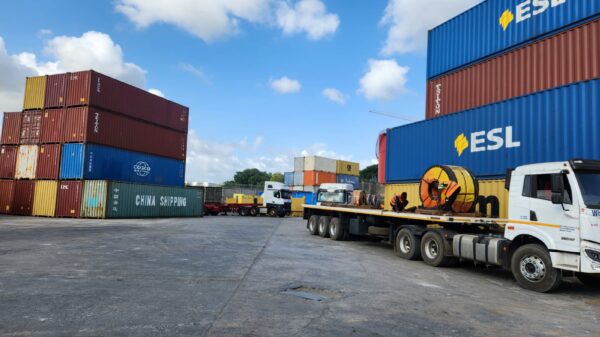
Alongside cost pressures, manufacturers are facing growing competition from imported goods, particularly in sectors such as steel, plastics, textiles, electronics and household goods.
Industry players argue that imported products often reach the market at lower prices, making it difficult for local producers to compete, even when quality is comparable.
However, the debate around imports is increasingly nuanced.
While manufacturers view cheap imports as a threat to local production, economists and policymakers note that imports also play a critical role in supplying machinery, industrial inputs and affordable consumer goods.
The policy challenge, therefore, is less about restricting imports and more about improving the competitiveness of domestic production through lower costs and higher efficiency.
Demand slows as households cut spending
Weakening consumer demand is adding another layer of pressure on manufacturers.
Recent business surveys show households and firms are increasingly cautious with spending, affecting orders across multiple sectors of the economy.
Data from the Stanbic Bank Kenya Purchasing Managers’ Index (PMI) showed private sector activity contracted in March 2026 for the first time since August 2025.
“A weaker Stanbic Kenya PMI in March reflects demand-side concerns and supply-side concerns about the war in the Middle East,” said Christopher Legilisho, Economist at Stanbic Bank Kenya.
The PMI fell to 47.7 in March from 50.4 in February, indicating a contraction in private-sector activity.
“Output and new orders declined in most sectors,” Legilisho said, pointing to broad-based weakness across industries.
For manufacturers, this environment is particularly challenging as weaker demand limits their ability to pass on rising costs to consumers, forcing many firms to absorb part of the pressure and operate on thinner margins.
Global pressures add to domestic strain
Kenya’s manufacturers are also exposed to external shocks, including global supply chain disruptions and volatile energy prices.
Ongoing geopolitical tensions have contributed to higher fuel and logistics costs, increasing the cost of importing raw materials and distributing finished goods.
Stanbic Bank’s PMI reports show firms have continued to report elevated input costs driven largely by transport and fuel pressures.
Despite these challenges, there are signs of macroeconomic stabilization.
Inflation has eased compared to previous years, and the Kenyan shilling has remained relatively stable after periods of significant depreciation, helping to reduce the cost of imported machinery and inputs.
Legilisho noted that there were early signs of recovery in business conditions.
“Overall, the April PMI implies a steady return to growth at the start of Q2,” he said following the release of the April survey.
Government maintains a more optimistic outlook
While manufacturers highlight structural challenges, government officials say Kenya continues to attract investment into the sector.
Trade Principal Secretary Juma Mukhwana says investor interest in manufacturing remains strong despite short-term pressures.
“The country is recording at least three or more new manufacturing investors establishing factories every week,” Mukhwana said.
He added that investor confidence remains resilient even amid occasional exits from the market.
“Whenever one investor exits, three or more are setting up operations,” he said.
The government argues that continued inflows of investment demonstrate that Kenya remains an attractive manufacturing hub in the region.
Industry calls for collaboration
Industry leaders say reversing the slowdown will require closer collaboration between the public and private sectors.
Kenya Association of Manufacturers officials argue that addressing energy costs, improving logistics infrastructure and ensuring predictable tax policy will be key to restoring competitiveness.
“We need to see how the private sector and government can collaborate over the next year to ensure that manufacturing increases, we create jobs,” said KAM Board Vice Chair Hitesh Mediratta.
Such reforms, they argue, would allow local manufacturers to better compete both domestically and in regional markets under the African Continental Free Trade Area (AfCFTA).
A sector under pressure, but still standing
Despite mounting challenges, Kenya’s manufacturing sector is not in decline.
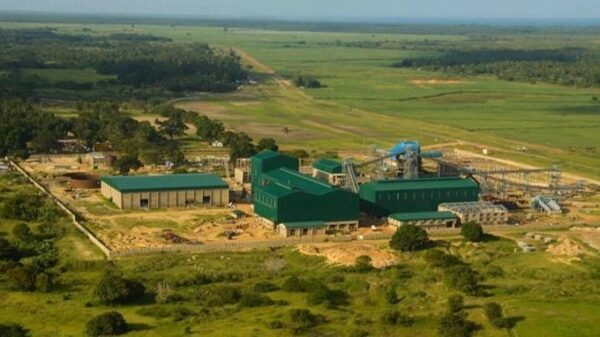
Sub-sectors such as food processing, pharmaceuticals, construction materials and export-oriented manufacturing continue to attract investment and maintain output growth.
Factories are also adapting through automation, efficiency improvements and regional market expansion strategies.
Still, the sector’s overall trajectory remains under pressure as costs rise faster than demand recovery.
The central question for policymakers is whether Kenya can reduce the cost of production enough to restore competitiveness without undermining fiscal stability.
For now, manufacturers remain caught between rising costs, import competition and subdued demand—an environment that continues to test the resilience of Kenya’s industrial ambitions.