





















NAIROBI, Kenya, April 16 – The Central Bank of Kenya (CBK) projects inflation could rise to 6.2 percent in July if the ongoing Iran conflict persists over the next three months.
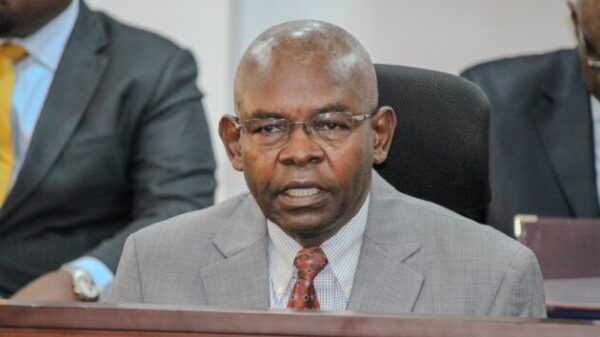
CBK Governor Kamau Thugge said the inflation outlook has been revised upwards due to the oil price shock, though pressures are expected to ease over time.
“However, with the oil price shock and assuming that the conflict lasts for the next three months, our inflation forecast goes above the midpoint of 5 percent, peaking at 6.2 percent in July 2026 and then progressively declining to 5.7 percent by March 2027,” Thugge said.
The projection follows the latest fuel price review by the Energy and Petroleum Regulatory Authority (EPRA), which saw petrol rise by Sh28.69 per litre and diesel by Sh40.30 despite an earlier VAT cut and a Sh6 billion subsidy.
This had pushed petrol prices in Nairobi to Sh206.70 per litre and diesel to Sh206.84.
However, the government has since moved to further cushion consumers by reducing VAT on petroleum products to 8 percent from 13 percent, leading to a drop in pump prices.
As a result, petrol will now retail at Sh197.60 per litre, while diesel will cost Sh196.63. Kerosene prices remain unchanged at Sh152.78.
Kenya continues to face supply disruptions linked to geopolitical tensions in the Middle East, particularly around the Strait of Hormuz, a key global oil transit route.
EPRA attributed the earlier price surge to higher landed costs of imported fuel, with petrol rising by 41.53 percent to $823.87 per cubic metre, while diesel jumped by 68.72 percent to $1,073.20. Kerosene also increased significantly to $1,311.93 per cubic metre.