






















NAIROBI, Kenya, May 29-A wave of AI-generated satire and heated political commentary is sweeping across Kenyan social media platforms following reports that the United States is weighing plans to manage some Ebola exposure cases outside its borders, including a potential arrangement involving Kenya, a development that has triggered legal objections, diplomatic scrutiny, and an explosive online reaction.
The debate, amplified through artificial intelligence-generated videos and memes, has transformed a sensitive public health discussion into a viral political spectacle, raising questions about sovereignty, risk perception, and the growing role of AI in shaping public opinion.
At the center of the online storm is a claim circulating widely on X, suggesting that Kenya could host a facility linked to the observation or quarantine of U.S. citizens exposed to Ebola.
The narrative has been repeatedly reshaped through AI-generated satire, with users mocking both Kenyan authorities and U.S. health policy decisions.
One viral framing captured the tone of the discourse:
“AI-generated satire is a fascinating test case for how memetic resistance shapes public perception of cross-border health policy. The viral framing itself becomes the story.”
Legal pushback enters the debate
The conversation escalated further after the Law Society of Kenya (LSK) President Charles Kanjama publicly urged the government to reject any proposal that would see an Ebola treatment centre established in Kenya to handle patients flown in from other countries.
In a post on X, Kanjama said Kenya should take “robust measures” to prevent Ebola cases from entering the country, including declining what he described as a request by the United States government.
“That includes declining the request by the US Government to set up an Ebola Treatment Centre in Kenya where Ebola patients from other countries will be flown in,” he said.
Kanjama argued that while Ebola patients deserve access to high-quality care, international public health practice dictates that treatment and isolation facilities should be located close to outbreak epicentres rather than in distant countries.
“Public health dictates [that] the medical treatment facility and treatment isolation protocols be set up near the common epicentre of the infection. That is either in Eastern Congo or Western Uganda,” he added.
His remarks have added legal and constitutional weight to a debate that has largely been shaped by social media sentiment and unofficial interpretations of diplomatic discussions.
Reports of U.S. planning fuel controversy
The controversy has been fueled by international reporting suggesting that the United States is considering handling certain Ebola exposure cases outside its territory.
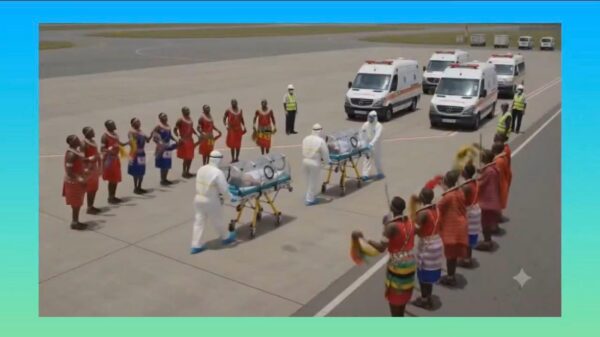
According to The New York Times, the Trump administration is planning to send U.S. citizens who may have been exposed to Ebola to Kenya for observation and treatment rather than repatriating them to the United States, marking a shift from previous outbreak response protocols.
The report further indicated that a facility in Kenya was being considered for quarantine or observation purposes, with Public Health Service officers reportedly undergoing training for potential deployment. The White House, according to the newspaper, declined to comment on the matter.
These reports have significantly influenced public debate and online reactions, even as details remain politically sensitive and contested in official communication channels.
Public reaction splits sharply online
The claims have triggered a wave of anger, satire, and divided opinion among Kenyans online.
Some users argue that Kenya risks being turned into a “containment zone” for foreign health emergencies, while others say international cooperation could strengthen the country’s medical infrastructure.
Critics, including activist voices such as Miguna Miguna, have described the idea as unacceptable, warning against exposing the country to infectious disease risks linked to foreign policy arrangements.
“If they’re too dangerous for Nebraska, they’re too dangerous for Nairobi. Kenya is not America’s biological waste bin,” said Miguna.
Others, however, have defended the possibility of international medical collaboration, arguing that properly constructed isolation facilities could improve Kenya’s preparedness for future outbreaks.
AI satire reshaping political communication
Beyond the policy debate, the episode has highlighted the accelerating role of artificial intelligence in Kenya’s digital information ecosystem.
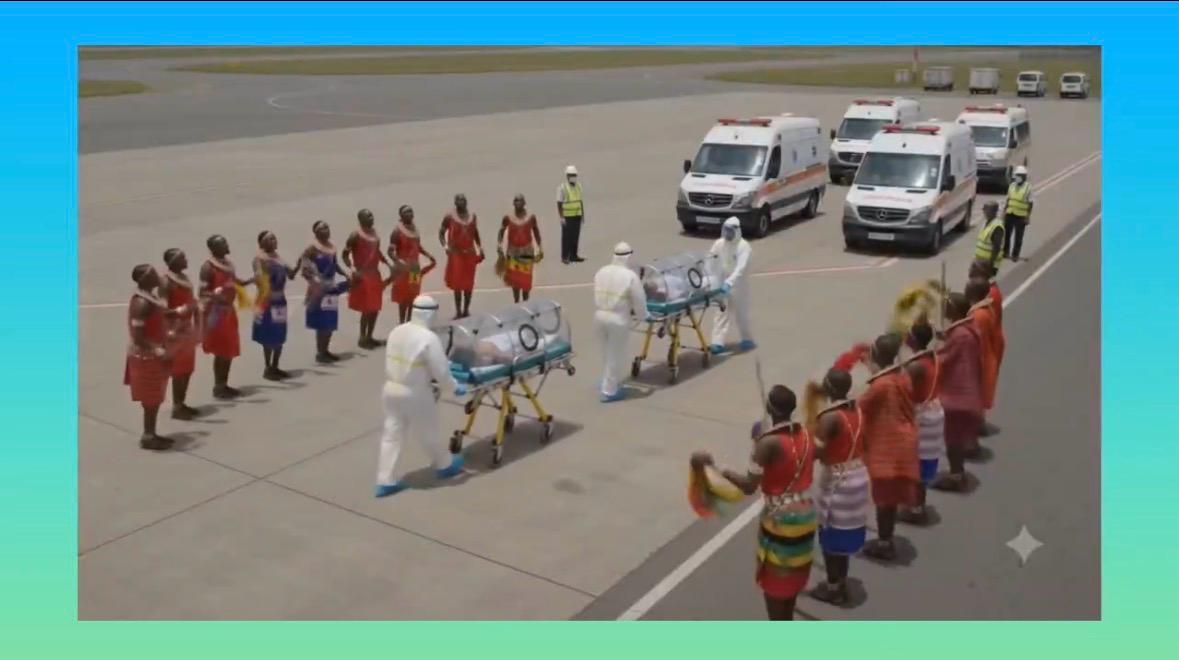
AI-generated videos, parody clips, and manipulated visuals have spread rapidly across X, TikTok, and WhatsApp, often blurring the line between factual reporting and satire.
In some cases, users have deliberately used AI tools to exaggerate political scenarios, turning diplomatic discussions into comedic or critical commentary.
Kenya is among Africa’s most active social media environments, with high engagement in political discourse and a growing adoption of generative AI tools among younger users.
The result is an information environment where satire is no longer just commentary, it is becoming a primary vehicle for political interpretation.
A debate larger than health policy
While the factual basis of the proposed arrangements remains contested in public discourse, the reaction has evolved into a broader debate about trust in government, global health governance, and Kenya’s role in international emergency response systems.
As AI-generated satire continues to circulate and shape perception, the episode underscores a shifting reality in which political communication is no longer controlled solely by institutions, but increasingly co-produced in real time by algorithms, creators, and viral digital cultures.