









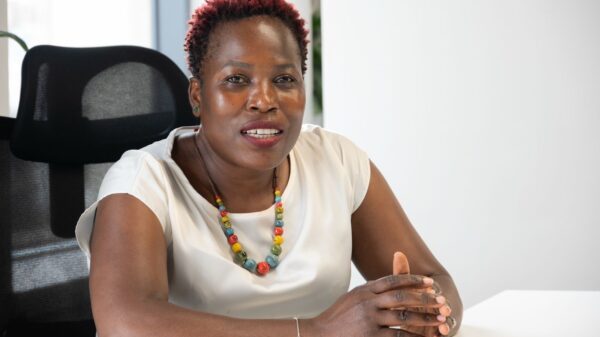

















By Kevin Mutiso, Digital Finance Services Association of Kenya Chairperson
JUNE 2 – A landmark court ruling exposes the KRA’s Large Taxpayer Office misapplying the law on bad debts, and points to a bigger lesson: the gains in digital finance will only hold if industry and regulators build the next standards together.
Kenya’s celebrated digital finance revolution faces two challenges that have to be solved together: a tax interpretation that misreads the economics of lending, and a consumer-protection framework that has not yet caught up with the pace of innovation. Neither will be fixed by industry or by regulators acting alone.
Walk through Nairobi’s markets or the rural stretches of Makueni, and the same sight greets you: a mobile money agent’s sign, a smartphone screen, a transaction completed in seconds. Kenya has built something genuinely remarkable. Digital financial services have become the economy’s central nervous system, extending credit to boda boda riders, mama mbogas and first-generation entrepreneurs who have no collateral, no credit history, and no realistic prospect of walking into a bank branch. Over eight million Kenyans borrow 500 million shillings every single day from digital lenders. By the standard measure of financial inclusion, access, the revolution has succeeded.
But success, examined closely, reveals its unfinished work. The first challenge comes from the state: a tax authority that has spent years misapplying the law against the very companies serving those eight million borrowers. The second is a consumer experience that the entire ecosystem — providers, regulators and infrastructure alike — has not yet made resilient enough. These are not reasons to slow the revolution. They are the work of maturing it.
In a judgment delivered on 28th February 2025, the Tax Appeals Tribunal ruled against the Commissioner of Domestic Taxes in a case brought by Branch International Limited, a mobile lending platform. The Tribunal set aside two of the Commissioner’s most significant disallowances: 32 million shillings in legal and marketing expenses, and a staggering 796 million shillings in bad debt deductions. Both, it found, had been wrongly disallowed. The Large Taxpayer Office, under Commissioner Weldon, had taxed Branch on income the company never received, because the loans underlying that income were never repaid.
Bad debts are a structural feature of unsecured micro-lending, not an aberration. Digital lenders extend credit with no collateral, no guarantor, and by design, minimal friction. A portion of borrowers will default. The Income Tax Act acknowledges this reality: properly documented bad debts are deductible expenses, a position affirmed by both the Commissioner’s own guidelines and prior case law. When a borrower cannot repay, the loss is real. Taxing the lender on that phantom income is not revenue collection; it is confiscation.
What makes the Branch case particularly damning is not just the substantive error but the procedural conduct surrounding it. The company was given seven days to respond to a pre-assessment notice covering six years of complex tax affairs. When it requested 30 additional days, a reasonable ask by any standard, the Commissioner declined and issued a formal assessment two days later. A second assessment followed, outside the five-year statutory limitation period. Article 47 of Kenya’s Constitution guarantees every person the right to administrative action that is lawful, reasonable and procedurally fair. On each count, the Tribunal found the LTO wanting. The Commissioner’s response to this rebuke has been to appeal.
Branch International is not alone in facing such pressure. The Digital Financial Services Association of Kenya, whose members include Tala, M-Kopa, 4G Capital and Zenka, has identified bad debt tax treatment as a critical, sector-wide concern. The compliance cost is enormous. The chilling effect on investment is real. Kenya’s Finance Bill presents an opportunity to settle the matter legislatively, by codifying clearly that properly documented bad debts from unsecured digital lending are fully deductible in the year they are written off. This would not be a concession to the industry. It would be the law, written plainly enough that no future Commissioner could misread it.
Yet to focus only on the tax dispute would be to miss the harder, more important work the industry itself must own: making the consumer experience demonstrably safer. The lenders represented by DFSAK do not dispute the findings below — we take them seriously, and we intend to lead in fixing them. A 2025 survey by Innovations for Poverty Action, covering a thousand active users across urban and rural Kenya, documents a consumer experience that should focus every serious participant in this market.
Eighty percent of payment-service users have sent money to an incorrect number, and 68% of them could not reclaim it. This is not the failing of any single company; it is a gap in the ecosystem’s shared rules, Kenya still has no common, enforceable standard for transaction reversals. Until providers and the regulator agree one, the burden of technical precision falls on the consumer, who is least positioned to bear it. An industry-wide reversal standard, co-designed with the regulator, would fix this for everyone at once.
Among mobile loan users, 55% failed to repay on time in the last year. Thirty-five percent expressed regret about taking the loan at all. Most strikingly, 48% of loan users reduced their food expenditure to meet repayment obligations. When nearly half of all borrowers are choosing between a digital lender and dinner, the word “convenience” begins to ring hollow. The credit-scoring models driving these products have proven adept at originating loans at speed and scale. They have proven considerably less adept at distinguishing productive credit from debt that corrodes the very households it purports to serve.
Seventy percent of respondents experienced a fraud attempt in the past twelve months. Only 14% lost money, but at a median loss of nineteen US dollars, the damage is meaningful in households where every shilling is accounted for. Trust has fractured along familiar lines: 65% of users express confidence in mobile money for basic transactions, but that figure falls to 36% when they are asked whether they trust the institutions managing their loans. That gap is precisely the trust deficit the lending industry must close, and intends to. Trust is not won by infrastructure alone; it is won by standards consumers can rely on.
The tax dispute and the consumer-protection gaps may appear unrelated. They are not. Both are symptoms of a sector that expanded faster than the institutions around it; regulatory, legal and cultural, could adapt. The answer in both cases is the same: industry and regulators building the missing standards together, rather than each waiting for, or blaming, the other.
There is already proof that this collaborative model works. After the Central Bank’s licensing regime took effect and the Office of the Data Protection Commissioner (ODPC) issued guidance and worked directly with DFSAK on data handling and debt-collection conduct, complaints of harassment and debt-shaming against digital lenders fell by roughly 75% (ODPC, 2024). That is what happens when industry sets a standard and the regulator enforces it alongside us: consumer harm drops, and fast. The lesson is not more confrontation, it is more co-regulation.
Eighty-one percent of Kenyan digital finance users find it difficult to access a hundred US dollars within thirty days. For 95%, that wall appears within a week. Digital financial services have mastered the velocity of money. They have not yet built the resilience of the user. Most Kenyans remain one hospital bill or one failed harvest away from a crisis that the digital ecosystem cannot resolve.
Parliament should remove the tax ambiguity through the Finance Bill, and the KRA Commissioner General owes the public a credible account of how many similar assessments have been issued across the sector. But reform must extend beyond tax, and here the industry is ready to do its part. Consumer-redress mechanisms need serious, shared investment: only 43% of those who lost money in the IPA survey sought recourse, deterred by friction and cost. DFSAK is willing to help design and fund a common redress-and-reversal framework. But it cannot be imposed on the industry from the outside; it must be built with the industry. The ODPC experience is the template.
Kenya can lead Africa’s fintech future, but only if its tax authority applies the law correctly on bad debts, and if consumer protection is brought up to the speed of innovation. The infrastructure exists. The ambition is evident. What remains is the harder work, which the industry wants to lead and which regulators must join, of building the standards, rules and norms that make that infrastructure genuinely safe for the eight million people it was always meant to serve. The regulator cannot do it without the industry; the industry should not wait for the regulator.