













NAIROBI, Kenya, Sep 22 — The government has reiterated its commitment to reverse the decline in endangered Rhino species following the launch of the 7th Edition of the Recovery and Action Plan for the Black Rhinoceros in Kenya (2022-2026).
Critical in the action plan is securing additional space for Rhinos in the next 5 years to sustain the growth rates and minimize mortalities especially territorial fights which remain high, accounting for a third of rhino mortalities.
Tourism Cabinet Secretary Peninah Malonza said there is a resurgence in rhino poaching with increased cases being reported in South African Countries.
“This will be critical to achieving the new goal of black rhino numbers increasing by at least 5 per cent, poaching kept below 0.5 per cent and mortality from other causes reduced to less than 0.5 per cent p.a. to reach a confirmed national total of 1,200 black rhinos by the end of 2026,” CS Malonza said.
The additional space for the endangered Rhino species has been proposed to be established at the expansive Loisaba Conservancy, located in Laikipia North Sub-county, Laikipia County, and Tsavo East Park, in Taita Taveta County.
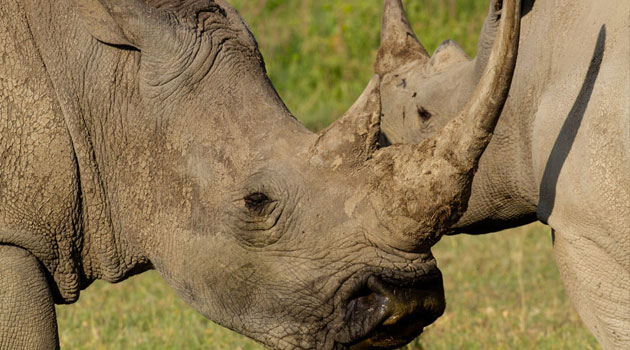
Territorial black and white rhino males show aggression to other rhino which are not tolerated, and chase them away.
‘Territorial’ behavior is of relevance to rhino population management because it sets a limit to the number of competing rhinos that can co-exist in a given reserve.
When these numbers are exceeded, rhino social pressures escalate leading to fighting, injuries, and rhino deaths.
Securing Rhino Conservancies
Principal Secretary, Ministry of Tourism, Wildlife and Heritage, State Department for Wildlife, Silvia Museiya called for collaboration between the private sector and community landowners in expanding the rhino range.
PS Museiya assured of strides in securing the Tsavo West National Park Intensive Protection Zone (IPZs)which has the capacity to host a large number of rhinos to ensure their long-term survival.
“As a Ministry, we are committed to supporting KWS in the implementation of the identified activities and priority projects, especially rhino range expansion to address the increased mortalities from territorial fights and suppressed growth rates due to constrained space,” said PS Museiya.
Currently, rhino populations in the six sanctuaries of Ngulia, Nairobi, Lake Nakuru, Solio, Ol Pejeta, and Lewa are being managed at Carrying Capacity.
This is further compounded by the impacts of climate change leading to frequent and prolonged droughts.
Implementation of the past 6 editions of the action plan has enhanced the recovery of the black rhino population to more than double from the population of less than 400 individuals by 1989 to an estimated population of 1,890 rhinos.
This includes 966 black rhinos, 922 white rhinos and 2 northern white rhinos by end of 2022.
The implementation of the 6th edition of the Black rhino Action Plan (2017-2021)has led to less than 1% rhino poaching in the entire period with zero poaching in 2020.
“Am glad to note that Kenya black rhino population ranks 3rd after South Africa and Namibia and that we host approximately 80 per cent of the eastern subspecies of the black rhino (Diceros bicornis michaeli),”said CS Malonza.
KWS strides
KWS has partnered with a consortium of renowned local and international scientists and conservationists to save the Northern White rhino from extinction.
Through the use of bio-rescue technology, fourteen Ovum Pick Up missions have been undertaken since 2019, with 29 embryos so far developed.
Kenya Wildlife Service Director General Erastus Kanga stated they have made tremendous progress in the implementation of the 6th edition of the black rhino action plan despite the plan being implemented during the COVID-19 pandemic.
“It is remarkable to note that we have surpassed the goal set in the plan of growing the black rhino population by an average annual growth rate of 5% p.a. to reach an estimated black rhino population of 966 at end of 2022,”said Kanga.
Nature Conservancy Program Director Munira Bashir echoed remarkable efforts in protecting rhino population by informing best practices in conservation and management of the increasing number of rhinos.
“This remarkable turnaround has been driven by government determination coupled with efforts by many local and international organizations. Most importantly is network of well researched rhinoceros government conservancies and private conservancies,” said Bashir.
Bashir expressed need for commitment to create more space to conserve the different rhino species amidst the increasing population of the endangered species.
“For rhino population to survive in Kenya for generation to come, in some existing sanctuaries nearing maximum capacity there is urgent need to look for more spaces. We look for areas holding ideal conditions, ecologically appropriate habitat and strong support from neighboring community,” she said.
“We as Nature conservancy we are working with government alongside other local and international partners to help the government efforts to bring back Rhinos from extinction,” Bashir added.
Loisaba Conservancy CEO Tom Silvester said the plans by the KWS to settle on Loisaba Conservancy as Rhino Conservancy site demonstrates the success of rhino conservation in the country over the last 40 years.
“As an umbrella species, protecting rhinos indirectly protects hundreds of other species, as well as critical habitats. The security required to keep rhinos safe also prevents poaching of many other species, and brings better security for community members living near protected areas,” said Silvester
Development of the 7th edition of the action plan comes at a time when significant changes have happened in the wildlife sector, the key among them being the creation of the Wildlife Research and Training Institute (WRTI).
Kenya’s national rhino strategy has a long-term vision of a total black rhino population of 2,000 animals.
Reaching this goal will only be possible if the current populations are appropriately managed; they are relocated to specific areas with good genetic mixes that enable each park or conservancy to host a viable breeding population of animals.