














China’s National Day, celebrated every year on October 1, is at one level an annual commemoration of 1949, the year the People’s Republic was founded. Yet, for the outside world, it has become much more than a domestic holiday. It is a moment of reflection, a window into how China sees itself and how it wishes to be seen in the global order.
The meaning of China’s celebration radiates beyond its borders. What kind of role will China play in shaping international affairs? How will its philosophies, especially the vision of a “community with a shared destiny for mankind,” reshape global governance? And, perhaps crucially, what does China’s rise mean for the rest of the world?
The first unique aspect of China’s National Day is that it symbolises not merely the founding of a state, but the revival of a civilisation. For many Chinese, 1949 marked the end of a “century of humiliation” and the beginning of national restoration. China frames this restoration as civilisational, a reawakening of a heritage that is thousands of years old, now translated into the language of modern governance and technology.
This is why the holiday carries global weight. China’s National Day highlights continuity, resilience and collective renewal. It suggests that the world is entering an era where civilisational diversity, rather than uniform political models, will increasingly define international life.
The concept of a “shared destiny for mankind” is central to how China projects its vision abroad. Its implications are practical. Unlike the globalisation of the late 20th century, which was largely driven by Western-led institutions and market liberalisation, China’s version of interconnectedness emphasises interdependence without homogenisation.
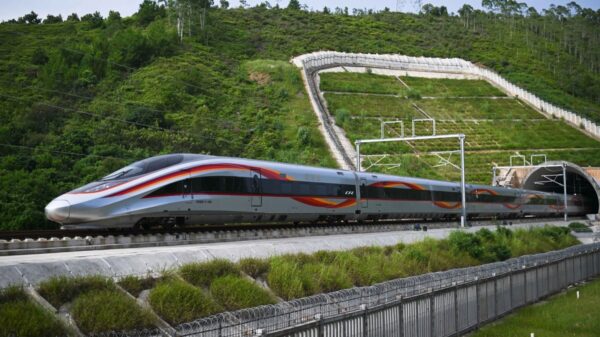
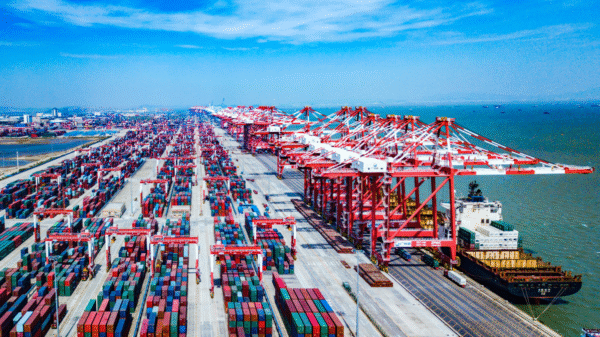
For instance, the Belt and Road Initiative is a material expression of this philosophy. By building railways in Africa, ports in South Asia, and digital networks in Central Asia, China is weaving together a web of connectivity that resists the notion of “one-size-fits-all” development.
For the Global South, China’s National Day symbolises the possibility of multiple pathways to prosperity. Many of these nations, long caught between dependency and marginalisation, view China’s rise as an invitation to experiment outside Western orthodoxies. The idea that modernisation must follow a single trajectory is giving way to the notion of plural modernities.
China’s parades can be seen as demonstrations of stability and self-confidence. The mixture of cultural performances, technological showcases and military displays signals readiness to take responsibility in a volatile world. It reminds observers that China’s ascent is not occurring in isolation but within an interconnected international system.
In recent years, China has become a central player in the fight against climate change. The broader narrative of “shared destiny” aligns closely with global environmental concerns. No single nation can address ecological crises alone. When China invests heavily in renewable energy or pledges carbon neutrality by 2035, as President Xi Jinping did on Thursday, it underscores that its celebrations of progress are tied to responsibilities that extend far beyond its borders.
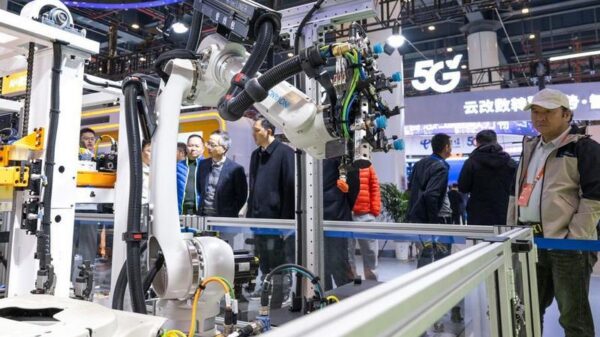
China’s experiments with digital currency, artificial intelligence governance, and data sovereignty are setting precedents that other nations will eventually confront. National Day, in this sense, serves as a backdrop for reflecting on how China’s technological achievements will influence the values embedded in tomorrow’s digital systems.
The COVID-19 pandemic revealed another layer of interdependence. China’s handling of the crisis, its provision of vaccines to developing countries, and its debates with Western nations about transparency and accountability showed both the promise and the complexity of its role. Each National Day since the pandemic has, therefore, carried echoes of global health politics, an implicit reminder that national celebrations are inseparable from global responsibilities.
The deeper meaning of China’s National Day lies in its contribution to the debate over what the future of global order should look like. If the 20th century was shaped by Western dominance, the 21st century is being shaped by multilateralism. China’s holiday asserts that there is more than one way to modernise, more than one way to govern, more than one way to belong to the world.
While for some this pluralism is unsettling, for others it is liberating. But for all, it is undeniable. China’s National Day is not only a celebration of sovereignty, but also a rehearsal for the future. It reminds the world that China seeks to redefine the terms of engagement. The philosophy of a “shared destiny for mankind” is both an invitation and a challenge – an invitation to imagine a more cooperative world, and a challenge to old hierarchies of power. As China looks back on its founding each October 1st, the world is also looking forward to a century where its role will be impossible to ignore.