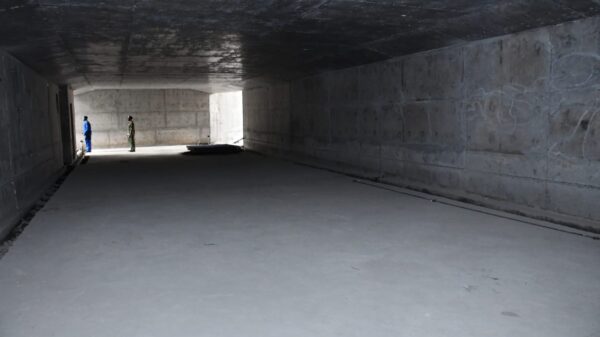






















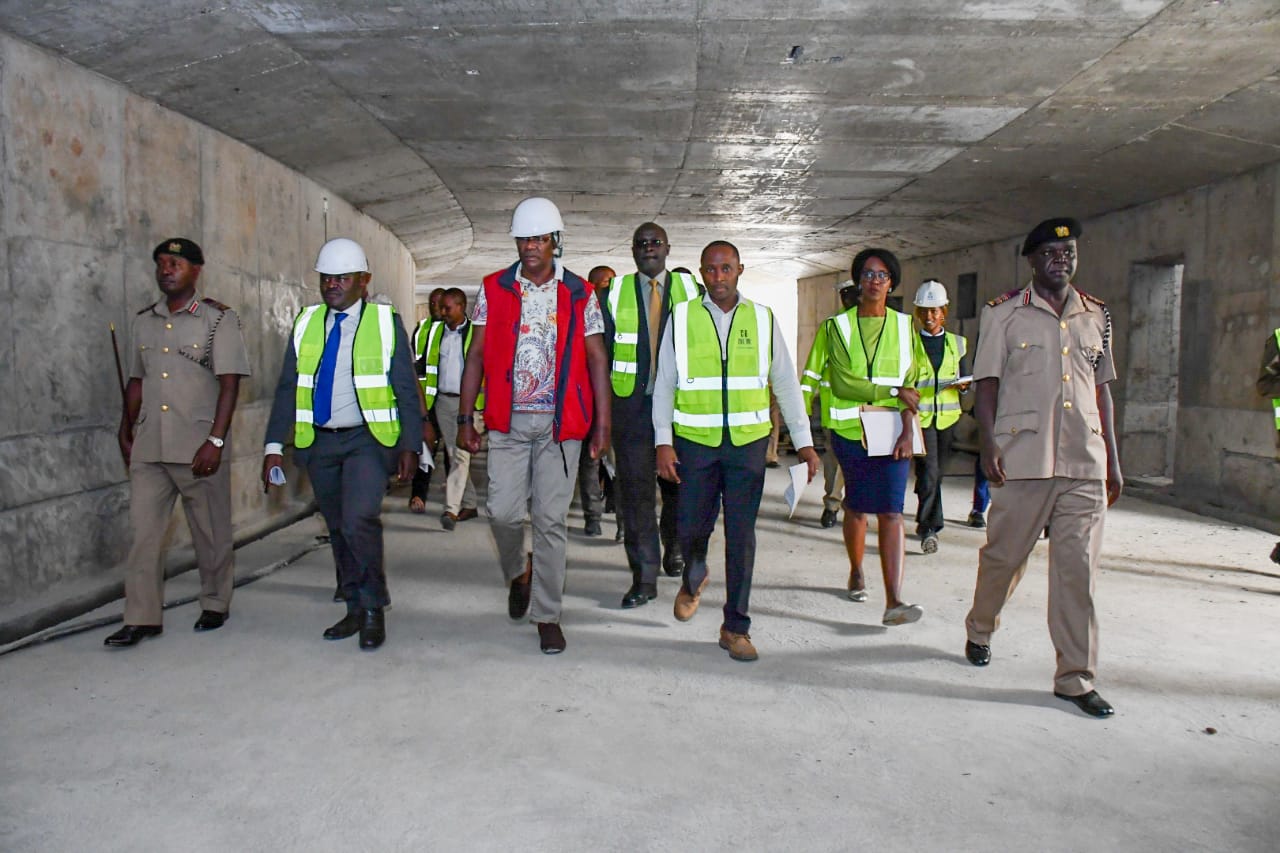

NAIROBI, May 18 – The construction of the Green Park underpass at the intersection of Uhuru Highway and Haile Selassie Avenue is nearing completion, promising to enhance pedestrian mobility and ease traffic congestion in Nairobi’s central business district.
Currently 88 percent complete, the modern infrastructure project is strategically located at one of the busiest junctions in the city. Once operational, the underpass will provide a safe and efficient route for pedestrians beneath Uhuru Highway, connecting Uhuru Park, Nairobi Railway Station, and Haile Selassie Avenue directly to the CBD without the need to cross busy traffic lanes.
The project is being implemented by the Kenya National Highways Authority (KeNHA) in collaboration with the China Road and Bridge Corporation. Drawing inspiration from global urban models such as London’s renowned pedestrian underpasses, the design integrates safety, accessibility, and functionality.
“This Green Park underpass is not just any construction project—it represents a vision to modernise Nairobi’s urban landscape,” said Mr Eliud Owalo, Deputy Chief of Staff for Performance and Delivery Management, during an inspection tour with engineers and officials from the Government Delivery Unit. “We’re creating an experience, not just a crossing.”
The Ksh 2 billion project is a key part of the government’s efforts to decongest the city and improve mobility. It aims to reduce the chronic traffic bottlenecks at the Haile Selassie-Uhuru Highway junction by separating pedestrian and vehicular movement.
The underpass will feature well-lit corridors, CCTV surveillance, and commercial amenities, including coffee shops, kiosks, and newsstands—mirroring the multi-functional pedestrian tunnels found in cities like Amsterdam, London, and Hong Kong, where such infrastructure serves both transit and lifestyle purposes.
Designed as a clean, secure, and accessible public space, the Green Park underpass will offer pedestrians a safe alternative to crossing chaotic roads, while enhancing Nairobi’s image as a forward-looking, people-centred metropolis.
By diverting foot traffic below ground, the facility is expected to reduce pedestrian-vehicle conflict, enhance commuter safety, and improve traffic flow—marking a shift from reactive traffic control to proactive, design-led solutions in line with global best practices.
With completion on the horizon, Nairobi residents can look forward to a safer, more organised commuting experience aligned with the city’s broader vision of becoming a green, modern capital.