






















NAIROBI,Kenya,June 3-Kenyan households, businesses and manufacturers will continue paying current electricity rates after the government withdrew a retail electricity tariff review application that had been submitted by the Kenya Power and Lighting Company (KPLC) in March.
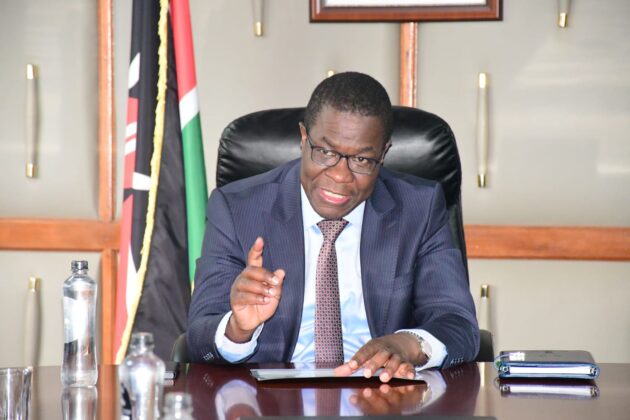
Energy and Petroleum Cabinet Secretary Opiyo Wandayi said the move is anchored on shielding consumers and enterprises from higher energy costs while supporting economic growth, job creation and industrial competitiveness.
In a statement, the Ministry of Energy and Petroleum said the decision followed consultations within government and engagements with key stakeholders across the energy sector.
“This decision reflects the need to buttress a sustainable energy sector while protecting households, businesses, and industries from cost escalation.”
“It aims to support economic growth, safeguard livelihoods and create jobs.”
The withdrawal means the current electricity tariff structure will remain in place unless a fresh review is undertaken through the legal and regulatory procedures outlined in the Energy Act, 2019.
Electricity pricing remains a critical issue for Kenya’s economy, with energy costs directly influencing operating expenses across sectors ranging from manufacturing and agriculture to retail trade and services.
Any increase in tariffs would have raised concerns over inflationary pressures and the cost of doing business at a time when firms are seeking to expand investment and create jobs.
The Ministry emphasized that tariff adjustments cannot be implemented unilaterally and must undergo a rigorous process involving the Energy and Petroleum Regulatory Authority (EPRA), including technical evaluations, stakeholder consultations and public participation.
According to the Ministry, the law requires electricity tariff setting to be guided by principles of transparency, fairness, consumer protection, cost recovery and the long-term sustainability of power supply.
The government also sought to reassure consumers and investors that the withdrawal of the application will not affect electricity supply or service delivery.
The decision offers short-term certainty for businesses planning their operating budgets, particularly energy-intensive sectors that closely monitor changes in power costs.
The tariff review application had been submitted by KPLC on March 31, 2026, but will now not proceed to the next stages of regulatory consideration following its withdrawal.
Kenya’s electricity tariffs,vary depending on user category and consumption levels, with residential customers charged under lifeline and standard bands where the lowest 0–30 kWh block is subsidised to support low-income households, followed by higher rates for 31–100 kWh and the highest domestic rate for usage above 100 kWh.