



















MAR 5 – China has set an economic growth target for this year of “around 5%” and pledged to pump billions of dollars into its ailing economy, which is now facing a trade war with the US.
Its leaders unveiled the plan as thousands of delegates attend the National People’s Congress, a rubber-stamp parliament, which passes decisions already made behind closed doors.
But the week-long gathering is closely watched for clues on Beijing’s policy changes – and this year is more significant than most.
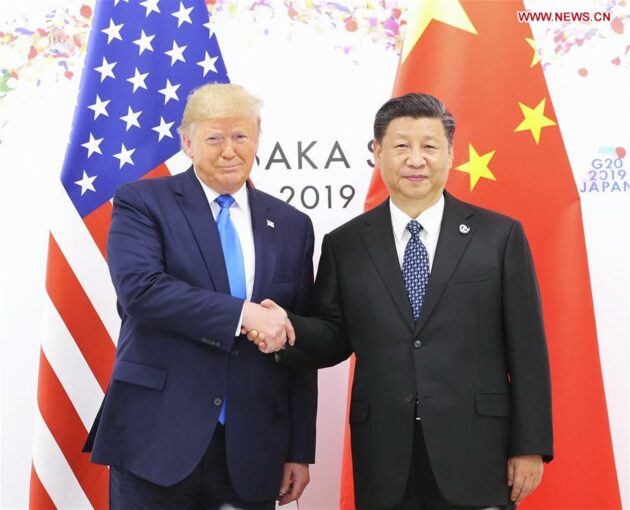
President Xi Jinping had already been battling persistently low consumption, a property crisis and unemployment, before Donald Trump’s new 10% levy on Chinese imports came into effect on Tuesday.
This follows the 10% tariff imposed in early February, taking the total US levy to 20%. And it hits what has been a rare bright spot for the Chinese economy: exports.
Beijing hit back almost immediately on Tuesday, just as it did last month. It announced retaliatory action that included 10%-15% tariffs on certain agriculture imports from the US. This is key because China is the biggest market for these goods, such as American corn, wheat and soybeans.
At the opening of this week’s meeting, known as Two Sessions, China vowed to make domestic demand the “main engine and anchor” of its economic growth.
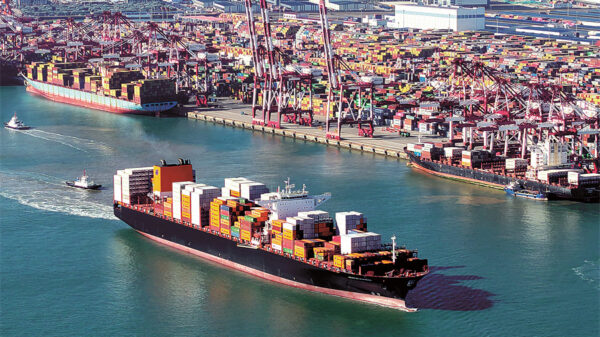
Beijing was able to meet its 5% target for the last two years but growth was driven by strong exports, which resulted in a nearly trillion-dollar record trade surplus.
Repeating that is going to be much harder this year.
“If the tariffs linger, Chinese exports to the US could drop by a quarter to a third,” says Harry Murphy Cruise, head of China economics at Moody’s Analytics.
Beijing is going to have to rely more than ever on domestic spending to achieve 5% growth – but that has been one of its biggest challenges.
On Wednesday, Chinese Premier Li Qiang said consumption has been sluggish and pledged to “vigorously boost” household demand.
“Domestically, the foundation for China’s sustained economic recovery and growth is not strong enough.”
“Internationally, changes unseen in a century are unfolding across the world at a faster pace,” Li said, as he noted the rise of protectionism around the world.
Beijing has already rolled out schemes to encourage its people to spend more, including allowing them to trade in and replace consumer goods like kitchen appliances, cars, phones and electronic devices.
Beijing’s plans include issuing 1.3 trillion yuan ($179bn; £140bn) in special treasury bonds this year to help fund its stimulus measures. Local governments will also be allowed to increase the amount of money they borrow to 4.4 trillion yuan, up from 3.9 trillion yuan, according to the annual “Work Report”.
In a rare move, Beijing raised its fiscal deficit – the difference between the government’s spending and revenue – by one percentage point to 4% of gross domestic product (GDP), the highest level in decades.
The hike signals Beijing’s commitment to increase spending to shore up growth. It has long sought to keep the deficit at or below 3% of GDP to demonstrate fiscal discipline.
It also announced plans to create more than 12 million jobs in cities, setting a target for urban unemployment at around 5.5% for 2025. The figure stood at 5.1% last year.
The government also pledged to provide more support to high-tech industries, restore stability in the property market, and expand elderly care programmes for its ageing population.
Whether these measures will be enough to boost consumption is the key question.
Harsh pandemic-era restrictions along with a prolonged real estate crisis and a government crackdown on tech and finance companies have fuelled pessimism among Chinese people. And a weak social safety net means savings have become especially crucial in case of unexpected out-of-pocket expenses.
But China’s leadership is optimistic. CPCC spokesman Liu Jieyi told reporters ahead of the session that while the economy was facing challenges such as low demand, it was “important to recognise that China’s economic fundamentals are stable, there are many advantages, resilience is strong, and potential is significant”.
‘High quality’ development
Investment in what President Xi calls “high-quality development”, which covers high-tech industries from renewables to artificial intelligence (AI), is also expected to be a major focus.
The world’s second-largest economy, China has long vied to become a global leader in tech, partly to reduce its reliance on the West.
State media has already touted recent examples like DeepSeek and Unitree Robotics, both of which have caught global attention, as examples of China’s “technological progress”.
The success of DeepSeek in particular saw an AI-driven stock rally, with analysts noting renewed interest in China among foreign investors.
A commentary in the state-run Xinhua newspaper said “China’s new energy industries and overall green transition, driven by its cutting-edge technologies, will continue to be important growth drivers”.
But the new US levies – which come on top of tariffs from Trump’s first term – could stymie these plans, not least because they could dampen investor sentiment.
“The chaos that tariffs leave in their wake is kryptonite for investment,” Mr Murphy Cruise says. “Tariffs are set to deliver a one-two punch to China’s economy, landing blows to both exports and investment.”
Also on Wednesday, China announced a 7.2% increase in its national defence budget, the same rate of growth as last year.
By BBC