

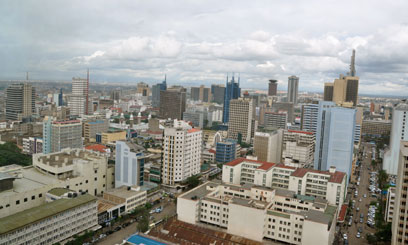
















Nairobi, Kenya Feb 26-African countries are having to spend up to five percent of their annual economic output to shield themselves against the impacts of climate change, even though they emit the least greenhouse gases in the world, a report released Saturday said.
The findings, published by the Nairobi-based think tank Power Shift Africa, focus on the costs of warding off climate impacts by strengthening transport infrastructure, shoring up communications, building flood defences and other preventative measures.
The threat is forcing nations to divert “already stretched” resources to climate self-defence, the report said.
The survey focused on seven countries from around the continent.
Ethiopia — which is also fighting a brutal war in its northern region — was the hardest-hit, spending up to 5.6 percent of its GDP to ward off climate-related disasters, it said.
Conflict-wracked South Sudan, which has been reeling from heavy rains and flash floods affecting more than 850,000 people, is on track to spend up to 3.1 percent of its GDP every year, the report said.
In West Africa, meanwhile, Sierra Leone will be spending as much as $90 million (80 million euros) a year — 2.3 percent of its economic output — on climate adaptation, even though its citizens on average generate 80 times less carbon than US residents.
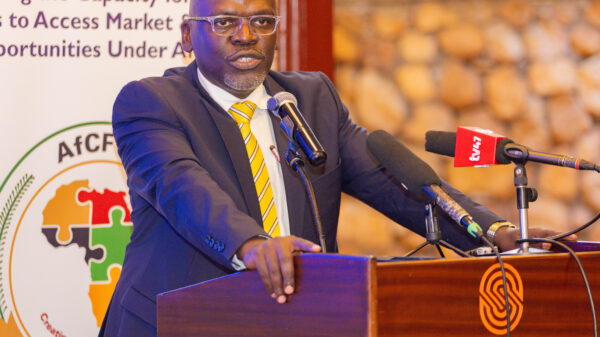
“This report shows the deep injustice of the climate emergency,” said Mohamed Adow, head of the Power Shift Africa.
“It is simply not acceptable for the costs to fall on those people who are suffering the most while contributing the least to climate change.”
– ‘Massive’ help needed –
Adow said African nations needed a “massive” amount of help to withstand the onslaught of climate change.
African economies have long struggled to find funds to limit emissions while also adapting to climate change.
A study published last November warned that the world’s 65 most vulnerable nations will see GDP drop 20 percent on average by 2050 and 64 percent by 2100 if the world heats up by 2.9 degrees Celsius (5.2 degrees Fahrenheit).
That research, commissioned by Christian Aid, found that eight of the top 10 most affected countries are in Africa, with the remaining two in South America.
All 10 countries would see their GDP fall by 40 percent even if global temperature rises are capped at 1.5C, in keeping with the most ambitious Paris Agreement goal, the study said.
To date, Earth’s average surface temperature has risen 1.1C compared to late 19th-century levels.
The next COP27 climate summit will be held in Egypt, seeking to build on gains made at the previous conference in Glasgow last year.
Pledges were made at COP26 to phase down coal-fired power, curb methane emissions and boost financial aid to developing countries.
Rich countries have also vowed to muster $100 billion annually in climate aid for poor nations.
But only a part of that funding promise has so far been earmarked for adaptation, as opposed to measures to mitigate carbon emissions.
A report last year by the UN Environment Programme (UNEP) found that developing countries will need to spend up to $300 billion a year on adaptation measures by 2030, and up to $500 billion annually by 2050.