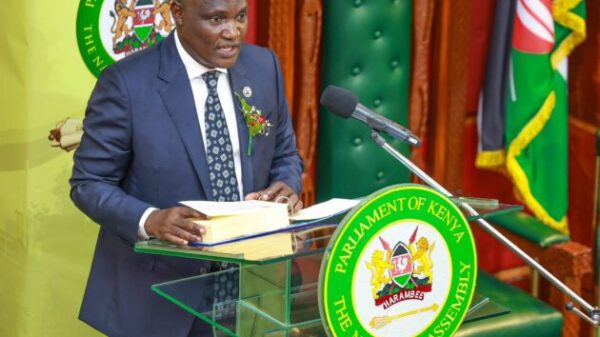








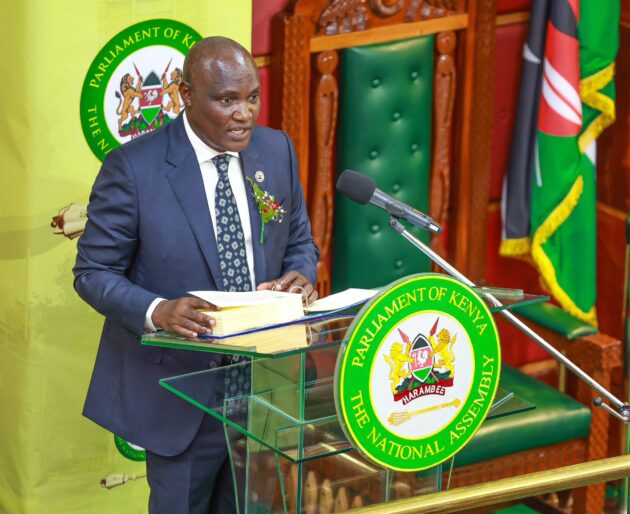

NAIROBI, Kenya, June 11 – Treasury Cabinet Secretary John Mbadi is set to present the 2026/27 Budget to Parliament today, outlining the government’s spending priorities, revenue plans and borrowing strategy for the financial year beginning July 1.
The budget comes at a time when the government is under pressure to balance fiscal consolidation, growing debt obligations and demands for increased funding for development projects and social services.
According to budget estimates, the National Government plans to spend Sh4.82 trillion in the 2026/27 financial year. Recurrent expenditure will take the largest share at Sh3.54 trillion, followed by Sh749 billion for development spending and Sh428 billion allocated to counties following an agreement between the National Assembly and the Senate.
A significant portion of recurrent expenditure will go toward salaries, government operations and debt servicing, raising concerns among economists that limited development spending could slow economic growth and infrastructure expansion.
On the revenue side, the Kenya Revenue Authority (KRA) is expected to collect about Sh3 trillion, with the government projecting an additional Sh120 billion from measures contained in the Finance Bill 2026.
Some of the proposals under the Finance Bill have already attracted public debate, including plans affecting mobile phones, second-hand clothing imports and changes to Value Added Tax (VAT) treatment on selected products.
Despite the revenue projections, the government is still expected to face a budget deficit of about Sh1.17 trillion, which will be financed through borrowing.
Treasury plans to raise approximately Sh995.7 billion from the domestic market and Sh116.2 billion from external lenders. Economists have previously warned that heavy domestic borrowing could crowd out private sector access to credit.
Key Winners
Education remains the biggest beneficiary in the proposed budget, receiving Sh781.4 billion, reflecting the government’s continued focus on funding schools, universities and technical institutions.
The security sector follows with Sh566.9 billion, underscoring ongoing investments in national security and law enforcement.
Other major allocations include:
- Roads and Infrastructure: Sh230.3 billion
- Health: Sh175.5 billion
- Housing and Urban Development: Sh138.2 billion
The housing allocation is expected to support the government’s affordable housing agenda, while health spending will focus on strengthening healthcare services and implementation of the Social Health Insurance Fund (SHIF).
Focus Areas
Analysts will be keenly watching for announcements on tax relief measures, support for businesses, allocations to counties, funding for key infrastructure projects and strategies to manage the country’s growing debt burden.
The budget is also expected to provide signals on the government’s economic priorities ahead of the 2027 General Election, particularly amid concerns over the high cost of living, unemployment and slowing private sector activity.
Mbadi’s speech will set the fiscal direction for the coming year and indicate how the government intends to balance spending needs with revenue mobilization while maintaining economic stability.