










NAIROBI, Kenya, June 11 – In an era defined by fractured global supply chains and shifting geopolitical corridors, Kenya is aggressively scouting for new opportunities and partnerships while bolstering existing ties.
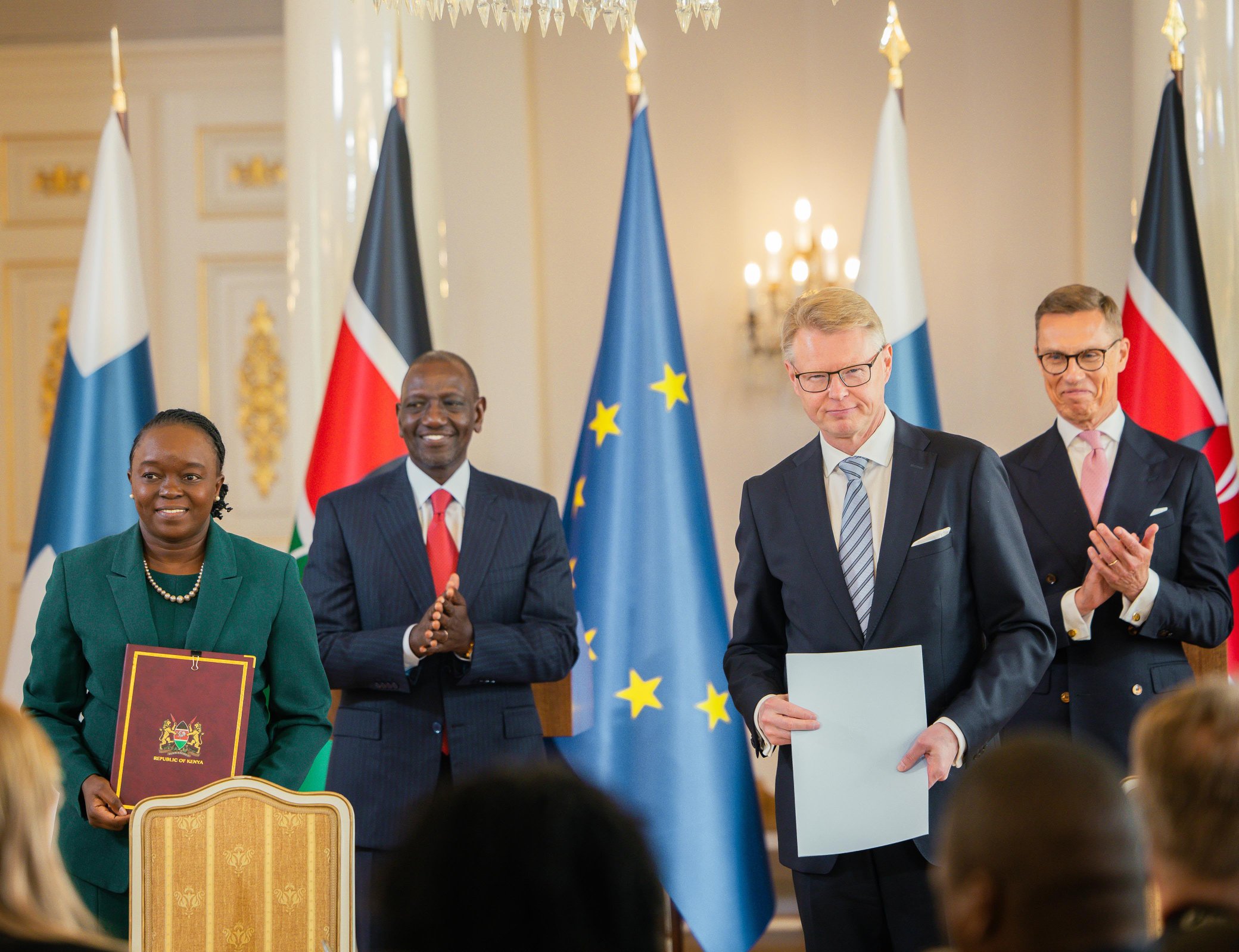
Over the past six weeks, President William Ruto has conducted an intensive, high-stakes diplomatic blitz across seven countries comprising Tanzania, Azerbaijan, Kazakhstan, South Africa, Kazakhstan, Belgium and Finland.
Moving far beyond traditional, subdued diplomacy, Nairobi’s aggressive trade-first foreign policy is locking in billions of shillings in fresh capital, securing unprecedented market access, and establishing crucial regional and trans-Eurasian infrastructure partnerships.
The visits are positioned to significantly lower the cost of doing business, create high-value jobs, and inject real wealth directly into the pockets of ordinary Kenyans.
In some quarters, these trips have been viewed from the standpoint of the expenditure, while according scant attention to the immense benefits the country will derive from these high-level tours. Yet the benefits that Kenyans will derive from these trips far outweigh the cost.
For years, Kenyan traders and manufacturers have watched their profits evaporate in grueling, bureaucratic gridlocks at border crossings. Bureaucracy, ad-hoc levies, and duplicate product testing have long choked the true potential of intra-East African commerce. Soon this will be a thing of the past as these hurdles are progressively addressed.
During his State Visit to Dar es Salaam, President Ruto and Tanzanian President Samia Suluhu Hassan vowed to confront these bottlenecks headon. In a landmark declaration, the two leaders set a hard deadline of June 30, 2026, to eliminate all remaining non-tariff barriers.
The practical impact on Kenyan livelihoods will be immediate. Through a new standards-harmonization pact, product testing between the Kenya Bureau of Standards (KEBS) and Shirika la Viwango Tanzania (TBS) will be fully aligned. A product cleared in Dar es Salaam will no longer face duplicate, costly inspections at Namanga or Holili.
Furthermore, the newly established Kenya-Tanzania Business Council will enforce a strict 30-day dispute resolution window. This means no more truck drivers stranded for weeks at border posts while fresh agricultural produce spoils in the heat.
For local consumers and farmers, the mutual recognition of sanitary and phytosanitary certificates means grains, eggs, milk, poultry, and fresh produce will flow seamlessly across borders. This will lower food prices at home while opening a massive, friction-free market for Kenyan farmers.
Economic transformation requires robust physical infrastructure. In Tanzania, President Ruto secured commitments that will fundamentally alter East Africa’s logistical map.
Top of the agenda was the revival of the Voi–Mwatate–Taveta railway line, which will be linked directly to Kenya’s Standard Gauge Railway (SGR). This rail link is projected to slice bulk cargo transport costs by up to 25 percent, positioning border towns like Taveta as booming logistical hubs and opening a highly affordable transport channel for Kenyan manufacturers into northern Tanzania.
Simultaneously, the fast-tracking of the multi-billion shilling Malindi–Bagamoyo Super Highway will establish an uninterrupted coastal economic corridor. By connecting Mombasa directly to Dar es Salaam, this highway will bypass congested inland routes, slash transit times for commuters, and spark an industrial and real estate boom along Kenya’s North Coast
In South Africa, President Ruto broke through decades of agricultural protectionism. In a major win for the Mount Kenya and Rift Valley agricultural belts, South African President Cyril Ramaphosa officially lifted suspended import duties on Kenyan tea, coffee, and spices. Lowering these trade barriers restores preferential market access, allowing Kenyan smallholder farmers to export directly to the lucrative Southern African Customs Union (SACU) market.
Meanwhile, in Brussels, President Ruto secured the future of Kenya’s multi-billion shilling horticultural sector. Through strategic talks with European Council President António Costa and European Parliament President Roberta Metsola, Kenya cemented the practical rollout of the Kenya-EU Economic Partnership Agreement (EPA). This deal guarantees permanent duty-free and quota-free access to the 27-member European Union market, protecting the livelihoods of hundreds of thousands of workers in Kenya’s flower, fruit, and vegetable industries
The diplomatic tour also delivered a powerful boost to Kenya’s status as Africa’s “Silicon Savannah”. In Belgium, the President secured a massive €139 million (Ksh 20+ billion) funding package from the European Union specifically earmarked for Kenya’s digital economy.
This capital injection will directly finance the expansion of the nationwide Digital Superhighway, accelerating the fiber-optic network expansion into rural areas and expanding the digitization of public services via e-Citizen. For ordinary Kenyans, this means cheaper internet, faster government services, and the creation of thousands of tech-driven jobs for the youth through localised digital hubs.
Perhaps the most forward-looking leg of the tour was the state visit to Kazakhstan, the first ever by a Kenyan Head of State. In Astana, President Ruto and President Kassym-Jomart Tokayev laid out a highly ambitious roadmap to link East Africa’s financial hub with Central Asia’s industrial powerhouse.
To anchor this new relationship, Kenya is immediately opening a Consular General office in Astana, which will scale up to a full-fledged embassy next year. To get goods moving, the two countries are fast-tracking direct air cargo and passenger routes under Kazakhstan’s open skies policy, allowing Kenyan flowers, tea, and fresh produce to land in Central Asia within hours.
The cooperation goes deeper than trade. As Kenya aggressively expands its power grid to 10,000 MW by 2030 using geothermal and green energy, the partnership opens doors to Kazakhstan’s world-class expertise in uranium processing and peaceful nuclear energy.
Furthermore, by linking the Nairobi International Financial Centre with the Astana International Financial Centre, Kenya is creating an institutional channel to attract large-scale infrastructure financing. Joint research initiatives launched with the Alem.AI Centre in Astana will also bring world-class artificial intelligence training, startup incubation, and public-sector tech applications directly to Kenyan software developers.
The economic windfall also extends to Kenya’s tourism sector. In East Africa, Presidents Ruto and Samia Suluhu Hassan directed their respective ministries to establish a single-destination framework for the iconic Mara-Serengeti ecosystem.
By harmonising park fees, streamlining visa regulations for third-country international tourists, and marketing the ecosystem as a single destination, the deal eliminates the bureaucratic hurdles that previously forced tourists to choose between Kenya and Tanzania. This unified framework is set to ignite a tourism boom, translating directly into increased bookings, higher revenues, and sustainable jobs for safari guides, hospitality workers, and local beadwork artisans.
President Ruto’s recent global engagements represent a definitive shift in Kenya’s economic management. By aggressively dismantling trade barriers, opening new aviation corridors, securing tens of billions in digital infrastructure funding, and looking toward advanced tech partnerships in Central Asia, Kenya is systematically insulating its economy from regional stagnation and disruptions in global supply chains.
These visits have successfully shifted the narrative of foreign travel from political networking to highly practical deal-making. As these treaties move into full implementation, the ultimate beneficiaries will not be the diplomats in Nairobi, but the farmers, tech innovators, small-scale traders, and manufacturers whose products can now move freely, cheaply, and competitively across the globe.