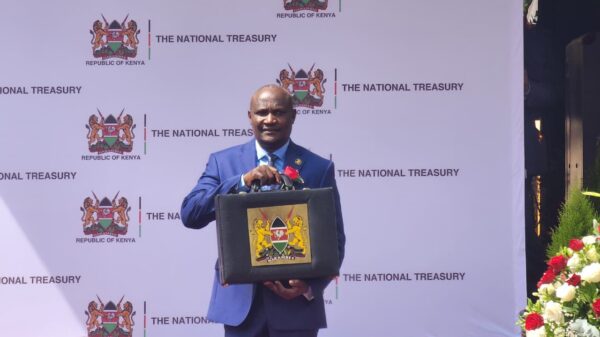











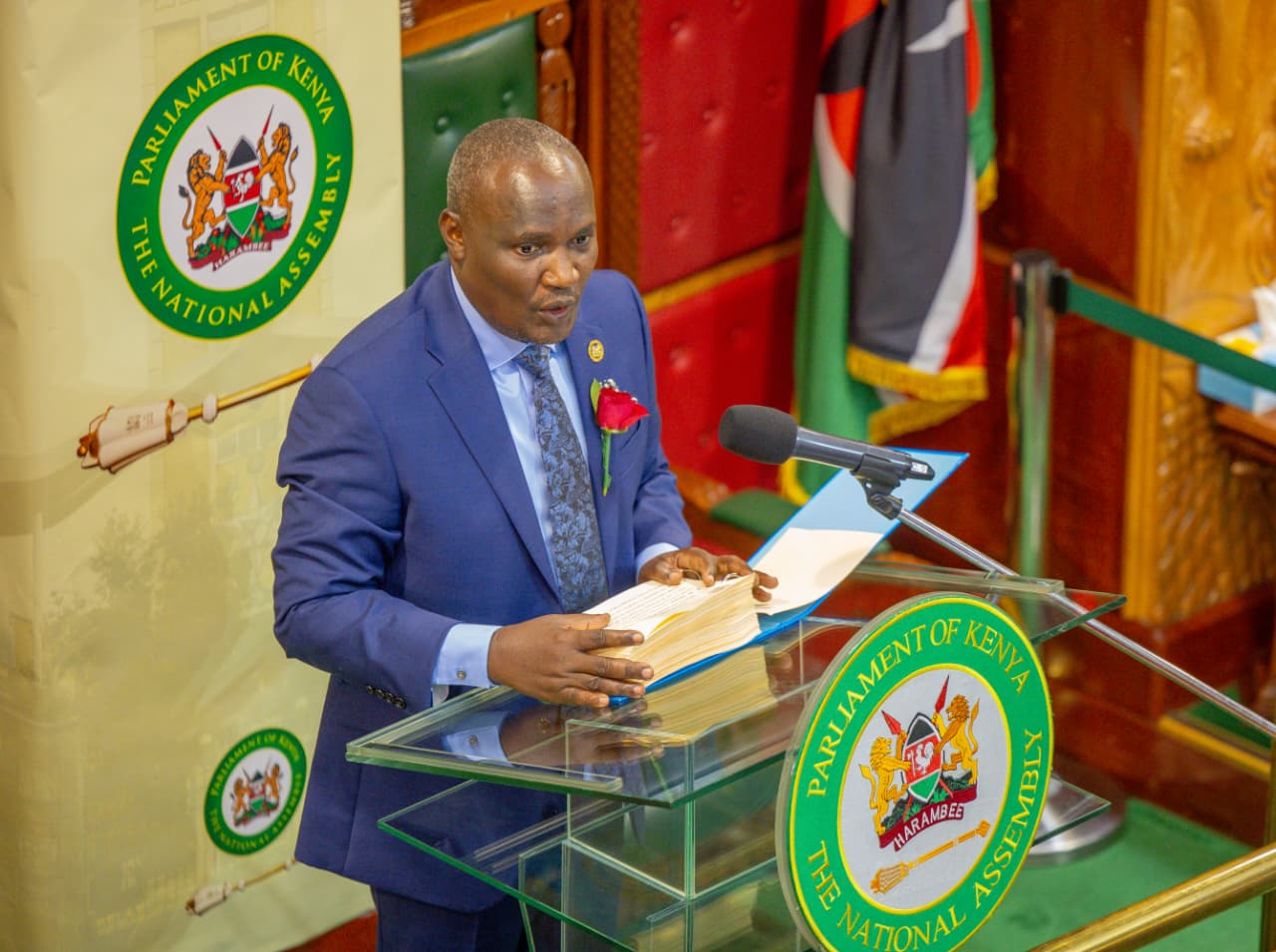

NAIROBI, Kenya, Jun 11 — Education has taken the lions share in the Sh4.3 trillion 2026/27 national budget unveiled by Treasury Cabinet Secretary John Mbadi.
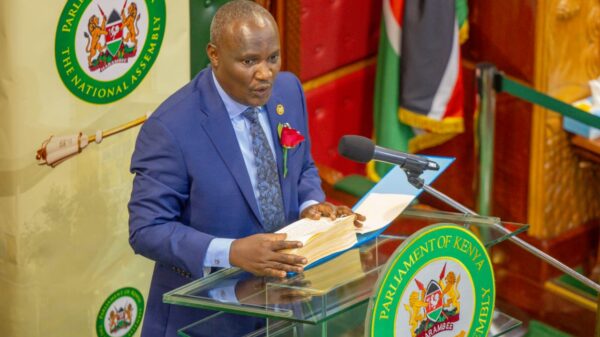
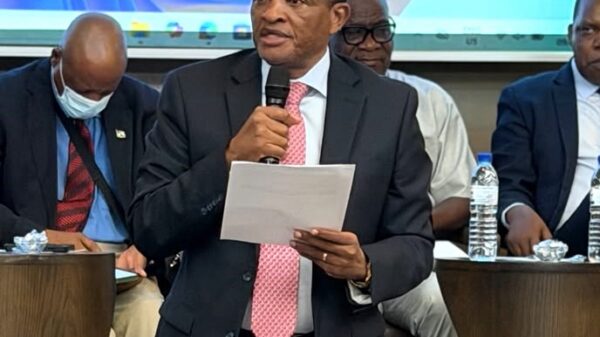
Mbadi while reading the budget estimates in parliament Thursday asserted that the allocations underscores the government’s strategy of investing heavily in human capital as the foundation for long-term economic transformation.
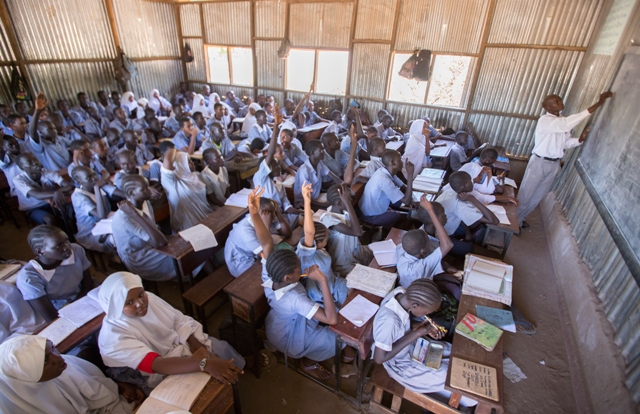
The sector received a massive Sh784.5 billion allocation, the largest share of government spending and nearly a fifth of the entire budget.
“Kenya’s future depends on developing strong human capital,” said Mbadi.
“This comprehensive allocation safeguards service delivery and expands opportunities across the learning continuum.”
According to the budget statement, the Teachers Service Commission (TSC) received the lion’s share of education funding at Sh424.3 billion, accounting for more than half of the sector’s total allocation.
Higher education institutions were allocated Sh163.9 billion to support universities, student financing and research programmes, while basic education received Sh136.6 billion to facilitate learning in primary and secondary schools.
The government also earmarked Sh58.5 billion for Technical and Vocational Education and Training (TVET), reflecting growing emphasis on skills development and job creation through vocational training.
National security emerged as the second-largest beneficiary of government spending with a combined allocation of Sh567.4 billion.
The Defence Ministry received Sh252.1 billion, making it the single-largest allocation outside the education sector. The National Police Service was allocated Sh144.7 billion, while the National Intelligence Service received Sh64.1 billion.
The State Department for Internal Security and National Administration was allocated Sh63.9 billion, while prison services received Sh42.6 billion.
Mbadi noted that security spending remains critical to sustaining economic growth and investor confidence.
Infrastructure remained a major priority, with the roads sector receiving Sh220.4 billion to improve connectivity and support trade.
Road maintenance received the largest share at Sh118.1 billion, signaling a shift towards preserving existing infrastructure assets. Rehabilitation of roads was allocated Sh58 billion, while construction of roads and bridges received Sh44.3 billion.
The Treasury argued that improved infrastructure lowers the cost of doing business, facilitates movement of goods and services, and opens up new economic opportunities.
The health sector also secured significant funding, although allocations were spread across various institutions rather than a consolidated sector vote.
Referral hospitals received Sh45.3 billion, the largest allocation within the health sector, while the Kenya Medical Supplies Agency (KEMSA) was allocated Sh20.9 billion to strengthen the supply of medicines and medical commodities.
Kenya Medical Training Colleges received Sh10.9 billion, while Sh9.3 billion was set aside to support medical interns.
The allocations come amid ongoing reforms in the health sector and efforts to improve healthcare access under Universal Health Coverage.
The Environment, Water and Natural Resources sector received Sh124.8 billion, reflecting the government’s growing focus on climate resilience and sustainable development.
Forest conservation programmes were allocated Sh13.4 billion while wildlife conservation and security received Sh13.2 billion.
A further Sh8.9 billion was earmarked for the Kenya Financing Locally Led Climate Action Project, aimed at supporting community-driven climate adaptation initiatives.
The budget also prioritizes investments in water access, sanitation and irrigation to support agricultural productivity and livelihoods.
While still attracting substantial resources, the Environment, Water and Natural Resources sector emerged as the smallest recipient among the five largest spending priorities identified in the budget.