

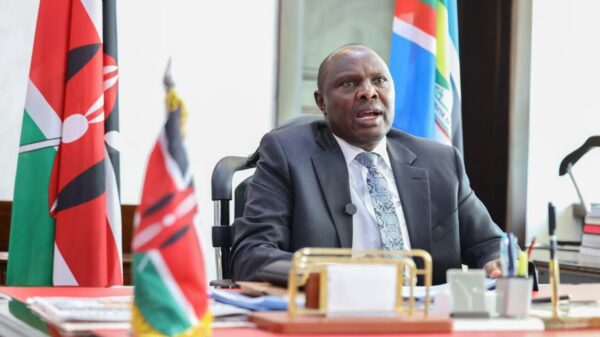






















NAIROBI, Kenya, Jan 26- Agriculture Cabinet Secretary Mutahi Kagwe has given maize traders and farmers hoarding grain a 30-day ultimatum to release stocks to the market, warning that the government will open the door to duty-free maize imports if supplies remain constrained.
Speaking in Sagana on Monday, Kagwe said the government’s priority is to buy maize from local farmers to replenish the Strategic Grain Reserve, but persistent hoarding and speculative behaviour could force Kenya to import maize to stabilise flour prices.
“We are buying maize at Sh4,000 per bag and we have Sh1.7 billion to pay farmers,” Kagwe said.
“Our first option is not to import. Our first option is to buy from our farmers. But as a country, we must stock our reserves and be ready for emergencies.”
The government is targeting the immediate purchase of 1.7 million bags of maize, with a longer-term goal of building a reserve of four million bags. However, only about 186,000 bags have been delivered so far, a shortfall Kagwe blamed on hoarding as early drought conditions begin to emerge in parts of the country.
He warned that if sufficient maize is not released to the National Cereals and Produce Board (NCPB) within a month, the government will allow duty-free imports, including from non-COMESA markets, to cushion consumers from rising maize flour prices.
To reduce post-harvest losses and quality concerns, Kagwe said the ministry is rationalising the use of more than 60 mobile and immobile maize dryers across the country. Dryers will be redeployed to high-production zones, cooperatives, self-help groups and large-scale farmers, while those stationed in low-yield areas will be withdrawn.
“When we talk about aflatoxin, we are talking about a public health issue,” Kagwe said, adding that placing dryers in areas without sufficient maize amounts to misuse of public resources.
Farmers will be allowed to dry maize at NCPB facilities at minimal maintenance cost, while millers will be permitted to lease dryers to reduce rejection of local maize and curb reliance on imports from neighbouring countries.
Kagwe said the fertiliser subsidy programme is already yielding results, noting that maize production doubled after the distribution of 9.1 million bags of fertiliser during the 2025 season, supported by favourable weather in the North Rift, South Rift, Eastern and Central regions.
To address last-mile challenges, county governments will now register agro-dealers, enabling farmers to access subsidised fertiliser closer to their farms. The ministry is working with the National Treasury, the World Bank and commercial banks to introduce an instant payment system that will ensure agro-dealers are paid immediately once vouchers are redeemed.
“This will reduce transport costs for farmers and ensure fertiliser is available at the village level,” Kagwe said, urging farmers to collect inputs early, noting that adequate stocks have already been positioned nationwide.
On rice, Kagwe dismissed claims of a national supply crisis, saying delays in collecting rice in specific regions should not be confused with overall availability. Kenya currently produces about 20 percent of its rice needs, importing the remaining 80 percent.
“There is confusion between a logistical issue in Mwea and a national rice shortage,” he said, while encouraging farmers and investors to expand domestic rice production. He added that NCPB has the capacity to take in and mill more rice locally.
Kagwe also said Kenya produces only about 10 percent of its wheat requirements, but reiterated that local wheat must be taken up before any imports are allowed, a policy he said will also apply to rice.
The CS said the ministry, working with county governments, is conducting a nationwide soil-mapping exercise to guide the use of crop- and soil-specific fertilisers, aimed at improving yields and farmer incomes.
He warned the NCPB to urgently address system inefficiencies that are slowing grain intake, saying delays and technical failures will not be tolerated.
“Food security is not optional,” Kagwe said. “It is a national duty.”