



























MAR 13 – The US has authorised countries to buy sanctioned Russian oil and petroleum that is currently loaded on vessels at sea in an attempt to curb the economic impact of the US-Israel war with Iran.
US Treasury Secretary Scott Bessent said it was a temporary measure to “promote stability in global energy markets” during the war. The authorisation will last until 11 April.
“This narrowly tailored, short-term measure applies only to oil already in transit and will not provide significant financial benefit to the Russian government,” Bessent said.
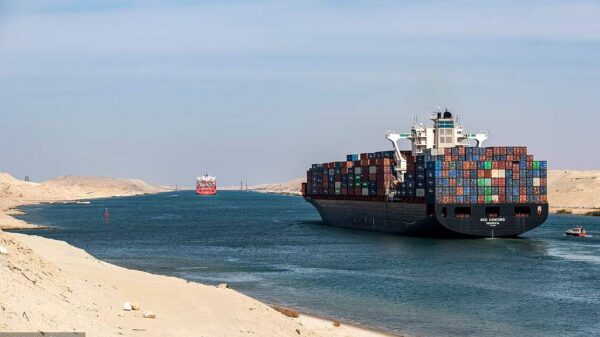
Attacks on ships and energy infrastructure in the Gulf and the effective closure of the vital Strait of Hormuz waterway have rocked global energy markets.
Oil prices climbed back above $100 a barrel on Thursday and stock markets fell after three more cargo vessels were hit in the Gulf and Iran’s new supreme leader vowed to keep blocking the strait.
Around a fifth of the world’s oil usually passes the narrow waterway.
Oil prices were broadly steady in Friday morning trading in Asia, with Brent crude 0.2% lower at $100.29 (£75.09) a barrel, while US-traded oil was down by 0.3% at $95.41.
The jump in energy prices this week has led to action by authorities to tackle the issue.
On Wednesday, the International Energy Agency (IEA) said it would release a record 400 million barrels of oil.
Governments in Asia, which are major buyers of oil from the Gulf, have announced a slew of measures in recent days.
The Philippines, for example, gets around 95% of its crude oil from the Middle East. The country’s president told public workers to switch to a four-day working week to save fuel.
Meanwhile, Japan, South Korea and Thailand have announced price caps on petrol prices.
“The temporary increase in oil prices is a short-term and temporary disruption that will result in a massive benefit to our nation and economy in the long-term,” Bessent said.
Earlier, he said the US government would start escorting vessels through the Strait of Hormuz “as soon as it is militarily possible”.
The possible need for a military escort “was always in our planning”, he told Sky News.
Pressed on whether that could start in the coming days, Bessent said “as soon as it is possible to ensure safe passage we will do it”.