























By Irene Kinyanjui
NAIROBI, Kenya, Feb 24 – For years, Kenya’s real estate sector has been sold as a story of endless growth. Buy land. Wait. Build. Sell. Repeat. But anyone paying close attention knows the market has changed. Today, success in property is less about speculation and more about structure. Less about hype and more about discipline. Kenya’s real estate market is maturing, and that is a good thing. There was a time when land appreciation alone could justify investing in the said property. Urban expansion, infrastructure growth, and diaspora remittances fueled rapid gains. Now, however, investors are asking harder questions: what is the absorption rate, who is the target tenant, what are the long-term operating costs and how resilient is the asset in a tightening credit market?
Institutional participation and listed real estate investment trusts have introduced higher standards of governance and reporting. Property is increasingly being treated as a structured financial asset, not a side hustle. That evolution is healthy. Property Management Is no Longer an afterthought. Rent collection alone is not management. Tenant retention strategy, preventive maintenance, regulatory compliance, and financial transparency are what protect asset value. Unmanaged property quietly destroys wealth. Professional management preserves it.
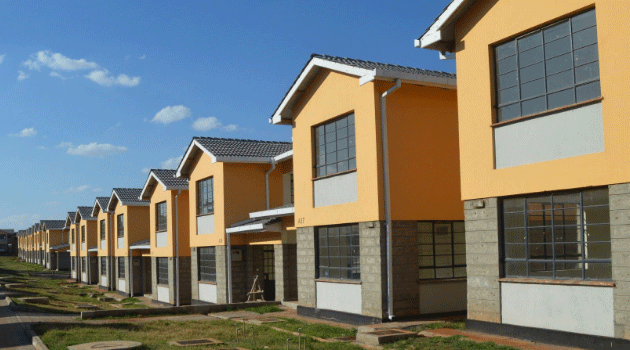
Kenya’s skyline continues to rise, not just in Nairobi but in emerging cities across the country. But cranes do not guarantee demand. Too many projects are driven by optimism rather than feasibility studies. Market research, financial modelling, and phased development strategies are no longer optional. They are survival tools. In an era of cautious lending, valuation accuracy matters more than ever. Overstated values increase systemic risk. Understated values restrict capital access. A maturing market demands professional, data-driven assessment, not guesswork.
Green building standards are increasingly tied to operational efficiency and long-term asset value. Lower energy and water costs improve net income. Stronger net income strengthens valuation. Sustainability is no longer a marketing badge; it is becoming an investment discipline.
Kenyans abroad remain a major force in the property market. Yet distance creates vulnerability. Transparency, structured reporting, and governance are essential if diaspora capital is to be fully protected and mobilized. Kenya stands at a turning point. We can either cling to the era of speculative real estate, where projects are launched on excitement and assumptions, or we can embrace a more disciplined future built on data, governance, sustainability, and professional execution.
Developers must invest in feasibility before foundations. Landlords must prioritize structured management over informal oversight. Financial institutions must continue to demand credible valuations. Regulators must enforce standards that protect investors. Diaspora investors must insist on transparency and documented accountability. The next decade of Kenya’s property market will not be defined by how fast we build, but by how well we manage what we build. If we choose discipline over speculation, structure over shortcuts, and long-term value over short-term gain, Kenya’s real estate sector will not merely grow but it will endure. And endurance, not hype, is the true mark of a mature market.
The writer is the Manager, Marketing & Business Development – LASER Property Services; a real estate company that provides professional services in Project & Development Management, Property Valuations, Property Management, and Property Consultancy Services.