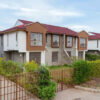























NAIROBI, Kenya, April 9 – On a hot Wednesday morning, Chris Ochieng’, a civil and structural engineer, supervises work on a Sh20 billion housing project in Nairobi.
The project, comprising mid- and low-cost units dubbed InCity Suites and Starehe Point, is one of four projects that real estate developer Gulf Cap has initiated to bridge the housing deficit in Kenya.
According to the National Housing Corporation (NHC), against an annual demand of 250,000 units, only about 50,000 units are constructed every year, creating a housing deficit of 2 million units.
“Most Kenyans would want to own a place they can call home, however with the cost of construction constantly rising, it is becoming very difficult for people to achieve this dream,” said Chris Ochieng’, CEO of Gulf Cap Real Estate

Led by their chairman, Suleiman Shahbal, the firm has adopted a number of strategies to make houses cheaper, including creativity in design, funding the developments, and procuring materials.
They also apply technology, notably tunnel and aluminum formwork, that is fairly new in Africa but is extensively used in the Middle East, Europe, and the Americas to bring down the cost of construction.
While the upfront cost of these technologies is high, they help to reduce wastage, reduce construction duration, and ensure the quality of the built form, enabling them to transfer the cost benefit to the consumer.
They also focus on efficiencies in the design, adopting strategies such as the use of natural lighting and water recycling, in order to bring down the cost of power and water.
Separating waste at source also enables them to reduce the cost of waste collection and therefore, the fees residents pay for access to this service, as well as the amenities in the establishment.
“We form structured academies around our amenities and equip them with skilled trainers in sports, arts, education and religion, to keep them from being under utilised as is the case in many estates,” noted Ochieng.
They also enforce development control guidelines and use materials that can safeguard against devaluation of the property over time, as has been the case in many estates in parts of Eastlands, Nairobi.
In addition, they work closely with financial institutions to bridge access to credit barriers that have kept many people, particularly those operating in the informal economy, from owning homes.
“Considering the money people spend on rent, homeownership should not be difficult, yet a majority of Kenyans are unable to own homes due to challenges in accessing affordable capital,” said Ochieng’.
For their efforts, the firm has received several awards, including the Mombasa Business Awards 2024, the Africa Gold Star Awards ITDP 2022, and the AUFH Awards 2022, among others.
They have transitioned to being one of the largest affordable housing developers in Kenya based on their portfolio size, with some of their notable projects including Buxton in Mombasa, the LV Marina mixed-use development in Kisumu, Starehe Point, and InCity Suites in Nairobi.