



I mourn Raila Amollo Odinga as a true national leader and hero—but I will also say what many are whispering: he did not manage his succession well. The question now sits before the country and the movement he built—who can fit in his shoes? They are too large, too big for any of the ODM bigwigs to slip into by default.
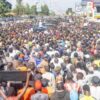
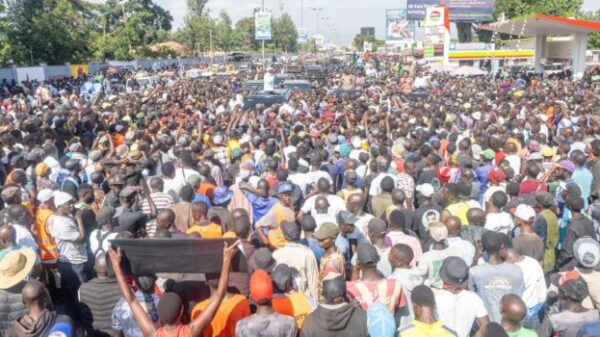
Raila was singular. He is the only politician of our era who could fill Uhuru Park and Kamukunji grounds without a shilling of mobilisation. All he needed to do was announce that he would be there. In the opposition, he never struggled to address a rally in any corner of Kenya. He needed no introduction in Eldoret, Mombasa, Kisii, Garissa, Kisumu or Nairobi—people knew the voice, trusted the message and showed up for the man. The media understood this instinctively. If Raila called a press conference at any hour, cameras from every newsroom rolled up and waited—as long as it took—because whenever he showed up and opened his mouth, it went straight to page one. That was Raila: news by presence, agenda by sentence.
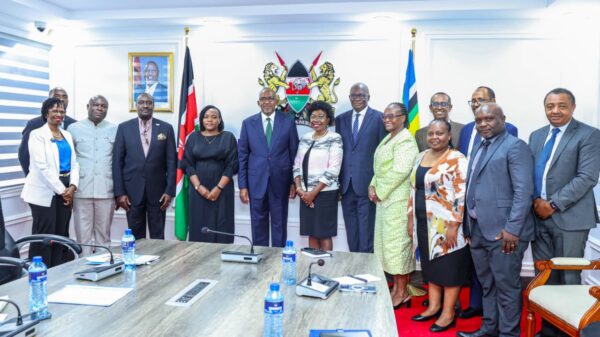
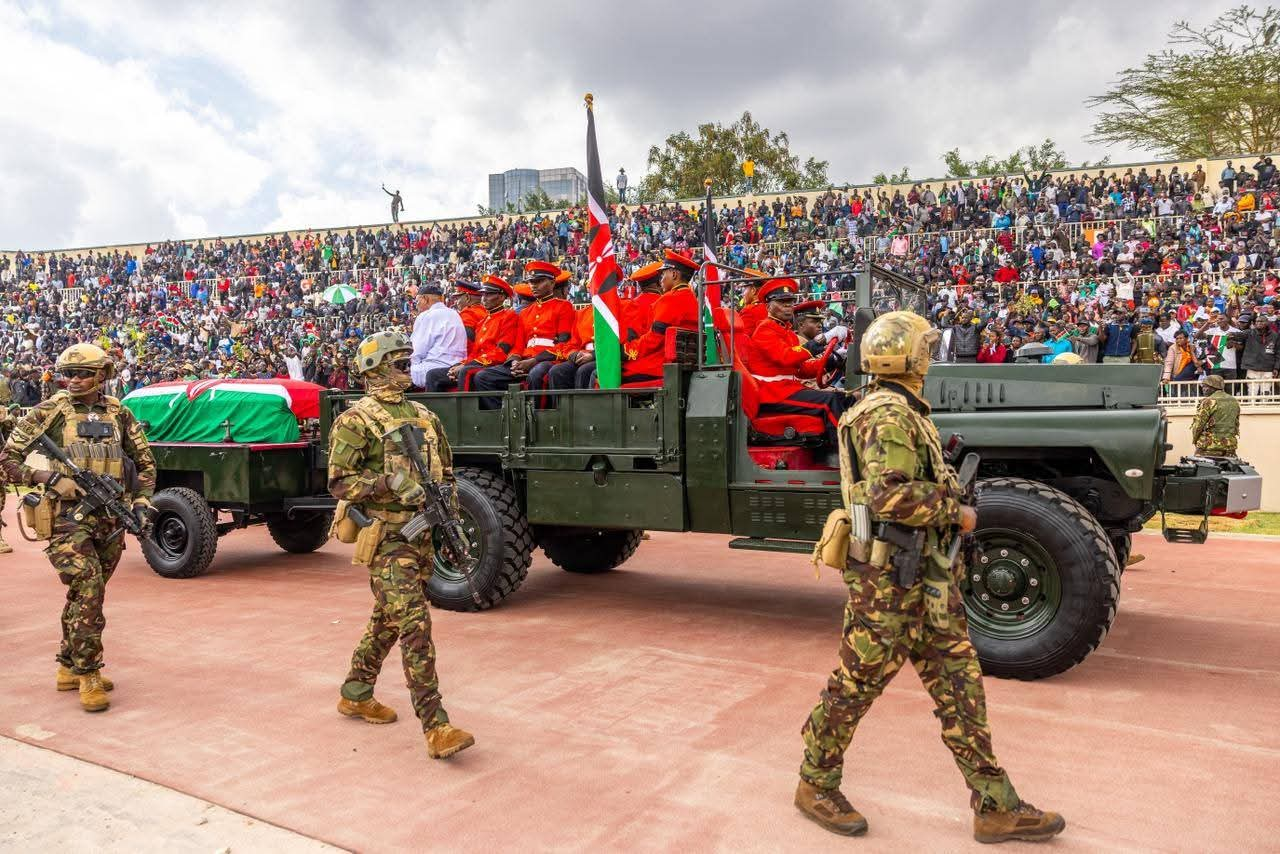
Events in recent days have sharpened the succession question. On the day his body was repatriated from India, ODM top guns convened that morning before heading to JKIA to receive his remains, which arrived on a Kenya Airways flight cosigned RAO001 in his honour. At that early meeting, it was announced that his elder brother, Dr Oburu Oginga, would serve as interim ODM party leader. Oburu is a respected elder. But can he pull the moves the Enigma pulled? Can he roar like Odinga did? Only time will tell.
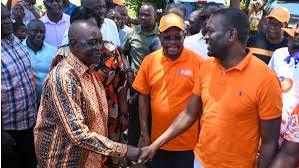
Then, at Odinga’s Opoda home in Bondo, Opiyo Wandayi—now serving as Energy Cabinet Secretary in the broad-based government—declared that Nyanza had been left “in government” by Raila and would remain there to the end. That, too, is a wait-and-see moment. Remember: Raila’s handshake with President Ruto led to the appointment of ODM leaders into the Cabinet. Raila Odinga, a towering figure in Kenya’s political history, died earlier this week, triggering a wave of grief and tributes from across the country and beyond. Yet even before his burial, there are murmurs of discontent and visible divisions within the party—fault lines likely to play out in the open once the soil settles.
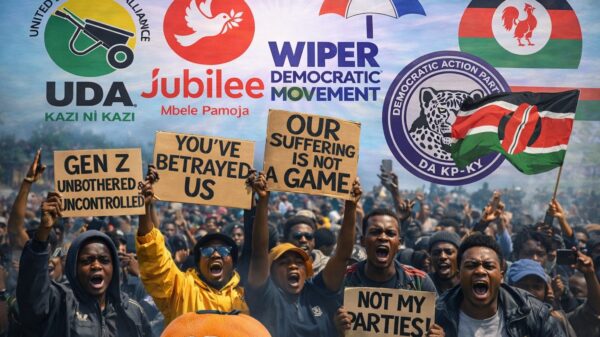
This is the structural problem with our politics: parties become personified. KANU, in power for 24 years, never truly recovered after Daniel Arap Moi left office in 2002 and later died in 2020. Mwai Kibaki’s Party of National Unity (PNU) was never the same after he exited in 2013 and passed away in 2022. Uhuru Kenyatta’s Jubilee is struggling barely three years after he left office, having handed over to his deputy William Ruto, who defeated Uhuru’s preferred candidate—Raila Odinga. When parties orbit a single star, the night after that star sets is long and disorienting.
A movement centred on one figure struggles to reproduce itself. ODM has seasoned leaders and fierce organisers, yes, but none with Raila’s effortless, countrywide influence. No one else can, on name alone, summon a crowd that looks like Kenya. No one else can turn a field into a forum and a forum into a movement by simply arriving. That is the succession gap, and we should admit it plainly.
This is not a dismissal of those who served beside him; it is a reminder of what succession requires and what was missing. A visible, empowered No. 2 over years—not months. A phased handover of roles and symbols. A bench where youth and women were groomed early and elevated decisively. Firm, transparent party rules that bind personalities to institutions. Without these, even the strongest brand risks becoming a memory instead of a machine.
What now? Grief is not an excuse for drift. To honour Raila, ODM must move from personality to institution—fast. Convene an open succession congress after the mourning period; let the country see a contest of ideas, not merely names. Codify the values that made Raila compelling—democracy, fairness, courage, national unity—and make them non-negotiable party law. Reform primaries so tickets are earned, not arranged. Pair veterans with a next generation that reflects today’s Kenya in age, gender and region. Invest in organisers, ward by ward, so that crowds can be summoned by ideals, not only by a single figure.
We must also accept that no one will be “the next Raila.” The goal is not to clone a legend; it is to build a leadership culture that does not collapse when a legend departs. Raila’s genius was to make ordinary Kenyans feel seen and heard; his succession must institutionalise that feeling so it survives the loss of the man.
For me, the memory that lingers is the simplicity with which he carried greatness. He asked for no elaborate introductions, demanded no orchestrated applause, and yet he commanded both. The horizon still beckons. The work still calls. If we want to prove his values can outlive his voice, we must do the work he left unfinished: build an organisation worthy of the crowds he inspired—not by finding someone who fits his shoes, but by stitching a path wide enough for many feet to walk.
Rest well, Baba; you gave your best.