





















NAIROBI, Kenya, Mar 22 – African governments must establish robust mechanisms to measure the impact of agricultural policies on women to fully capitalize on the continent’s investment in agriculture, according to a coalition of civil society organizations advocating for resilient and sustainable food systems.
Led by Oxfam, the African Women’s Development and Communications Network (FEMNET), SDG2 Advocacy Hub, the African Kilimanjaro Women Farmers Forum (AKIWOFF), and ActionAid, the group emphasizes that despite women’s significant contributions to food production, they continue to face structural barriers, including limited land ownership rights, restricted access to credit, and exclusion from key decision-making processes.
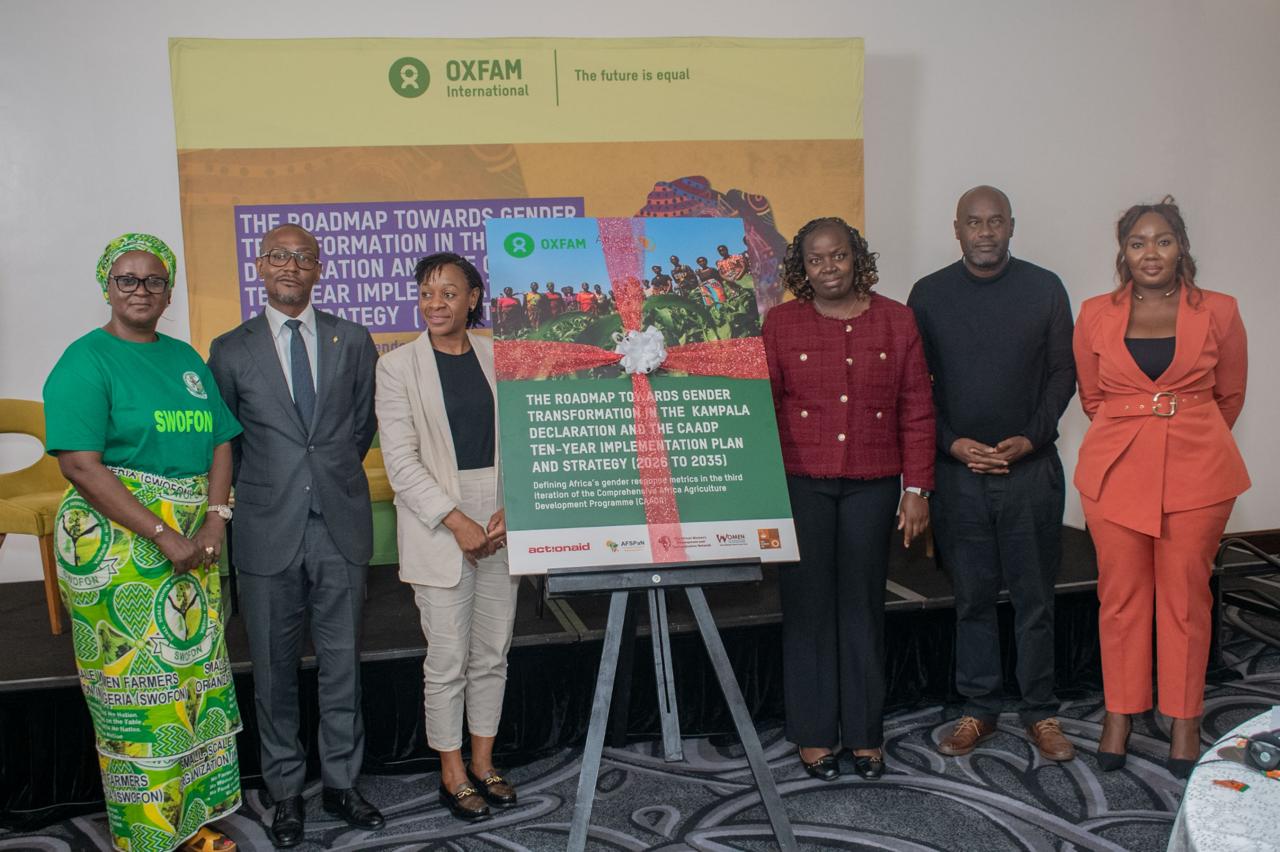
To address these challenges, the organizations today launched “The Roadmap Towards Gender-Transformation in Africa’s New Agri-Food System Strategy (2026-2035)”—a framework that proposes gender-sensitive, measurable indicators and policy interventions.
The document calls for policies that ensure women’s participation in decision-making, access to productive resources, and recognition of cultural and intersectional challenges affecting women in agriculture.
“It’s shameful that progress remains so slow in addressing the discrimination women face in Africa’s agri-food system, even as policies have long acknowledged these inequalities. This roadmap provides a clear, actionable plan to put smallholder women farmers and other marginalized groups at the heart of Africa’s agricultural transformation,” said Fati N’Zi-Hassane, Director of Oxfam in Africa.
The framework aims to guide the results roadmap for the African Union’s Comprehensive Africa Agriculture Development Programme (CAADP) 2026-2035, which was adopted by AU Member States in January 2025.
It advocates for integrating gender-focused indicators that allow policymakers to assess the impact of their policies on women’s education, technology access, cultural barriers, decision-making roles, and agricultural participation.
It also underscores the need for CAADP to align with Africa’s broader gender equality vision by strengthening its ties to key frameworks such as the Maputo Protocol, the Solemn Declaration on Gender Equality in Africa, and the AU Strategy on Gender Equality and Women’s Empowerment.
“Sustainable agricultural growth isn’t just about increasing yields—it’s about empowering communities, building resilience, and ensuring no one is left behind. The CAADP framework offers a transformative path that connects vision with action, guiding Africa toward food security and prosperity,” said Susan Otieno, Executive Director of ActionAid Kenya.
Africa is facing a growing food security crisis, driven by low agricultural investment, climate shocks (droughts and floods), conflicts, and unfavorable land policies that disproportionately disadvantage women smallholder farmers.
In 2024 alone, 163 million people across Africa faced acute food insecurity.
Yet, empowering women farmers could be a game-changer.
The Food and Agriculture Organization (FAO) estimates that if women in the Global South had equal access to productive resources as men, they could increase their agricultural yields by 20-30%, potentially boosting overall agricultural output in the Global South by 2.5-4%.
However, persistent barriers—such as flawed financing models and restrictive land policies—continue to limit their potential.
“As Africa doubles down on agricultural development through the new AU strategy, governments must fully harness the potential of all citizens. Ensuring the inclusion of women in the agricultural value chain is not just about gender equality—it’s a strategic move that strengthens the continent’s chances of achieving food security,” said Memory Kachambwa, Executive Director of FEMNET.
As Africa moves forward with its new agricultural strategy, civil society groups are calling on governments to translate commitments into concrete action—ensuring that policies not only acknowledge but actively address gender disparities in the agricultural sector.
By investing in gender-responsive agricultural policies, Africa can unlock the full potential of women farmers, paving the way for a food-secure and economically empowered continent.