




















FEB 18 – Average wages are continuing to outpace inflation with pay packets rising for both the public and private sector workers, official figures show.
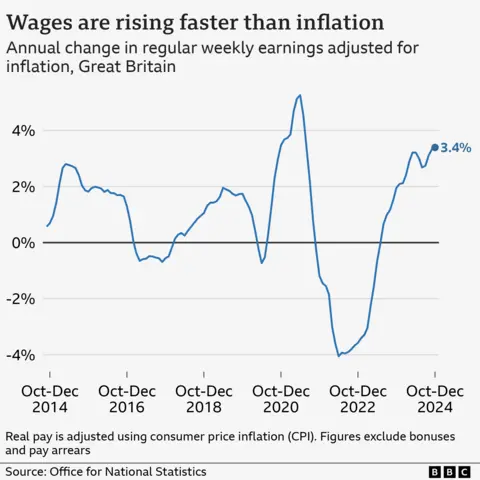
Pay, after taking into account the pace of price rises, rose 3.4% between October and December compared with the same period a year ago, according to the Office for National Statistics (ONS).
The UK’s unemployment rate remained unchanged at 4.4%, although the ONS has advised that its jobs figures should be treated with caution because of low response rates to its employment survey.
The figures follow warnings from businesses that they are planning to cut workforces and raise prices ahead of higher employment costs in April.
Employers have raised concerns that paying more in National Insurance, along with minimum wages rising and business rates relief being reduced, could hit pay rises going forward and also affect investment.
Without taking account of inflation, the ONS said annual pay growth, excluding bonuses, was 5.9% from October to December. which was up from the previous figure of 5.6%.
Earnings growth for the private sector was 6.2%, while for the public sector it was 4.7%.
The UK’s inflation rate, which measures the rate consumer prices rise at over time, was 2.5% in the year to December, but is predicted to rise again as a result of higher energy and water bills.
Yael Selfin, chief economist at KPMG UK, said she expected a “steady downward trend” in pay growth in the coming months.
Some economists suggested that a small rise private sector wages, which are closely watched by the Bank of England when making decisions on interest rates, would not result in policymakers changing their approach to “gradual” reductions in borrowing costs.
Earlier this month, the Bank cut interest rates to 4.5% from 4.75%.
Rob Wood, of Pantheon Macroeconomics, said rate setters would remain “cautious” on rate cuts following the recent wage growth figures.
Ms Selfin said the latest employment figures indicated that hiring intentions by businesses had “weakened significantly”.
She said the hospitality and retail sectors were expected to be “disproportionately affected” by the incoming cost hikes due to them employing a higher proportion of lower-wage workers.
“There is a limit to how much additional cost business can absorb without employment and investment opportunities being damaged,” added Jane Gratton, deputy director Public Policy at the British Chambers of Commerce said.
“The government must do all it can to minimise costs for business and ensure they have access to a skilled and healthy workforce.”
From April, employers will have to pay National Insurance at 15% on salaries above £5,000, instead of 13.8% on salaries above £9,100 at the moment.
The Treasury has repeatedly said its Budget measures will deliver stability businesses need to invest and grow, but there are concerns that firms cutting back will impact UK economic growth, which is the government’s main priority in its effort to improve living standards.
A recent survey of UK employers suggested companies could raise their prices to cover the increased costs.
If firms do raise prices, there is a risk it could feed through to further increases in inflation in the coming months, and place more pressure on household budgets.
Total estimated vacancies were down by 110,000 (11.8%) from a year ago, according to the ONS, but remain above pre-Covid levels. It also estimated that the number of UK workers on payrolls rose by 21,000 during January to 30.4 million.
Chris Eldridge, chief executive of UK, Ireland and North America at the recruitment firm Robert Walters, said it was case of “wait and see what happens” in the jobs market in the early months of 2025.
“The first big test is going to be at the end of the quarter [in March] when we see the National Insurance changes kicking in and also we’ve got this backdrop of the Employment Rights bill where we’re still waiting to see what’s happened there,” he added.
Sign up for our Politics Essential newsletter to read top political analysis, gain insight from across the UK and stay up to speed with the big moments.
It’ll be delivered straight to your inbox every weekday.
By BBC