










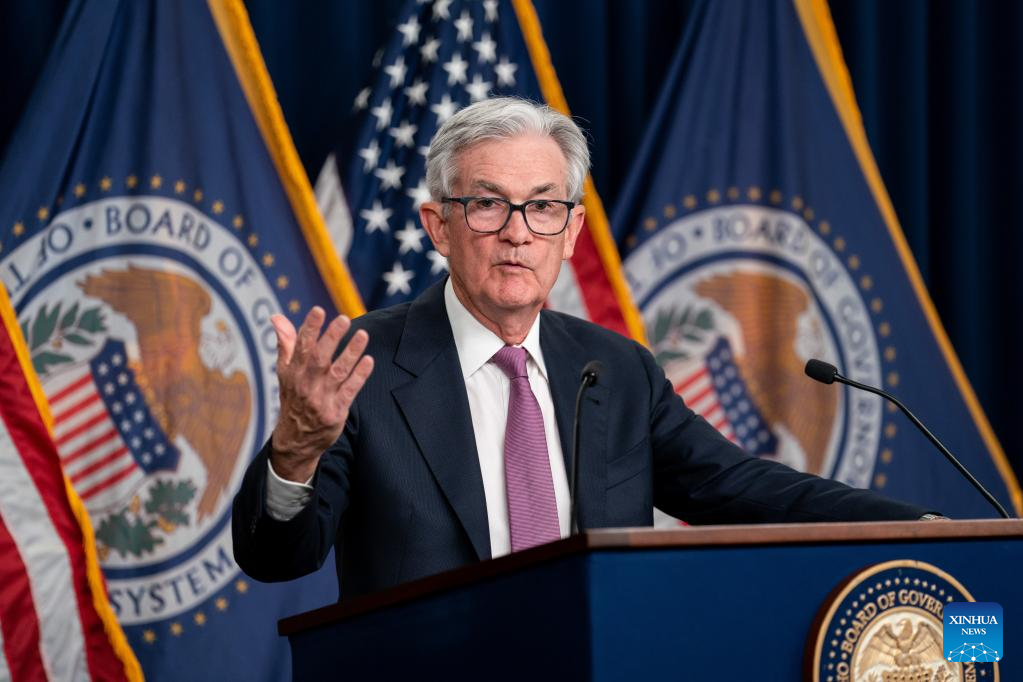

MAR 19 – The US central bank has voted to hold interest rates steady again, as a spike in oil prices since the start of the US-Israel war with Iran raises economic uncertainty and threatens to drive up inflation.
The decision, which was widely expected, left the Federal Reserve’s key interest rate in the range of 3.5%-3.75%, where it has stood since December.
Despite pressure from US President Donald Trump to slash borrowing costs, policymakers have been moving cautiously, as they face a tricky combination of rising prices and mixed signals from the job market.
Analysts say the war has made them even less likely to cut, with markets now pushing back the chance of a rate cut happening into next year.
Forecasts released after the meeting showed a majority of Fed board members still expect to cut interest rates at least once this year, with five now expecting rates could fall below 3%.
Federal Reserve chairman Jerome Powell said future cuts would depend on whether inflation continues to fall, noting that it was “too soon” to say how the Iran war would affect that outlook.
“We just don’t know what the effects of this will be and really no one does,” he said.
The Fed typically lowers borrowing costs when it sees unemployment rising and wants to boost the economy. It raises them when it is worried about inflation, hoping higher borrowing costs will ease spending and slow down price rises.
But an economic picture muddied in part by abrupt policy changes, such as tariffs, has made it difficult for policymakers to agree on which problem to prioritise.
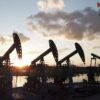
The war in Iran is the latest, triggering a spike in oil prices that has already driven up gas prices in the US to the highest since 2024.
While that is likely to drive up prices more widely, at least temporarily, it also risks slowing the economy, as households have less money to spend on other things.
Fed board members now expect inflation to end the year at 2.7%, up from the 2.4% they were predicting in December.
Powell said that increase was due to the “oil shock” and concerns that the US has not yet seen the last of price rises triggered by the tariffs Trump put in place last year.
Meanwhile, board members on average are forecasting economic growth of 2.4%, up slightly from 2.3% in December, while predicting the unemployment rate will hold steady at 4.4%, as previously predicted.
Powell said the Trump administration’s crackdown on immigration, which has slowed population growth and reduced the size of the workforce, meant companies did not need to hire as many people to keep unemployment down.
But he acknowledged concerns, saying that it was “not a really comfortable balance”.
“That’s balance but it does have a feel of downside risk,” he said.
Powell said the next six weeks would be critical to understanding how the world’s largest economy evolves.
His term as chair is due to end in May. But Powell said he would stay on as chair until Trump’s choice to replace him is confirmed.
Senators have threatened to block Kevin Warsh’s confirmation until a Department of Justice investigation into cost overruns at a Fed renovation is resolved.
Powell said he would remain on the board at least until the investigation concludes, even if he has stepped down as chair.
He said he had not yet decided whether he would remain on after, saying he would make that decision based on what he thought was “best for the institution” at that point.
By BBC