























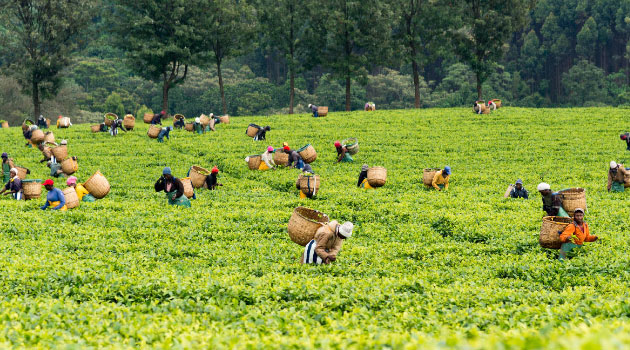

NAIROBI, Kenya, Mar 2 – Kenya’s tea sector faces heightened uncertainty as the escalating conflict in the Middle East threatens supply chains to key Gulf markets.
Over the weekend, US-Israeli strikes inside Iran, which killed Supreme Leader Ayatollah Ali Khamenei, have prompted a series of military and diplomatic responses, including warnings over commercial maritime traffic and partial closures of regional airspace.
Airspace restrictions across Iran, Iraq, and parts of the Gulf have disrupted cargo flights and shipping schedules, raising concerns among exporters reliant on timely delivery for perishable goods such as tea and coffee.
While some air and sea routes remain technically open, airlines and freight operators have suspended services, citing safety risks and insurance constraints.
Tea at Risk
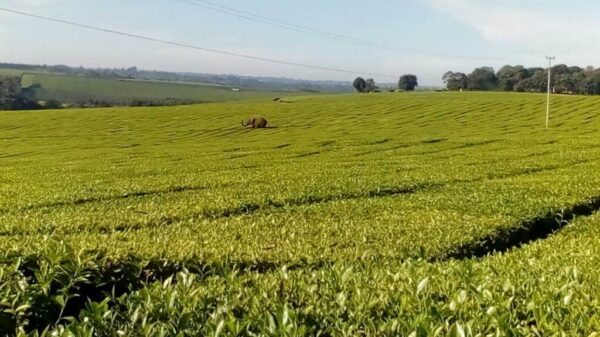
Tea, Kenya’s top agricultural export, is particularly vulnerable to the current crisis. In 2024, Kenya exported approximately 13 million kilograms of tea to Iran, valued at Sh4.26 billion, according to the Tea Board of Kenya.
Coffee, tea, and spices accounted for over 90 percent of Kenya’s total exports to Tehran.
Data from the United Nations COMTRADE database, as reported via Trading Economics, shows Kenya’s total exports to Iran in 2024 were about $50.8 million, with coffee, tea, and spices contributing roughly $45.23 million.
“Iran ranks among the top ten importers of Kenyan tea. In 2024, it imported approximately 13 million kilograms valued at KSh 4.26 billion,” said the Kenya Tea Board earlier.
“Pakistan remained the leading destination for Kenya’s tea exports, accounting for 34.7 per cent of total export volume, while Egypt, the United Kingdom, the United Arab Emirates and Iran were among the other key markets,” read a 2024 Kenya National Bureau of Statistics report.
While Pakistan continues to absorb the largest share of Kenyan tea, Gulf states and Iran form a crucial secondary market that helps balance supply, especially in years of robust production.
Logistics and Cost Pressures Mount
The conflict has already disrupted shipping through the Strait of Hormuz, a vital shipping artery that handles roughly 20 percent of global oil and energy exports as well as regional air corridors.
Airlines and cargo operators have rerouted flights or suspended services, and marine insurers have withdrawn war-risk coverage for vessels transiting the Persian Gulf.
These disruptions translate into higher freight rates, longer transit times, and elevated insurance premiums.
For Kenyan tea exporters operating on thin margins, such cost pressures could undermine competitiveness against producers in India and Sri Lanka.
Kenya’s tea reached 96 international markets in 2024, up from 92 the previous year, reflecting a diversification strategy that provides some buffer.
Nevertheless, timely delivery to Gulf markets remains essential, particularly for premium teas that are sensitive to delays and quality concerns.
Indirect Impact via Fuel Costs
The conflict also carries indirect risks for Kenya through energy supply channels.
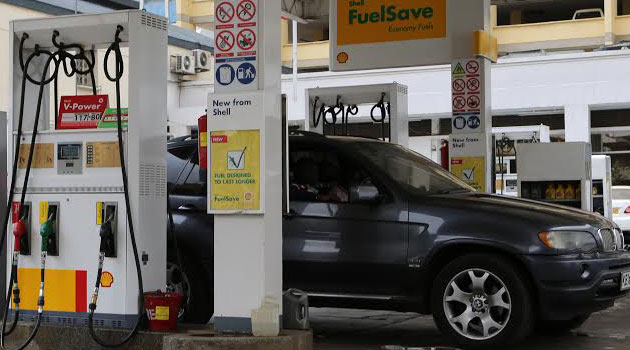
The country imports most of its refined petroleum products from Gulf producers such as Saudi Arabia, the United Arab Emirates, Iraq, and Kuwait.
Much of this fuel transits the Strait of Hormuz or passes through conflict-affected airspace before reaching the Port of Mombasa.
Disruptions could potentially drive up freight costs and global oil prices, which in turn increase domestic fuel and transport cost factors that feed directly into tea production, factory operations, and distribution logistics.
Already, global oil prices have risen after at least three ships were attacked near the Strait of Hormuz, as Iran continues to launch strikes across the Middle East in response to ongoing attacks by the US and Israel.
Outlook for Exporters
Kenya and Iran had been negotiating expanded agricultural trade for 2025–26, including meat and horticultural products, signalling opportunities for market diversification.
However, with ongoing conflict and airspace restrictions, these plans face potential delays.
For now, the immediate risk is uncertainty and rising operational costs, rather than outright market loss.
Exporters will need to navigate volatile shipping and air logistics, rising insurance premiums, and energy price pressures while maintaining competitiveness in Gulf markets.
With the Middle East crisis showing no immediate signs of de-escalation, the fate of Kenyan tea shipments from Kericho to Tehran and beyond now depends as much on geopolitics as on harvest yields.