
















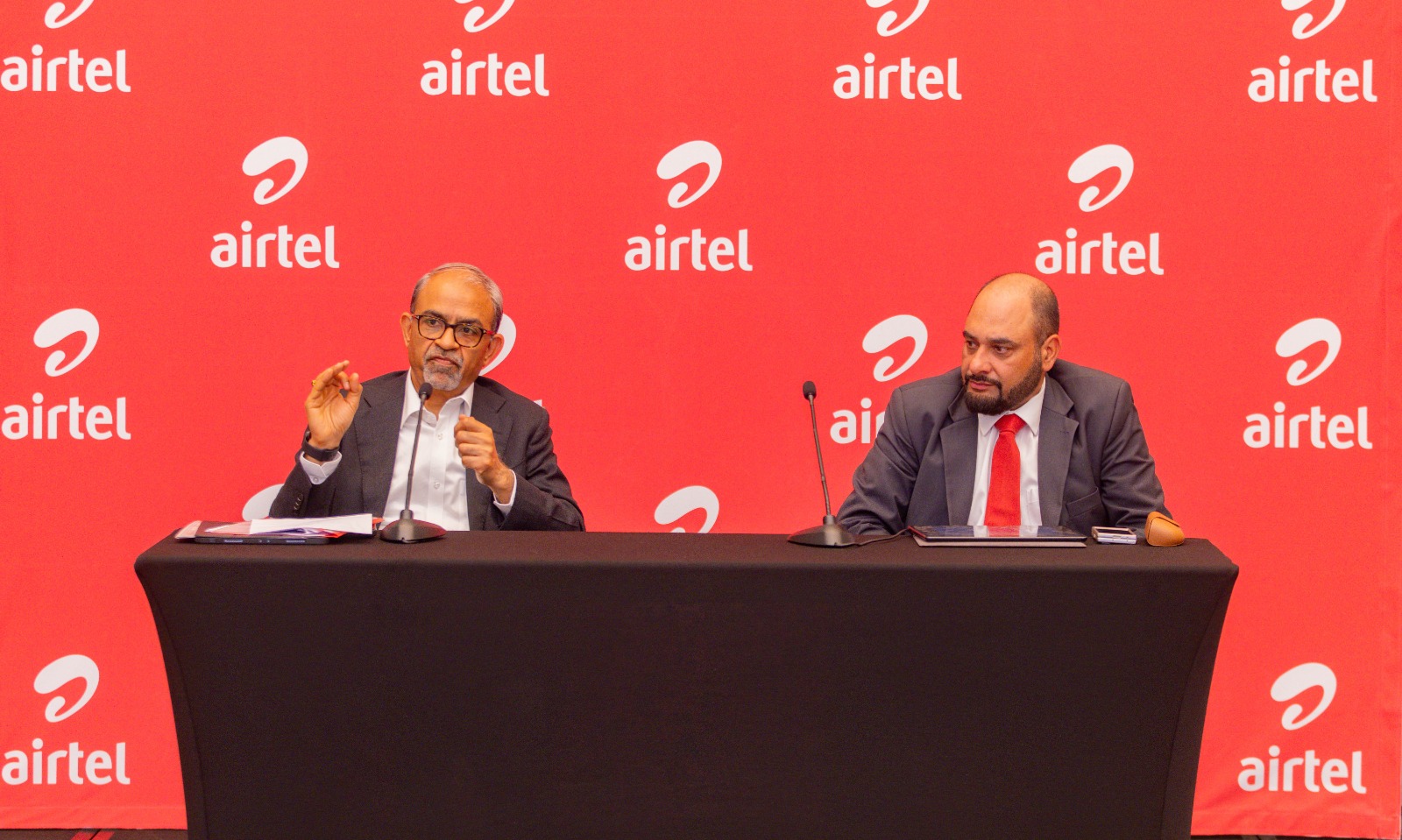

NAIROBI, Kenya, Feb 22 – In a wide-ranging interview with Capital FM Business, Sunil Taldar, Group Chief Executive Officer of Airtel Africa, unpacked the company’s strategy on mobile money growth, future launches, market competition, satellite connectivity plans under a partnership with SpaceX’s Starlink, and investments in data center infrastructure.
Airtel has talked about building a broader digital ecosystem beyond just mobile money. What does that look like?
Our vision isn’t limited to individual services it’s about creating a full ecosystem that integrates payments, commerce and connectivity. We’re in the process of securing licenses and approvals across markets so we can bring these products to life.
Work is underway and we feel very comfortable with the foundational platform we have built; enhanced services will roll out at the right time.
How central is mobile money to Airtel Africa’s strategy?
Mobile money remains a strategic pillar. Despite solid growth, penetration is still relatively low compared to total subscribers which means there’s significant room to expand and add value.
This business continues to demonstrate strength in underlying metrics and contributes meaningfully to financial performance.
What’s the thinking behind the partnership with Starlink?
The challenge in many markets including Kenya is that rural, remote areas are costly and difficult to cover with traditional network infrastructure.
That’s where satellite technology helps. Through our partnership with SpaceX’s Starlink, we aim to leverage satellite connectivity to deepen coverage, especially in underserved regions where backhaul (the connection between remote sites and the core network) is a major constraint.
The collaboration includes two tiers: using satellite broadband to support remote base stations and, eventually, deploying next generation direct-to-cell satellite services that allow compatible smartphones to connect directly to low earth orbit satellites without needing traditional towers.
What benefits will customers see from this satellite collaboration?
For consumers and businesses in areas where terrestrial infrastructure is sparse, this will expand coverage, improve speeds and support more advanced data services.
By bypassing ground-only network limits, we can serve remote communities more effectively and cost efficiently.
The partnership aims to support messaging, mobile money and selected internet services initially, with enhanced capabilities to follow as technology and approvals evolve.
How will this partnership affect Airtel’s competitive position in Kenya and beyond?
If executed well, the integration of satellite connectivity could be a game changer. In markets like Kenya, where internet penetration is growing but rural populations remain underserved, this approach has the potential to widen access dramatically from 4G/5G to places traditional cell sites struggle to reach.
It also strengthens our position relative to larger competitors by expanding our coverage footprint and service quality without proportionately increasing tower infrastructure.
What regulatory or approval hurdles remain?
These satellite services require regulatory clearances in each market before we can launch. Discussions with regulators are ongoing, and once the frameworks are in place, we will proceed with phased roll outs. It’s a careful process but essential to delivering on the potential of this new technology.
Does this satellite strategy complement your investments in terrestrial networks?
Absolutely. Satellite connectivity is not a replacement for our 4G/5G network but a complement to it.
We continue to invest in network capacity, quality and rural site builds. The satellite partnership allows us to extend coverage further and more economically, addressing areas that have been historically hard to reach.
Can you update us on Airtel’s investments in data centres in Kenya?
We are making a significant investment in our Nxtra Data Centre facility in Tatu City.
The project will cost $150 million and is planned with a 44 MW capacity, making it one of the largest data center investments in East Africa. It is designed to host high-density servers and advanced, cloud-ready infrastructure.
We expect the new Airtel (Nxtra) data center to open in the first quarter of 2027, reinforcing our commitment to digital infrastructure and supporting cloud, enterprise and telecom services across the region.
Finally, what does all this mean for Airtel Africa’s role in shaping digital inclusion?
We see ourselves as a connectivity enabler across Africa.
Whether it’s mobile money, broadband services, satellite-enabled coverage or now cloud-ready data centres, the goal is the same to ensure that more people, businesses and communities can access the digital economy.
We are investing for long-term impact, and partnerships like the one with Starlink, as well as our Nxtra data centre project, reflect that commitment.