















By Samuel Gitau
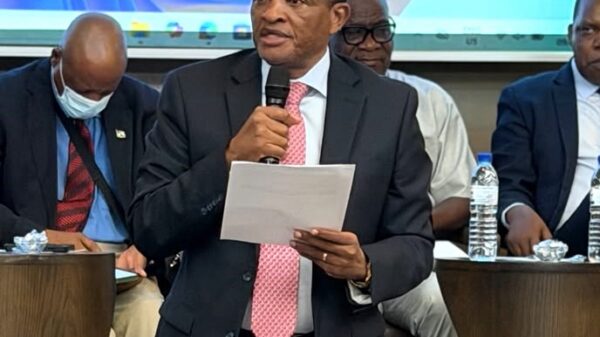
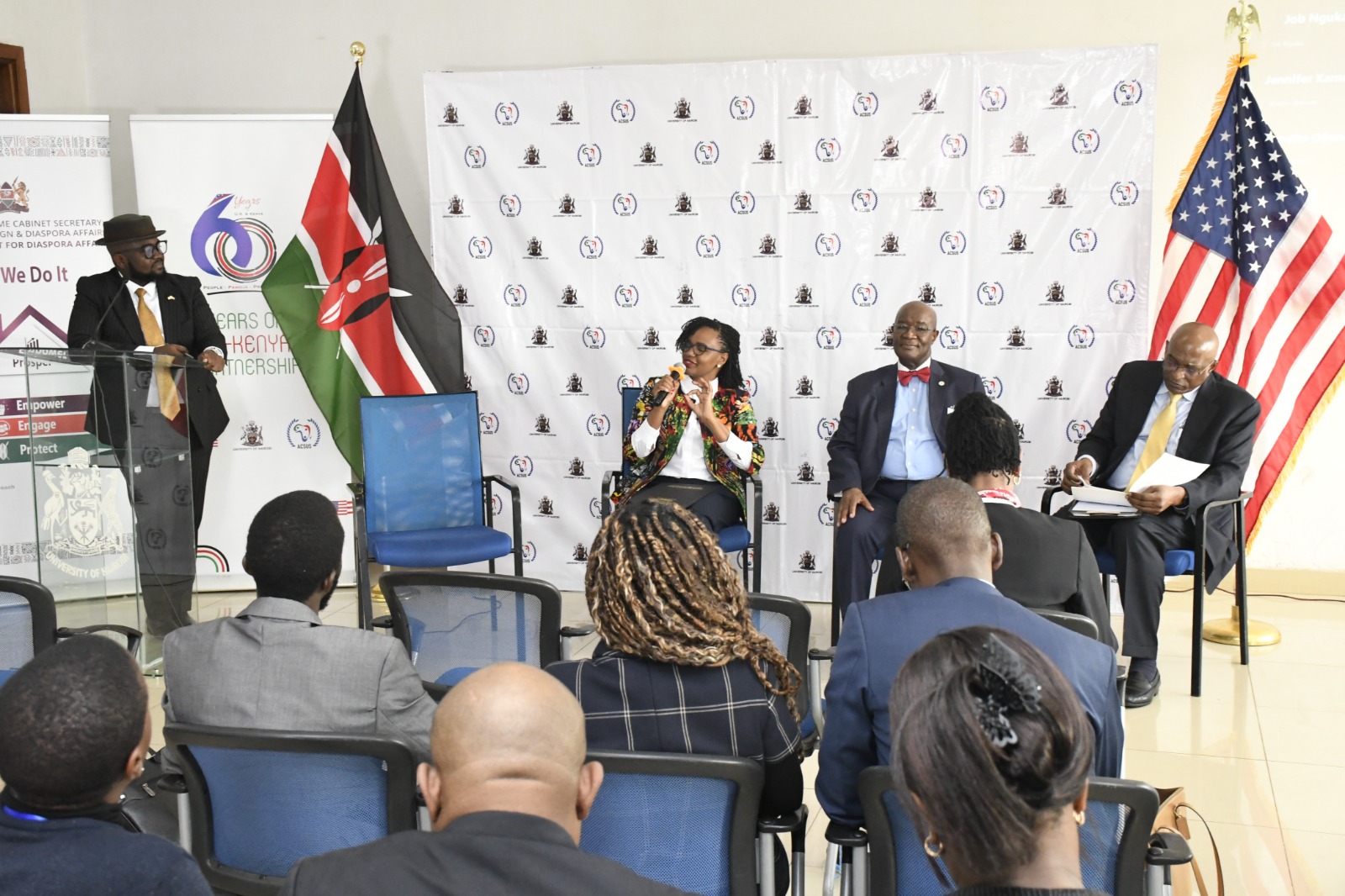
MAY 29 – As Kenya and the United States mark six decades of diplomatic relations, a recent seminar at the University of Nairobi revealed the transformative power of diaspora communities in bridging nations and fostering mutual growth. Organized by the Africa Center for the Study of the U.S. (ACSUS) in partnership with the U.S. Embassy, the panel discussion brought together key stakeholders to examine how both Kenyan and American diaspora communities have become pivotal actors in bilateral relations.
State Department for Diaspora Affairs PS Roseline Njogu spoke to the main principle of modern diplomacy by pointing out that “the strongest connections between people are found in People-to-People Diplomacy.” This points to a significant shift away from state-focused ties to ordinary people-driven ties that have become common in Kenya’s relations with the United States. The community of around 150,000 to 200,000 Kenyans in the United States, along with an expanding group of Americans in Kenya, create informal but strategic links that support friendly relations.
It is inconceivable to overstate the economic impact of diaspora exertion. Remittances from Kenya’s diaspora, which amount to over $4.95 billion a year, have overtaken more conventional sources of foreign exchange earnings including tourism and agriculture, making the diaspora Kenya’s largest source of income. This outstanding performance dispels the myth that migration is only “brain drain.” Discussants pointed out that this narrative urgently needs to be reframed in favor of “brain gain” and “brain circulation” noting how skilled migration generates networks of opportunity, investment, and knowledge that are advantageous to both the nations of origin and the countries of destination.
Still, there is a lot of potential that is not being explored enough. Though the Kenyan diaspora thrives economically and is important in areas like healthcare, technology and education, it still hasn’t done enough to contribute to governance, arts and business networks, according to the panelists. This means there is a need to think more broadly about how to engage with diaspora communities, working on political involvement, promoting cultural sharing and making sure their investments support Kenya’s priorities.
Critical policy interventions emerged as central themes requiring immediate attention. Kendrick Jr., a US Diaspora Energy Expert in Kenya suggested that making honorary consulates available in certain strategic U.S. states is a sign of the increasing presence and reach of Kenyan communities across the country. Refining Kenya’s policy for diaspora people is necessary to create conditions that promote business and investment, while also ensuring there are improved structures to maintain accountability for investors outside the country. It was submitted that making visa requirements softer and relaxing dual citizenship rules could improve relations and make it simpler for skillful individuals and funds to travel between the two countries.
Delegates reiterated the need for more advanced engagement tactics as they looked to the future. This includes establishing a center of excellence for strategic foresight centered on U.S.-Kenya relations, coming up with alternate routes to access American markets, and formulating methodical strategies to encourage wider diaspora involvement in national development. The movement of talent, as discussants noted, generates dividends not just for individual migrants but for entire communities on both sides of the Atlantic.
The seminar illuminated how diaspora communities serve as more than economic actors as they are cultural ambassadors, innovation catalysts, and bridges for mutual understanding. As Kenya and the United States embark on their next chapter of diplomatic relations, the challenge lies in harnessing this diaspora potential through deliberate policy frameworks, institutional partnerships, and recognition of these communities as global citizens whose success transcends national boundaries. The path forward necessitates moving beyond traditional approaches toward more inclusive, strategic engagement that maximizes the goodwill and capabilities of diaspora communities in fostering sustainable growth and deeper bilateral cooperation.
Gitau is a Research Associate at the Africa Center for the Study of the U.S. (ACSUS),University of Nairobi.