


























NAIROBI, Kenya, May 13 – The changing skyline of Mukuru informal settlement in Embakasi South, Nairobi, signifies more than just transformation. It is about survival. It is about healing. It is about finally reclaiming dignity and peace of mind after years of living on the edge of disaster. It promises safety and a reprieve from the ever-present threat of devastating fires that have tragically marked its history. For those who have lived in Mukuru, the fear of fire is not abstract , it is a bad memory branded into their lives.
On 12 September 2011, the Sinai fire tragedy left an indelible scar on the nation, and on the people of Mukuru kwa Njenga. A fuel spill ignited, unleashing a fireball that tore through the informal settlement, killing more than 100 people and leaving over 150 others with life-altering injuries. Entire families were wiped out. Survivors were left with painful burns, physical and emotional. Many still live with the trauma, the scars and the devastating memory of that day, haunted by the unbearable silence left by those they lost
“Some people never recovered,” says Maximilian Kamotho, a long-time Mukuru resident and one of the first beneficiaries of the Affordable Housing Programme. “The fire did not just destroy homes , it shattered lives, tore apart families, and stole futures. The pain is still with us.”
Reflecting on her journey since arriving in Mukuru kwa Njenga 17 years ago as a newly married young woman, Maximilian describes the ever-present fear that has shadowed her life – the fear of fire.
“One of our biggest challenges has always been shelter. Our homes are made of iron sheets, packed so tightly together that if one catches fire, they all do. A fire here is never just one fire , it spreads instantly, and disaster can strike at any time,” she says.
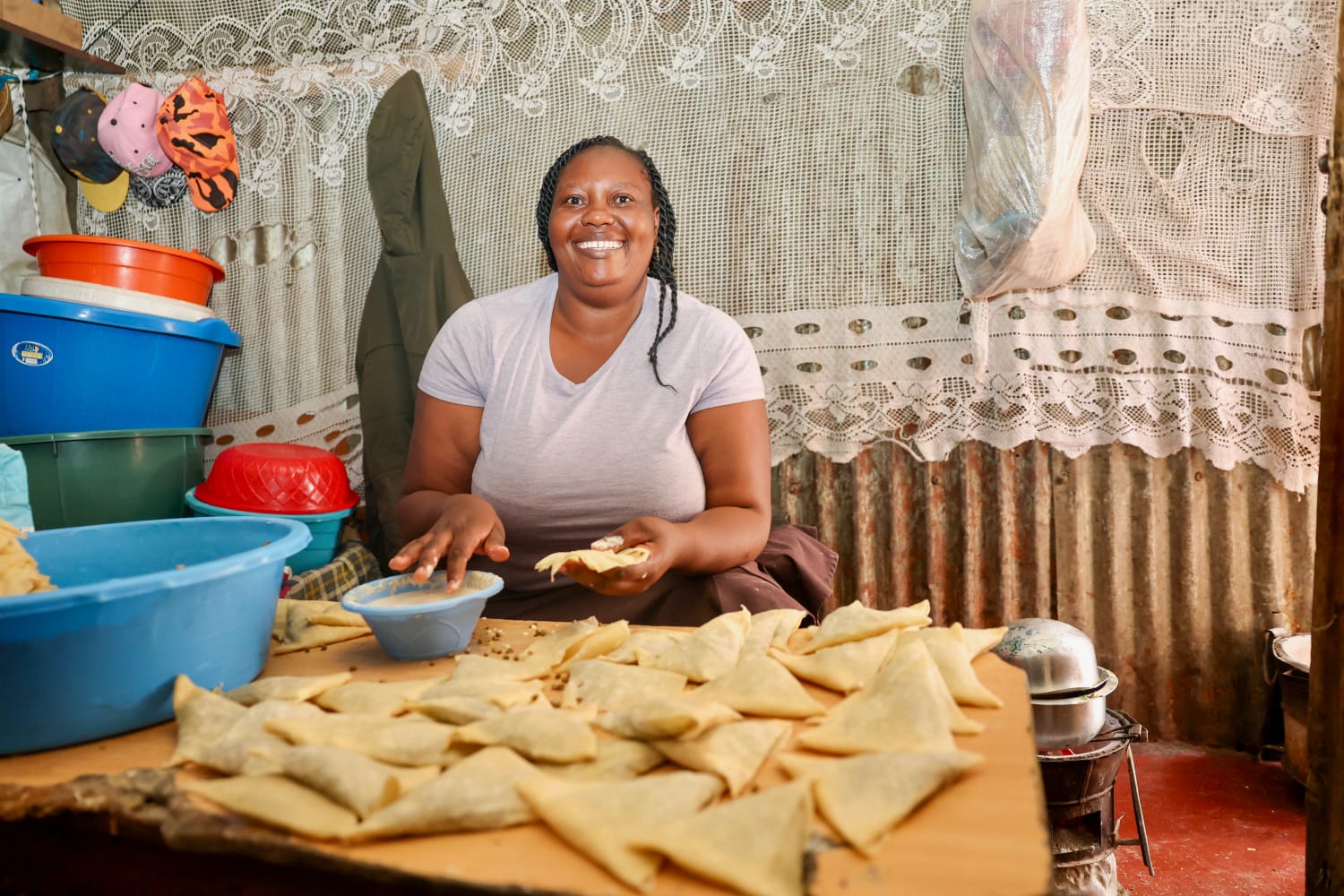
Every day, Maximilian turns her one-room mabati house into a samosa kitchen, but that is about to change. As one of 1,080 beneficiaries of the New Mukuru Housing Estate, Affordable Housing Programme by Government, she will finally be able to separate her home from her business.
Making ends meet often means turning survival into creativity. For many residents, their one-room tin-walled homes double as business premises by day, especially for women running small food businesses to support their families.
With rent for a single room averaging KSh 2,500, those who need more space often combine at least two units, pushing their monthly costs closer to the price of a newly built affordable housing studio apartment. Yet despite paying more, the risk is far greater.
“You cook, store ingredients, and sleep in the same space,” explains Maximilian. “It’s cramped, there’s barely any ventilation, and when you use charcoal to cook, the fire can catch so easily. Once it starts, there’s no stopping it.”
These daily hustles, while essential for survival, are one of the leading causes of fire outbreaks in the settlement. The tightly packed iron-sheet homes, often just inches apart, offer no firebreaks. A single spark in one house can ignite an entire row within minutes.
But change is now within reach.
For years, residents like Maximilian had no real choice but to make do with what was available, cramped, iron-sheet structures that doubled as both home and workplace. Many paid high rents for multiple rooms just to separate living space from small food businesses run within. Despite the constant risk of fire, poor sanitation, and lack of basic services, these makeshift homes were the only option.

New affordable housing units rise on the horizon, standing in stark contrast to the sprawling Mukuru informal settlement in the foreground, a powerful glimpse of progress and the long road ahead.
“We paid more for less, simply because there were no alternatives. We had no other choice,” says Maximilian.
Now, through the Affordable Housing Programme, residents like her are being offered a safer, more dignified path to homeownership. A studio apartment valued at KSh 640,000 comes with flexible payment plans and deposit assistance, allowing beneficiaries to pay as little as KSh 3,494 per month.
For Maximilian, who previously paid KSh 4,000 for two cramped mabati rooms to give her growing children some privacy, the cost is not only manageable, it is life-changing.
Instead of renting insecure, makeshift spaces, she is now investing in a permanent, well-planned home with proper infrastructure, safety, and the dignity of building a future beyond daily survival.
“I was so happy when I first heard about the Affordable Housing Programme. At first, some of us couldn’t believe it was real. But after visiting the site and seeing the houses for ourselves, I was even more excited. The environment is clean, the houses have toilets inside, and there is good security. I’ll be paying KSh 3,800 per month,” she says, beaming with joy.
She adds that, for residents of Mukuru, fire was never just a risk, it was a constant shadow, a haunting memory, and a devastating reality that too often turned ordinary days into tragedy. The trauma of burned-out homes, lost loved ones, and futures cut short still lingers in the minds and hearts of many.
The design of the new affordable housing units, according to the businesswoman, offers more than just walls and roofs, it offers resilience. With proper spacing between buildings, the risk of fire spreading uncontrollably has been drastically reduced. Emergency access roads, in-unit amenities, and formal layouts now make rapid response possible, something the informal settlement never allowed.