
























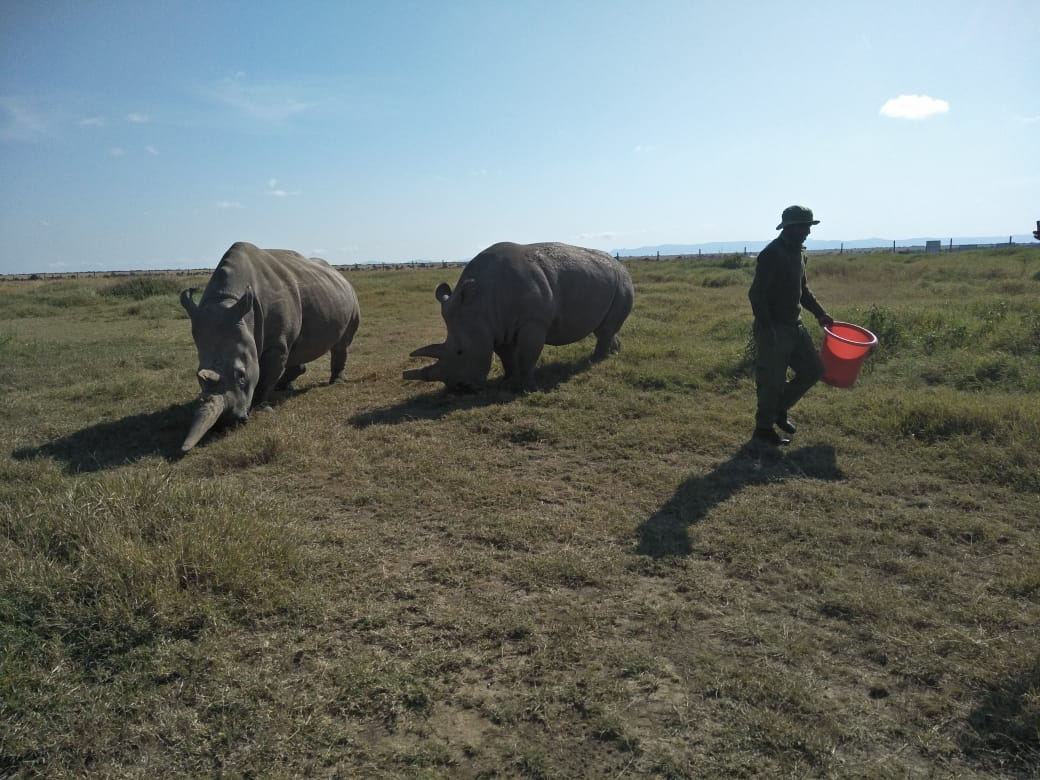

NAIROBI, Kenya, July 20 – Despite the powerful gusts of the savannah, strong storms and rains, and earth tremors, the memorial grave of Sudan, the last male Northern White Rhino still stands firm under a Desert date acacia tree, at the heart of Ol Pejeta Laikipia County.
Nested on the Leeward Side of Mount Kenya, Conservancy was home to Sudan until he died in 2018. Back then, Sudan was the remaining male Northern White in the world, making him a household name.
Sudan lived a life similar to that of a celebrity. 24-hour protection by armed guards, waking up to the cool breeze of the savannah, gazing at the iconic Batian and Neon peaks, and crushing carrots inside his big-sized mouth next to his daughter Najin and his granddaughter Fatu.
Sudan died in March 2018 at the age of 45, after a long battle with age-related health issues. At the time of his death, Sudan’s condition was so critical that he could not lift himself even with the help of his caretakers. He was unresponsive to any medications the veterinary team attempted to give him. The team determined that euthanizing him was empathetic.
“We tried to do all sorts of medications and he could not respond to any of them. We tried to support him to wake up but he could not, so the decision was made by the vet team to euthanize him instead of him suffering. He was in a lot of pain,” said Zacharia Mutahi who is the Rhino head caregiver in Ol Pejeta.

Historically, the Northern White Rhinos cruised across north-western Uganda, southern Chad, south-western Sudan, the eastern part of the Central African Republic, and the north-eastern Democratic Republic of Congo (DRC). However, political violence in these regions catalyzed massive poaching activities, rendering the population of the Northern whites slashed to 15 in the 1980s.
Contrary to what you would imagine, the Northern White Rhino is as gray as rock. Their skin is also hard and rough. The name emerged as a result of a misinterpretation of the Dutch word ‘Wijde’, which meant ‘wide’ and not ‘white’, that was used to describe the rhino’s mouth.
The ginormous size of the 3.5-tonne mammal not only made them a prime target for the poachers but also economic development. Because of their massive size, rhinos need large territories for feeding; however, the construction of massive infrastructural structures deprived the animals of enough land and made these regions less habitable.
By the year 2008, the number of Northern Whites had been wiped out to eight. The famous Four, consisting of two males, namely Sudan and Suni, and two females, Najin and Fatu, were transferred to Dvůr Králové Zoo in the Czech Republic; however, efforts to breed the species naturally were rendered futile due to unfavorable living conditions in the zoo.
In December 2009, the four Northern Whites were airlifted from Europe to Ol Pejeta with the hopes that the warm and favorable environment of the conservancy would be conducive enough to catalyze the natural bleeding of the animals. Ol Pejeta dedicated round-the-clock armed security, a 700-acre enclosure, and a nutritious diet supplemented with fresh vegetables such as carrots to provide a natural habitat and ensure the well-being of the four.
Suni, one of the two remaining male Northern whites, died in October 2014 from what was suspected to be a possible heart attack. Later, the death of Sudan rendered the entire subspecies extinct. However, by the time of their deaths, scientists had been able to collect their semen that would later be used to conduct in vitro fertilization (IVF).
The other four had been transferred to zoos in San Diego Zoo and Dvur Kralove Zoo, Czech Republic; however, by 2015, the four had died, leaving only 3 Northern Whites in existence.
Following the deaths of Sudan and Suni, the option of natural mating and reproduction within the species was automatically erased. Sudan’s remains were collected and taken to the Nairobi National Museum, where his monument is displayed.
Najin and Fatu live peacefully in the conservancy in the company of Tauwo, who is a Southern White Rhino. After they came to Africa, the four Rhinos were not familiar with the new ‘wild’ way of life.
Just imagine being in a new town, you know no one, you don’t know where you can get your favorite snack, and you are just stressed and panicked. You will definitely decide to get a guide who will teach you how to maneuver through the streets. This was the case for the Northern whites. Back in the Zoos, the four were used to eating ‘human’ food such as bread, apples, and the rest and were unfamiliar with doing natural activities such as feeding themselves with natural grass like other Rhinos in the wild did.
The conservation saw it fit to introduce Tauwo, who is more aggressive and extremely familiar with the African way of life. Tauwo acted like a godmother, and taught them how to feed themselves and perform other natural activities. She is slightly aggressive and acts as their bodyguard when they are approached by visitors.
Whenever visitors are taken to the Rhinos, Mutahi, who has been with the Rhinos for the past 15 years, carries carrots as treats. “They get disappointed when I carry nothing. They are always well-behaved and I make sure I reward them for their behavior” Due to his gentle caring nature, Mutahi has been accepted by the three ladies as their friend and part of the family “I try to listen and understand their language, they have a way of communicating and I have tried to learn and we are friends, just like one big family.”
In the past 9 years, rapid science and technological metamorphosis have offered hope in rekindling the reproduction of the white rhinos artificially using technologies such as IVF.
IVF is a process where an egg is harvested from the female’s ovaries and fertilized with sperm in a laboratory to form an embryo.
Scientists have already made strides by creating 30 northern white rhino embryos using eggs harvested from the remaining two females and stored sperm previously obtained from northern white rhinos through the technique.
However, according to experts, neither of the females is capable of holding any kind of pregnancy due to their old age and health-related issues. Najin, who is 35, is incapable of carrying a pregnancy due to weak legs. Furthermore, female Rhinos approach menopause at the age of 35. The average lifespan of the White Rhino species is 45 years.
In 2012, Suni was seen mating with Fatu, but after the gestation period passed, it was plain that Fatu was not pregnant. It was later discovered that Fatu had a uterus problem and could not get pregnant.
Rhino experts are thus continuing to explore the possibility of artificial reproduction techniques, through Southern white rhinos as potential surrogate mothers as a way to generate, preserve, and maintain northern white rhino genes into the future.
Southern White Rhino are the closest relatives to the Northern Whites and thus have been categorized as suitable candidates in the surrogate program.
“The reason for not using the two is that they have different issues she is out already, Najin turned 35 yesterday, and normally female Rhino reach menopause at that age so she is out of the candidate and Fatu got to be mated with Suni One of the males and we expected her to deliver but nothing happened. Later, when the tests were conducted Fatu was found to have uterus problems,” Mutahi said.
According to Ken Kimani, who is the conservancy’s chief commercial officer, the conservancy, in collaboration with partners and scientists from Germany, Italy, Spain, and the Czech Republic, is set to conduct the first-ever assisted artificial reproduction technique in Africa, which holds great potential to generate future offspring from the remaining animals.
“It is very sad because only two Northern Whites are remaining. They were excessively killed where they were. We have partnered with people from Germany, Italy, Spain, and the Czech Republic to look for technologies that can help in harvesting eggs from the two remaining so that we can use southern Whites as the Surrogates,” he said.
“Last year we were lucky since we confirmed that the technology that we want to use can work and this year we are hoping that this year we will execute it successfully,” he added.
Ol Pejeta is home to critically endangered rhino species, including black rhinos, southern white rhinos, and the last two remaining northern whites. All of them are monitored 24/7 by armed rhino protection guards, supported by a team of rangers and a K9 dog unit.
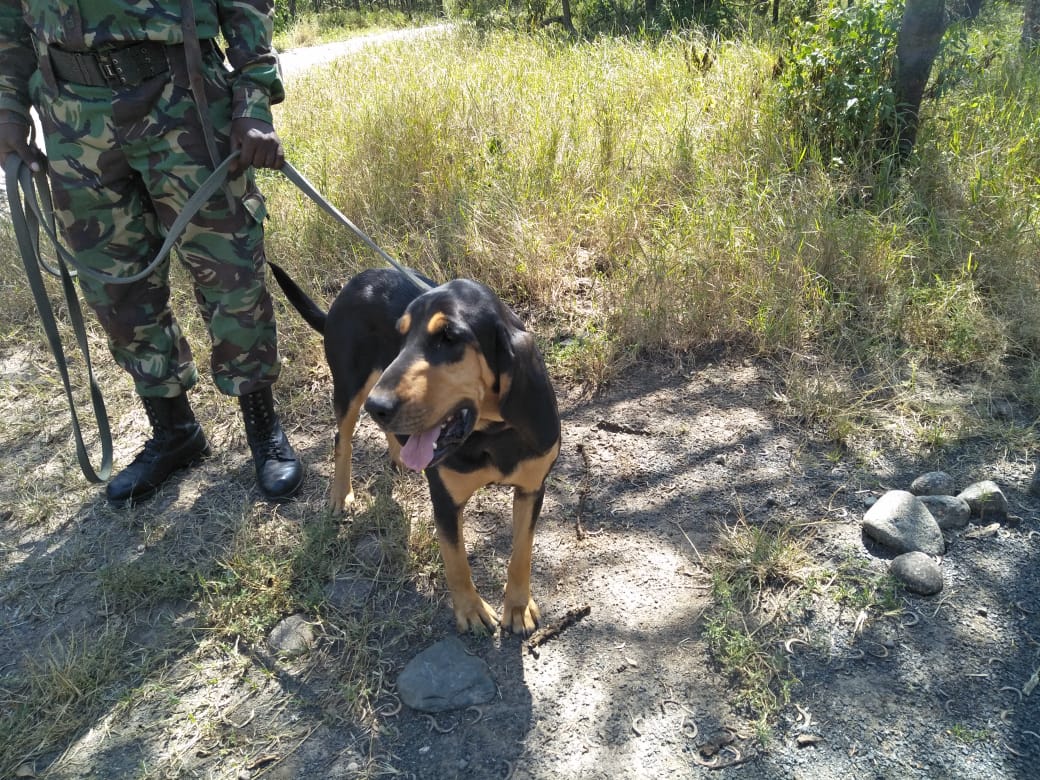
Furthermore, visitors are required to pay slightly more so that the conservancy may gather enough revenue to fully cater to the needs of the Rhinos, including security.
These animals are part of the more than 15 animal species classified as critically endangered, such as the African Forest Elephants, Amur Leopards, and the Cross River Gorilla, among others. The main causes of these creatures’ declining numbers are human-caused events like widespread poaching, political violence, and industrialization, which have not only catalyzed unfavorable living conditions for the animals but also snatched away their homes.
A shoot-to-kill policy in the country in poaching incidents permits the guards guarding the Rhinos to shoot any poacher who attempts to get close to not only the two endangered Rhinos but also other species in conservancies. A life sentence is imposed on anyone who is arrested for poaching as well.