






















NAIROBI, Kenya, June 23 – Alcohol manufacturers are against Government’s proposal requiring them to pay excise duty in advance.
Forcing them to pay the taxes with 24 hours upon removal of goods from the stockroom, the Alcoholic Beverages Association of Kenya (ABAK) said will punish innocent players.
ABAK argued while the proposal, which was not taken through public participation and only inserted in the Finance Bill by the National Assembly’s Finance Committee, is meant to deter illicit alcohol trade, they said it is more likely to end up promoting it.
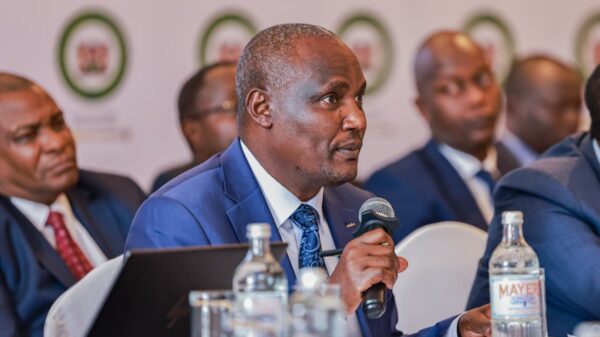
ABAK chairman Eric Githua said the introduction of the provision via the Finance Bill was unnecessary as the current model, where manufacturers remit the tax after the reconciliation of sales, is working.
Excise duty is a consumption tax that needs to be charged at the point of consumption.
In the alcohol industry, the product passes through a value chain comprising of distributors and the outlets before it is consumed.
“Our members have remained compliant in remitting excise duty, playing their part in building Kenya’s economy even in the current tough economic times,” Githua said.
“Implementing the advance payment effectively is a counterproductive, unperceptive move that will hurt legal manufacturers debilitatingly and benefit illicit alcohol dealers who do not pay taxes, anyway.”
The proposal was picked up by the Finance Committee after a submission by the Illicit Alcohol Prevention Taskforce.
ABAK argued that the proposal ought to have been subjected to public participation as well as views from stakeholders.
“You do not stop errant alcoholic beverage dealers by making it harder for legal manufacturers. The government should be doing all it can to unearth the source and movement of ethanol and eventual making of this harmful alcohol,” Githua added.
“So far, it is evident that the Government’s efforts at curbing illicit alcohol as it continues to lose approximately Kshs. 71 billion annually as established by the recent study by Euromonitor. How will this move make things better?”
Since Excise Duty is a consumption tax, manufacturers are merely a collection agent for the final consumers of the product.
ABAK argued that with the taxes already remitted in advance, this will negate the entire objective of levying excise tax as manufacturers will be incurring a cost that should be incurred by consumers.
If the proposal is enacted, manufacturers will be required to review the contracts that they have with their distribution networks, including outlets such as bars and restaurants, to require upfront payment on all orders to sustain compliance by alcoholic manufacturers.
This will create a strain on the value chain as the immediate cash requirements will not sustain the value chain distribution networks.
According to the 2022 Economic Survey by the Kenya National Bureau of Statistics, the Government collected Sh44.7 billion from locally manufactured beer, wines, and spirits in 2021.
An extrapolation of this amount by factoring inflation at 6.3 percent gives an estimated total amount of Sh47.5 billion from locally manufactured beer, wines, and spirits in 2022.
Consequently, the implementation of the new requirement to remit excise duty in advance will require local manufacturers to finance a total Sh130 million daily before they actualize a sale.