














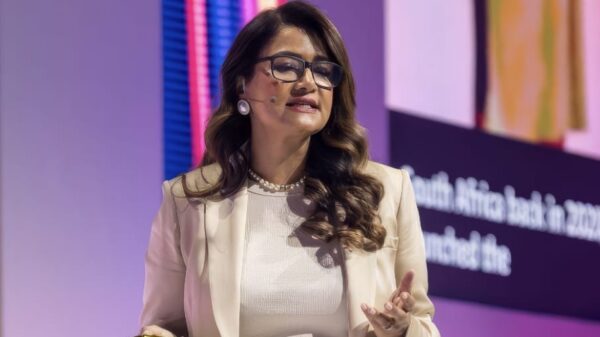





OCT 25 – When Primah Kwagala stood up to tell her story at a Moth Global Workshop in Aspen, Colorado in 2018, she had no idea she was about to spark a national conversation that would reach the halls of Uganda’s parliament.
Her personal narrative about the night her father brought home a second wife—when she was just 9 years old on Christmas Eve 1997 was powerful, honest, and deeply vulnerable. It was also, she would soon discover exactly what thousands of people needed to hear.
The story she told was deceptively simple on the surface but devastating in its implications. She recounted how her father, educated, wealthy, and loving, had taken them to the village for Christmas celebrations. How she heard whispers that he would introduce a “new mother.” How her own mother, Joy, locked them inside their house that night as her father pounded on the door with his brothers, demanding entry. How her father called to her specifically “Primah, Primah, can you open the door?” and how she stood frozen between the door and her mother’s command not to open it. How they eventually broke down the door. How her father told her mother, “This is my home. I can do what I want. If you do not want to stay, pack your bags and leave,” and when her mother protested that she had contributed to their wealth, he responded, “You can take the roof and leave.”
The next day, Primah and her mother and sisters packed their bags and left. He didn’t come after them. But the story didn’t end there. In a twist she shared with The Moth’s Executive Producer, Sarah Austin Jenness, in an episode of The Moth Radio Hour, Primah’s father who left his wife and five daughters in pursuit of a male heir because “in our culture, a girl cannot inherit property” ultimately named Primah as his heir before his death. It was, she said, “almost impossible to believe.”
Within days of the video being shared online, Primah’s story went viral across Uganda and beyond. It spread across YouTube, TikTok, Facebook, and Instagram reaching audiences far beyond the workshop room in Colorado where she first told it. The video has garnered a million views and thousands of messages. “I even get recognised in airports,” she recalls.
This is the reality of storytelling in an era when East Africans spend an average of four hours daily on social media, nearly double the global average of 2 hours and 19 minutes. In this digital ecosystem, a single authentic story can travel further and faster than ever before, creating real-world impact that would have been unimaginable just a decade ago.
Primah’s experience raises critical questions about this unprecedented level of digital engagement. With 15.1 million social media users in Kenya alone (26.5% of the population) and similar patterns across East Africa, are we scrolling our problems away, or are we actually solving them through digital storytelling? Primah’s story suggests the answer is more complex than critics of “screen time” might assume.
The impact of her viral story extended far beyond social media metrics. It reached Uganda’s parliament during debates over proposed amendments to marriage laws. “There was a clause attempting to turn monogamous civil marriages into polygamous unions,” Primah explains. “Many people, including religious leaders and parliamentarians, denounced it. They kept referencing and using my Moth video on the impact of polygamy on the lives of women and children.”
Here was a personal story, told in a workshop in Colorado, shared online, that directly influenced legislative debate back in Uganda.
The four hours that Ugandans and Kenyans spend on social media suddenly looks less like wasted time and more like the new public square where ideas are debated and change is initiated.
But the impact wasn’t just political. “It has sparked fresh dialogues on marriage equality laws in Uganda and emboldened my mother to speak about her experience among her peers,” Primah shares. “I am glad I did it.” The ripple effects of her story touched everything from parliamentary debate to personal family dynamics, demonstrating how digital storytelling can simultaneously operate at macro and micro levels.
What makes Primah’s story particularly powerful is her credentials as the teller. She’s not just a survivor sharing trauma she’s a human rights lawyer who has specialized in strategic litigation, providing free legal services and challenging systems of patriarchy. With degrees in both law (LLB from Makerere University Kampala) and ethics and human rights (BA from Makerere), master’s in philosophy from University of Pretoria in South Africa and currently a doctoral candidate at Makerere University. She is the CEO of the Women’s Probono Initiative (WPI) in Uganda, she was named the Probono lawyer of the year 2023 by Uganda Law Society and received the EU Human rights defenders award in 2022.
She brings both experience and professional expertise to her advocacy. She’s handled cases involving illegal detentions in health facilities, access to emergency obstetric care, and access to free vital medicines. She served as Chairperson of Female Lawyers in the Uganda Law Society between 2021-2022 and was awarded the 2020 Peace and Reconciliation Prize by the German and French Ambassadors to Uganda.
“I looked at the system of patriarchy and how it has envisioned women in our community as less than the men, as having men being entitled,” she said at the end of her Moth story. “I have devoted my work and career towards supporting women to access justice in our community.”
This is the paradox of the four-hour generation. For East Africa’s young people 75% of the population is under 35 social media isn’t an addition to real life; it is real life. They’re conducting relationships, building careers, accessing education, processing trauma, and increasingly, driving social change through digital platforms.
The positive impacts are undeniable. Young East African entrepreneurs are using social media to build businesses and access global markets. Artists are finding audiences beyond their immediate communities. Students in remote areas are accessing educational content and opportunities that would have been impossible just a decade ago. And lawyer-advocates like Primah are sparking national conversations about issues that directly affect legislation.
Health storytelling, in particular, has been revolutionized by social media engagement. Initiatives like Kenya Creates have discovered that peer-to-peer storytelling on social platforms is more effective at changing health behaviors than traditional public health campaigns. When professionals share authentic personal stories as Primah did audiences listen in ways they never did to statistics alone.
However, this digital immersion comes with costs. The sudden viral attention that Primah experienced being recognized in airports, receiving thousands of messages, becoming the subject of parliamentary debate can be overwhelming. Mental health professionals across East Africa report increasing rates of anxiety and depression among young people, often linked to social media comparison, cyberbullying, and the pressure to maintain an online persona.
The four hours of daily social media use also represent time that could be spent on other activities studying, working, exercising, or engaging with immediate communities. Critics argue that excessive social media engagement is creating a generation that’s more connected to global trends than local realities, more comfortable with digital activism than real-world organizing.
Yet Primah’s experience demonstrates why dismissing East Africa’s social media engagement as frivolous misses a crucial point. For many young people in the region, digital platforms provide opportunities for expression, connection, and impact that simply don’t exist elsewhere. In countries where youth unemployment is high and traditional power structures are difficult to access, social media has become both voice and vehicle for change.
The stories young East Africans tell themselves through social media reflect this duality. They’re simultaneously hyper-aware of global opportunities and frustrated by local limitations. They’re connected to international movements while feeling disconnected from traditional power structures. They’re optimistic about their individual potential while sometimes pessimistic about systemic change.
This digital storytelling is also reshaping how the region presents itself to the world. Rather than waiting for international media to tell their stories, young East Africans are crafting their own narratives about everything from politics to pop culture to marriage laws. They’re challenging stereotypes, correcting misconceptions, and asserting agency over their representation.
Primah’s story also highlights the power of training and platform. The Moth Global Workshop—where she was participating as an Aspen New Voices fellow—gave her tools to craft her narrative effectively, and the resulting video provided a platform that amplified her voice exponentially. This suggests that the question isn’t whether four hours of social media use is good or bad, but how to ensure that engagement is meaningful and empowering.
The challenge moving forward is ensuring that this digital engagement translates into tangible improvements in young people’s lives and sustainable social change. The stories they tell online need to connect with real-world opportunities for education, employment, and civic participation. One viral story can spark a conversation, but lasting change requires sustained effort beyond the initial digital moment.
Yet Primah’s work demonstrates that viral moments can be springboards for sustained change when the storyteller is also a trained advocate. Her story didn’t just circulate and fade—it became a reference point in policy debates. Her professional work gives her the tools to convert viral attention into legal advocacy and systemic reform.
East Africa’s four-hour social media generation isn’t just consuming content—they’re creating culture and driving change. Primah Kwagala’s experience demonstrates that when authentic storytelling meets digital platforms and professional expertise, the results can be transformative. Her personal story about a Christmas Eve that changed her childhood didn’t just get likes and shares; it influenced legislation, emboldened others to speak their truth, and demonstrated that the digital public square can be a space for meaningful dialogue about difficult issues.
The fact that her father ultimately named her—his firstborn daughter, whose name literally means “first love”—as his heir suggests that stories can change not just laws but hearts.
Even the patriarch who left his family in pursuit of a male heir eventually recognized his daughter’s worth, calling her back into his family through “this very final act in life.”
The stories we tell ourselves matter. For young East Africans spending four hours daily in digital spaces, those stories are increasingly being written, shared, and reimagined online. Whether this leads to empowerment or escapism, to meaningful change or digital distraction, depends on how storytellers, platforms, and communities choose to use this unprecedented level of connectivity.
When Primah Kwagala told her story in Aspen, she wasn’t trying to go viral or influence parliament. She was simply telling her truth—about a nine-year-old girl standing frozen between a door and her parents’ bitter exchange, about watching her father become someone she didn’t recognize, about packing bags and leaving with her mother and sisters.
That her story ended up doing both—going viral and influencing policy—demonstrates the unpredictable power of authentic narrative in the digital age, especially when told by someone with the credentials and commitment to convert attention into action.
In a region where four hours of daily social media use is the norm, stories like hers prove that this time isn’t necessarily wasted—it might be the very thing that changes everything. From parliamentary debates to personal reconciliation, from viral video to legal reform, Primah’s story demonstrates that when wisdom, WiFi, and professional expertise converge, the four-hour generation might just be the generation that rewrites the laws that have governed women’s lives for centuries.