










Maize and sorghum farmers lose 60pc of the crop to armyworms - Capital Business
Connect with us

Hi, what are you looking for?

This picture released by FAO (The Food and Agriculture Organization of the United Nations)shows Turkana farmer Joseph Tirkwel asses the severe damage of his maize crops while hopper bands of Desert Locust ravage them in Napeikar, Turkana County, Kenya on June 2, 2020.Joseph Tirkwel is Turkana farmer and father of 6 children with several acres of maize that have been severely damaged by hopper bands.An increasing number of second-generation immature swarms of desert locust continue to form in northwest Kenya. The desert locust upsurge could have devastating consequences in already vulnerable regions, potentially causing large-scale crop damage and threatening food security in countries affected by recurrent drought, conflict, high food prices, as well as the impacts of the COVID-19 pandemic.The Horn of Africa is facing the worst desert locust crisis in over 25 years, and the most serious in 70 years for Kenya. - "The Food and Agriculture Organization of the United Nations (FAO) and the Government of Kenya’s (GoK) have joined efforts as part of its action plan aimed at boosting ground and aerial surveillance on Desert Locusts. FAO has supported governments in scaling up control activities on the fight against Desert Locusts while launching an urgent appeal to support and contain the upsurge and anticipate devastating impacts on livelihoods and food security." (Photo by LUIS TATO / FAO / AFP) / RESTRICTED TO EDITORIAL USE - MANDATORY CREDIT "LUIS TATO/FAO/AFP " - NO MARKETING - NO ADVERTISING CAMPAIGNS - DISTRIBUTED AS A SERVICE TO CLIENTS

Agriculture

Maize and sorghum farmers lose 60pc of the crop to armyworms

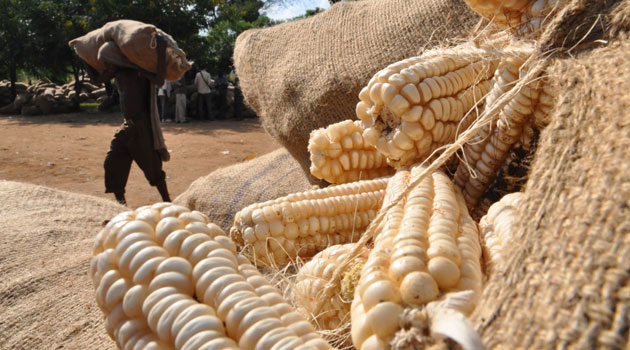
KISUMU, Kenya, May 31 – Maize and sorghum farmers in Kisumu are staring at glaring losses this season after the African armyworms destroyed 60% of the crops.

 Kisumu County Chief Officer in charge of agriculture Dr. Paul Omanga confirmed that the pests which have now been brought under control destroyed 10, 000 acres of the crops and pasture in the area.

The joint effort between the national and county governments to eradicate the pests, he said, has worked with the ongoing rains having also played a critical role in the fight.

 “The heavy downpour washed away the armyworms making it difficult for them to reproduce even in their hideouts,” he said.

 The pests, he said, were a threat to food security with farmers in the area expected to harvest just about 40% of the crop.

Speaking to KNA in his office, Omanga said the Japan International Cooperation Agency in collaboration with the county government distributed free seeds and fertilizer to the farmers to cushion them against the losses.

“We gave out plenty of seeds and fertilizer initially which we hope they had spared some to help them during this planting season,” he said.

   As a long term measure to contain the menace Omanga asked farmers to prepare to counter the trans-boundary pests early enough to avert massive losses.

“The African armyworm is believed to manifest during the dry season as it is in this period that the migratory pests move in search of food and damage green land including crops,” he said.

  According to Omanga the pests are very active and consume a lot during the larval stage where they need plenty of food for growth. They tend to attack and cause more distraction to young plants.

 “Research shows that African armyworms consume crops especially in their early stage. It is at this stage that they cause the biggest damage,” he stated.

            The chief officer asked farmers to ensure that they buy chemicals and store them in readiness for the possible invasion of the pests.


Visited 2 times, 1 visit(s) today

More on Capital Business

Agriculture

NAIROBI, Kenya, Sep 13 – The government has projected a sustained maize harvest of 70 million bags in 2025, up from 67 million last...

Africa

NAIROBI, Kenya, Mar 25 – The cost of living in Kenya is escalating as maize prices surge by 45%, hitting Sh4,800 per bag since...

Agriculture

SEP 1 – Maize harvests will hit a record 70 million bags this year, President William Ruto has announced. The President attributed the huge...

Agriculture

NAIROBI, Kenya, Oct 6 – No permits will be issued to millers to import wheat or maize into the country. Click here to connect...

Agriculture

NAIROBI, Kenya, Aug 13 – Twiga Foods intends to expand the irrigated acreage at the Galana Kulalu Food Security Project (GKFSP) by up to...

Agriculture

NAIROBI, Kenya, June 12 – The Kenya Bureau of Statistics (KEBs) has stepped up aflatoxin tests on Tanzanian maize amid concerns. Click here to...

Kenya

KAJIADO, Kenya, Dec 30 – Farmers in Kajiado East and South Constituencies are in agony after fall army worms invaded their grazing fields and...

Agriculture

NAIROBI, Kenya, Dec 15 – The Kenyan Government will allow millers and traders to import 1.5 million metric tons of duty-free maize and rice...