



















NAIVASHA, Kenya, March 5 – Energy Cabinet Secretary Davis Chirchir has called on all the County Governments to set aside funds for investment in the electricity sector in order to help stabilize supply to the national grid.
Chirchir noted that most of the country’s electricity supply comes from the Eastern side of the country but Western Kenya and the rest of the country also have the potential of producing some electricity for the country by harnessing the available resources to produce electricity from hydro, solar sources, and wind sources to help meet the growing energy needs.
The CS also called upon Members of Parliament to set aside money from the National Government Constituency Development Fund (CDF – NG) kitty for investment in electricity generation to help meet demand.
“The country`s electricity supply currently stands at 75 per cent of the households and this can be grown to cover 100 per cent of the country if collaboration between the national and the country government and partners is enhanced,” Chirchir observed.
The CS was speaking in Naivasha on Friday at the close of a four-day induction training for the National Energy Planning Committee which included County Executive Committee (CECs) members in charge of energy dockets in all the counties.
Participants came up with an Integrated National Energy Planning framework and regulations (INEP) that will help consolidate efforts by government agencies, the private sector, and development partners in a coherent manner to provide energy services to all Kenyans.
The INEP seeks to champion the status of clean cooking to be a top priority under energy access at both national and county levels, complete with facilitative budgets for implementation, and will also address electricity generation, transmission and distribution, energy access covering electricity and clean cooking solutions, energy resource assessment and development, bioenergy development; and energy efficiency and conservation.
CS Chirchir directed that the document be subjected to scrutiny by stakeholders such as the relevant Parliamentary departmental committees on Energy before it is launched at a later date.
Chirchir noted that Schedule 4 of the Kenya Constitution 2010 has devolved some aspects of the Energy Sector but added that necessary legislation needs to be enacted to facilitate it.
He disclosed that the Energy Act of 2019 had now provided an enabling legal environment for the necessary regulations to be formulated through miscellaneous amendments and added that only eight out of the 20 needed legislations had been completed.
The CS stated that Kenya has managed to increase her electricity production from 1, 600 megawatts (MW) to about 3,300Megawatts in 2023 with the construction of the Ethiopian line bringing about 200megawatts (MW) of power from the neighbouring country and increasing inter-country trade.
“We want to continue being a market leader in renewable energy and grow the Gross Domestic Product (GDP) from manufacturing from seven per cent to over 14 per cent and continue positioning the country as a preferred investment destination through cheap energy,” Chirchir said.
According to Chirchir, Kenya is set to retire its investments in thermal sources in the country and transition fully to green renewable energy generation by 2030.
According to Data from the Ministry of Energy, Kenya’s current effective installed (grid connected) electricity capacity is 2,990 MW. Electricity supply is predominantly sourced from hydro and fossil fuel (thermal) sources.
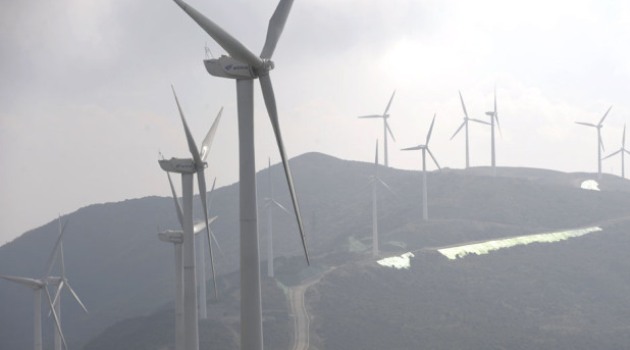
This generation energy mix comprises hydro at 838 MW, geothermal at 863 MW, two per cent from biogas cogeneration, wind at 437 MW and solar at 173 MW.