














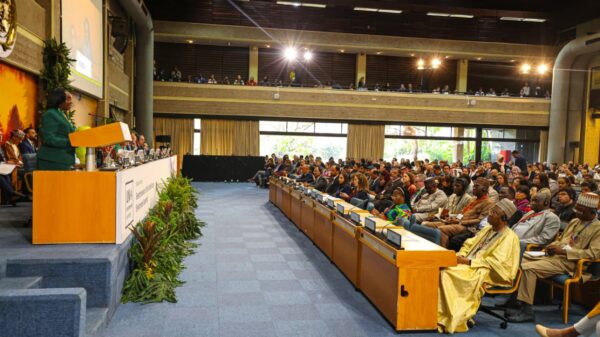





Lusaka, Zambia, Aug 27 – The 75th Session of the World Health Organization (WHO) Regional Committee for Africa (RC75) placed a strong focus on the health and well-being of women, children, and adolescents (WCAH), with calls for strengthened accountability in regional mechanisms.
The meeting drew wide engagement, with 43 statements delivered—30 by African member states and 13 by development partners—underlining the urgency of addressing high maternal and child mortality rates across the continent.
Africa continues to bear the greatest global burden of preventable deaths linked to pregnancy, childbirth, and childhood illnesses. The region accounts for 70 percent of maternal deaths and more than half of all child deaths worldwide. Despite a 40 percent decline in maternal mortality between 2000 and 2023, alongside reductions in neonatal and under-five deaths, progress remains uneven and off track to meet the 2030 Sustainable Development Goals.
A WHO working paper tabled at the meeting, Accelerating progress in the health and well-being of women, children and adolescents by transforming health systems in the African Region (AFR/RC75/5), proposed three approaches: prioritising investments in health governance and financing; strengthening health systems through workforce expansion, infrastructure and data systems; and ensuring delivery of essential health services with equity and quality, including during emergencies.
Member States highlighted persistent challenges. Kenya cited shortages of health commodities and attrition of skilled workers. Seychelles and Zambia emphasised the need for robust data systems to address inequities, with Zambia noting how data was being applied to tackle health inequalities. Malawi raised concerns over high teenage pregnancy rates, underscoring gaps in access to sexual and reproductive health and rights (SRHR) services.
Calls for stronger accountability mechanisms featured prominently. Senegal urged African Union institutions to institutionalise WCAH accountability, while Kenya backed the proposal, pressing for stronger regional monitoring and use of data. The Partnership for Maternal, Newborn and Child Health (PMNCH) echoed these appeals, stressing the need for transparent tracking, peer review, and systematic reporting of measurable progress.
Financing challenges also drew attention, with several countries stressing the importance of domestic resource mobilisation. A recent Lancet study was cited warning that reductions in U.S. global health funding could result in millions of preventable deaths, including among children under five, by 2030.
Zambian President Hakainde Hichilema opened the meeting with a personal reflection on his own birth in a health facility without electricity or water, describing it as a reality that persists for many African women. He outlined reforms under way in Zambia, including expanding health facilities, scaling up specialist recruitment, linking health and education, and expanding service delivery in fragile settings. He urged African leaders to prioritise investment in resilient health systems, local manufacturing, regional solidarity, and alignment with global frameworks, while warning that funding cuts require decisive responses.
The discussions at RC75 underscored consensus that progress in WCAH requires stronger accountability, better data use, and sustained financing. WHO and partners said they will continue supporting African governments to strengthen health systems and expand access to services, with the aim of reducing preventable maternal and child deaths across the continent.