

















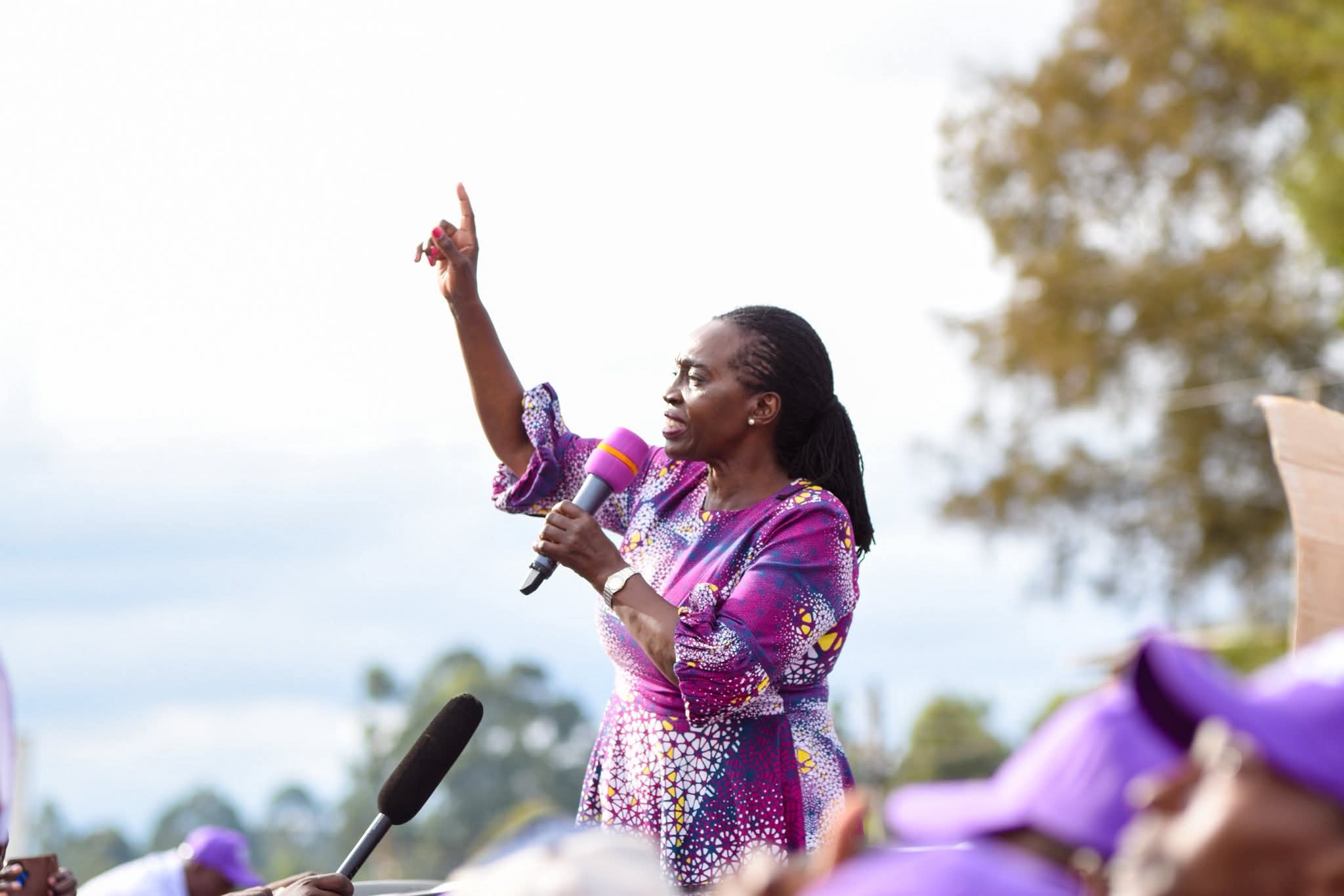

NAIROBI, Kenya, May 17- Martha Karua has come under criticism from Kenyans online over what critics describe as a conscious bias and selective political framing following her latest comparison between the administrations of Kenya’s 2nd President, the late Daniel arap Moi, and 5th President William Ruto, while pointedly leaving out the country’s first, third and forth presidents.
The former Justice Minister, who served during the late President Mwai Kibaki’s administration, sparked debate after sharing what she described as a WhatsApp forwarded image comparing fuel prices in June 1997 during Moi’s tenure with current fuel costs under President Ruto.
Her comparison comes amid rising global oil market tensions linked to the escalating Iran conflict and the involvement of the United States, a situation that has disrupted one of the key oil shipping routes through the Strait of Hormuz, a critical global oil transit corridor through which a significant percentage of the world’s petroleum supplies pass.
“I was forwarded this image on WhatsApp, and it is making rounds all week. This was June 1997. Moi was in power. Fuel prices and cost of living were high and our rights were under attack. Twenty-nine years later, different era, same struggle,” The People’s Liberation Party leader wrote on her social media pages.
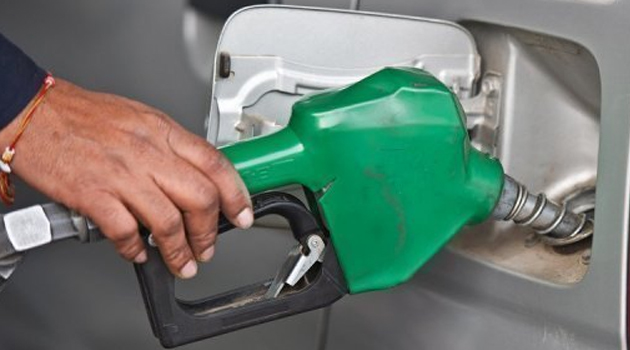
Her remarks came at a time of growing public concern following the latest fuel price hikes announced by the Energy and Petroleum Regulatory Authority (EPRA) for the May-June 2026 pricing cycle.
Effective May 15, 2026, EPRA increased the price of Super Petrol by KSh16.65 per litre and Diesel by KSh46.29 per litre, pushing Nairobi pump prices to KSh214.25 for petrol and KSh242.92 for diesel. Kerosene remained unchanged at KSh152.78 per litre.
The steep increase, particularly in diesel prices, is expected to drive up transport and cargo costs across the economy, adding pressure to households already struggling with the high cost of living.
However, it was Karua’s framing of the issue that triggered backlash online, with critics accusing her of selectively narrowing Kenya’s political and economic history to focus only on the Moi and Ruto administrations.
Observers noted that the comparison conspicuously skipped the eras of Presidents Jomo Kenyatta, Mwai Kibaki and Uhuru Kenyatta, despite the country also experiencing major economic shifts, fuel price increases and governance challenges during those administrations.
Some commentators argued that the omission appeared politically calculated, while others subtly pointed to the ethnic and regional undertones that often shape Kenya’s political discourse.Critics further argued that fuel prices are influenced by multiple factors, including domestic taxation, global oil markets, exchange rates and international geopolitical conflicts, making it misleading to isolate only two presidencies in a comparison spanning nearly three decades.
The debate has since reignited broader conversations around selective political memory, historical framing and the use of economic hardship narratives in Kenya’s increasingly polarised political environment.