















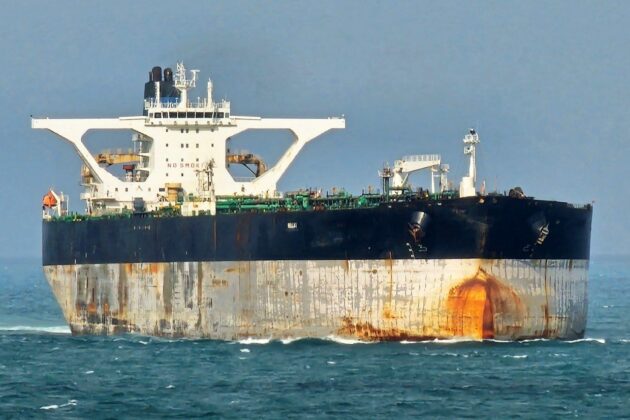

MAR 13 – The US has loosened sanctions preventing other countries buying Russian oil and petroleum already loaded on vessels at sea to try to ease the energy supply crunch sparked by the US-Israel war with Iran.
US Treasury Secretary Scott Bessent said the “short-term measure” was aimed at promoting “stability in global energy markets”.
Despite the announcement, oil prices continued to hover around $100 (£75) a barrel again on Friday, while stock markets outside the US fell.
The move also drew criticism from leaders in Europe and Canada, who warned it would help Putin’s regime.
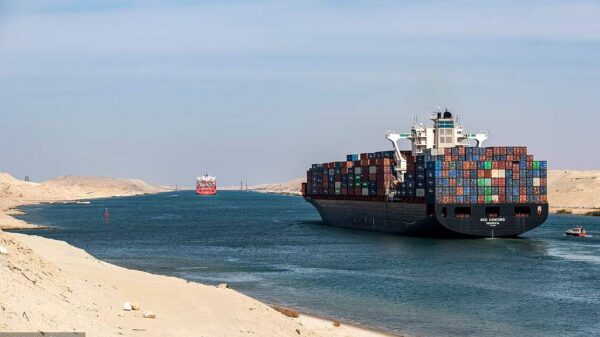
Attacks on ships and energy infrastructure in the Gulf, as well as the effective closure of the Strait of Hormuz, have rocked global energy markets, creating an unprecedented supply crunch.
But German Chancellor Friedrich Merz on Friday said he believed it was wrong to ease sanctions now, adding that his country’s support for Ukraine would not be “deterred or distracted” by the war in Iran.
French president Emmanuel Macron has also said that the Strait of Hormuz’s shutdown “in no way” justified lifting the sanctions on Russia, while Canadian Prime Minister Mark Carney said sanctions on Russia and its shadow fleet should be maintained.
UK Foreign Secretary Yvette Cooper, speaking during a visit to Saudi Arabia, accused Russia and Iran of trying to “hijack the global economy”, pointing to links between the two countries.
However, she refrained from criticising the US decision to ease sanctions on Russian oil, describing it as a “specific, targeted issue”.
About a fifth of the world’s oil typically passes through the Strait of Hormuz, a narrow channel between Iran and Oman.
But the violence has left tankers stranded for roughly two weeks and forced oil producers to start cutting output.
That has driven up prices and caused strains around the world, including the US, where US President Donald Trump was already facing pressure over economic issues.
US Defense Secretary Pete Hegseth said on Friday the US was working to clear the Strait of Hormuz, after attacks on three cargo ships and Iran’s leader vowed to keep blocking the channel.
A move from the International Energy Agency (IEA) on Wednesday to ease the pressure, pledging to release a record 400 million barrels of oil, including 172 million barrels contributed by the US, failed to lower the oil price.
Trump and other officials have also said they will provide naval escorts to ships in the Strait “as soon as possible”, without setting a timeline.
The latest move to ease sanctions is expected to affect about 100 million barrels of Russian oil, which Russia said were currently in transit.
Bessent said the temporary sanctions waiver would last until 11 April.
The decision re-ignited concerns that the conflict in the Middle East may benefit Moscow and distract international attention from bringing to an end the war in Ukraine.
Ukrainian President Volodymyr Zelensky told a news conference in Paris on Friday that the decision by the US “could give Russia about $10bn (£753m) for the war”, adding that it “certainly does not help peace”, according to news agency AFP.
At the same time, analysts said the decision was unlikely to do much to relieve the spike in oil prices.
“Even the release of 400 million barrels of reserves announced recently didn’t really put a dent in the oil price which is still up [at] around $100 a barrel,” said Colin Walker, transport lead at the Energy and Climate Intelligence Unit (ECIU) think tank.
UK Energy Minister Michael Shanks said the country would not follow the US in easing sanctions on Russian oil.
He told BBC Radio 4’s Today programme: “What we absolutely can’t have is Putin sitting in the Kremlin seeing this as a chance to invest in the war machine.”
But Kirill Dmitriev, Russian President Vladimir Putin’s economic envoy, said the US was “effectively acknowledging the obvious: without Russian oil, the global energy market cannot remain stable”.
He added: “Amid the growing energy crisis, further easing of restrictions on Russian energy sources appears increasingly inevitable.”
By BBC