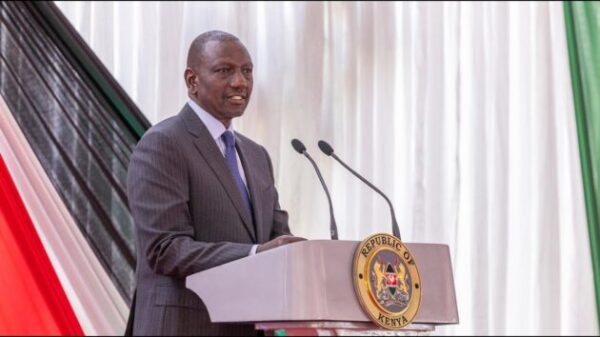



















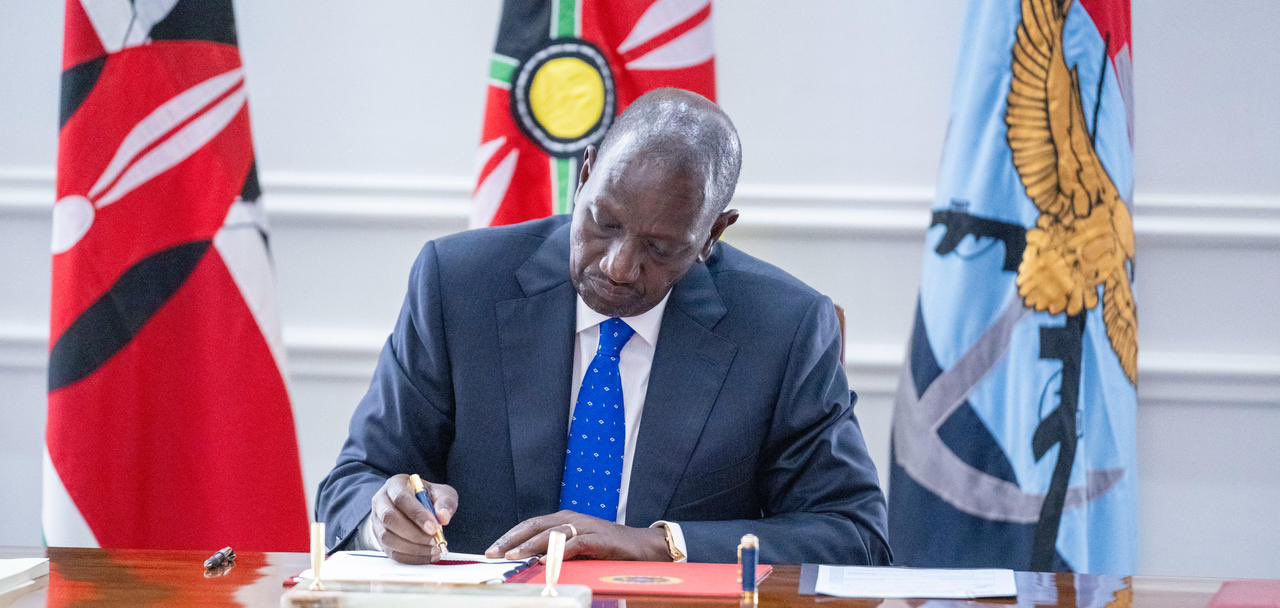

NAIROBI, Kenya, Mar 9 – President William Ruto has signed into law the National Infrastructure Fund (NIF) Bill, 2026, marking a shift in how the government will finance and manage large-scale development projects.
The assent ceremony took place at State House, Nairobi, in the presence of private sector leaders and government officials including Moses Wetang’ula, Speaker of the National Assembly and Treasury Cabinet Secretary John Mbadi.
The National Assembly passed the legislation on March 6 after weeks of debate and amendments aimed at strengthening oversight and governance of the proposed fund.
The NIF is expected to mobilise nearly Sh5 trillion over the next decade to finance key national projects, including highways, railways, ports, agribusiness infrastructure, and energy systems.
Unlike previous government borrowing models, the fund introduces an investment-led approach, allowing both public and private sector participation.
Funding sources will include government allocations, private investment, privatisation proceeds, grants, and loans.
National Assembly Majority Leader Kimani Ichung’wah, who sponsored the bill, described it as one of Kenya’s most significant pieces of legislation.
He said this is the second most important legislation since the approval of the 1965 Sessional Paper No. 10 and added that the fund would help drive Kenya’s long-term development ambitions while reducing reliance on debt.
“The journey to Singapore has been crystallized. We have now put the roadmap to the first world,” Ichung’wah sign reffering to President Ruto’s infrastructure modernisation ambition.
While the bill initially faced opposition over potential executive influence, lawmakers introduced amendments to enhance transparency, accountability, and parliamentary oversight.
The law establishes a Governing Council chaired by the Treasury Cabinet Secretary, which includes the Central Bank Governor, the Attorney-General, and six independent members appointed by the President for three-year terms.
The council provides strategic direction and protects the fund’s assets but cannot interfere in day-to-day operations, ensuring board independence.
The board has also been restructured to require four independent directors recruited competitively, each holding professional qualifications and at least ten years of experience in finance, engineering, or law.
The Chief Executive Officer will serve as Administrator of the fund, creating a streamlined leadership structure.
The Treasury Cabinet Secretary is required to submit the fund’s Investment Policy to the National Assembly for approval within 90 days, and Parliament may approve, amend, or reject the policy.
To deter misuse, anyone who misappropriates NIF funds must repay twice the stolen amount, face a fine of at least Sh10 million, or serve a minimum of five years in prison.
The law defines “national infrastructure” to include national highways, railway networks, airports, seaports, and electricity generation, transmission, and distribution systems.
The fund will focus on strategic commercial investments, while project preparation will remain under existing frameworks such as the Public Private Partnership Act.