
















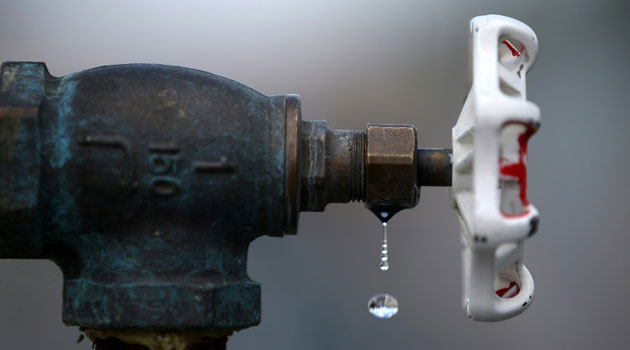

NAIROBI, Kenya, Mar 10 – Nairobi City County Government has unveiled a Sh38.1 billion water and sanitation programme aimed at expanding access to clean water and upgrading sewer infrastructure in the capital.
The initiative forms the largest component of the Sh80 billion Nairobi Rising urban transformation plan, a joint programme between the county administration and the Government of Kenya.
Officials say the project seeks to modernize Nairobi’s ageing water systems and expand service coverage as the population of Nairobi approaches six million residents.
Under the water and sanitation pillar, authorities plan to expand water transmission systems, construct new sewer infrastructure and improve last-mile connectivity for households and businesses across the city.
Key projects include upgrading the Ngethu–Gigiri water transmission pipeline, expanding last-mile water connections and constructing a 27-kilometre trunk sewer along the Nairobi River corridor to strengthen wastewater management.
The programme also includes the development of a new sewer treatment plant in Kariobangi, expansion of sewer networks and institutional reforms within the city’s water utility to improve operational efficiency.
Authorities say the projects aim to address long-standing water shortages and sanitation challenges linked to rapid urban growth in the capital.
Beyond water infrastructure, the Nairobi Rising programme will also invest in roads, street lighting, markets and environmental restoration.
Under the Safe Streets pillar, about Sh23.1 billion will be spent on road upgrades, bridges, pedestrian infrastructure and the installation of approximately 40,000 streetlights across the city.
The initiative also plans to reorganize informal trade by relocating about 300,000 street vendors into formal market spaces to support small businesses and improve urban order.
Environmental projects such as river corridor regeneration and green infrastructure development are also included in the programme.
Implementation will be overseen through a joint governance structure bringing together the national government and Nairobi County.
However, the cooperation agreement underpinning the Nairobi Rising programme is facing legal challenges at the Milimani High Court, where petitioners argue that the arrangement may interfere with functions constitutionally assigned to county governments under Kenya’s devolution framework.