





















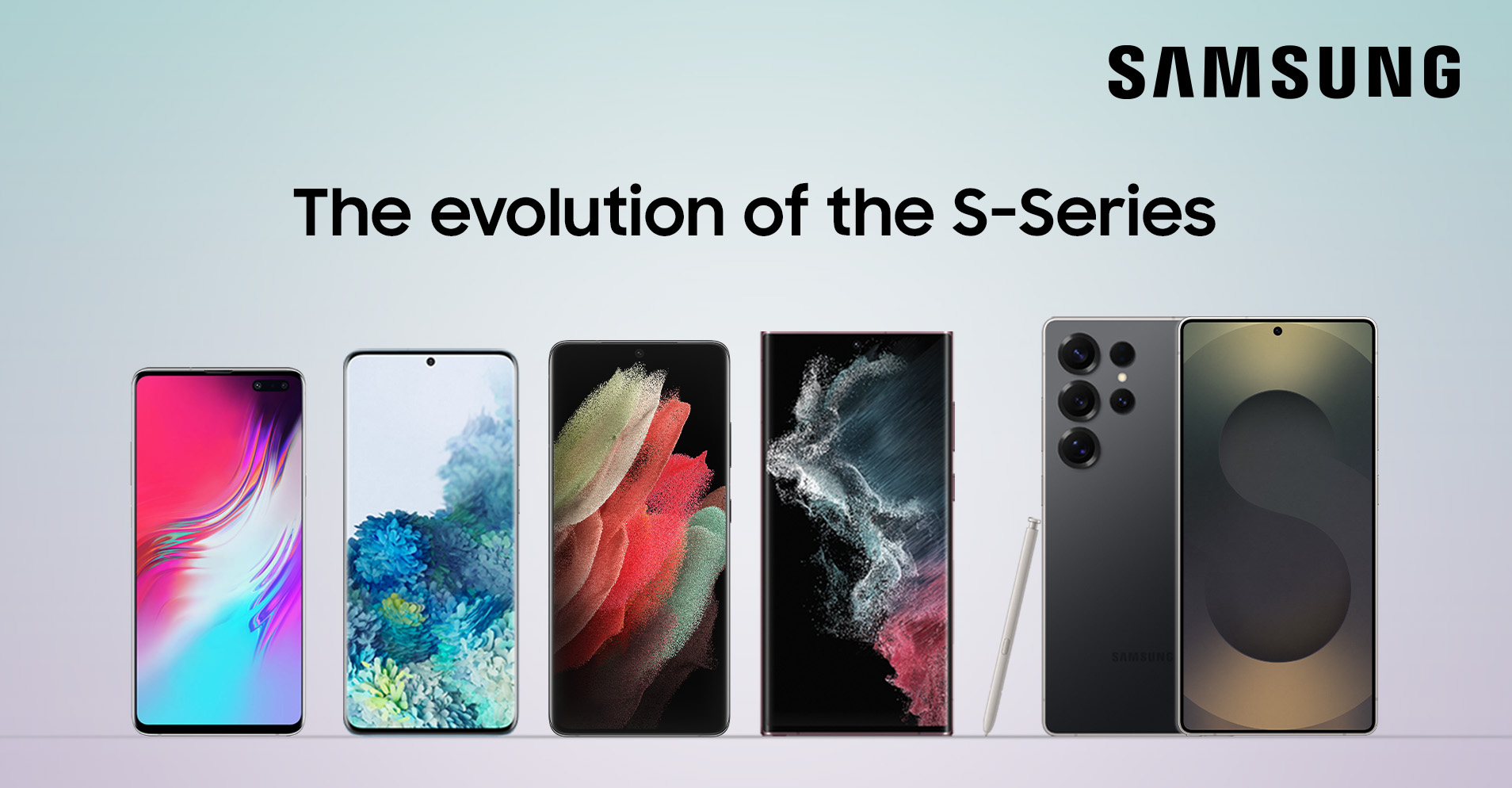

NAIROBI,Kenya, Feb 19 – Samsung has outlined the transformation of its Galaxy S series, tracing the flagship lineup’s journey from the original 2010 handset to today’s AI-powered smartphones.
In a statement on the 16 years of the series, the company said the Galaxy S line has steadily evolved in design, camera technology and performance to meet changing consumer needs.
The original Galaxy S launched with a rounded plastic body, a Super AMOLED display and a 5MP rear camera, signaling Samsung’s serious entry into the premium smartphone market.
Subsequent models refined both form and function.
Early versions such as the Galaxy S II and S III improved camera performance and slimmed down designs, while maintaining practical features like removable backs and water resistance.
A major design shift came in 2015 with the Galaxy S6 and S6 Edge, which introduced glass-and-metal builds and curved-edge displays.
Camera upgrades, including optical image stabilization and dual-pixel autofocus in later models like the S7, strengthened Samsung’s position in mobile photography.
The near bezel-less “Infinity Display” debuted with the S8, followed by hole-punch cameras and multi-lens systems in later generations.
As camera sensors grew larger, Samsung adapted its design, introducing more structured frames and prominent camera modules beginning with the S20 series.
In recent years, the lineup has shifted toward flatter screens, boxier aluminum frames and matte finishes for improved grip and durability.
The Galaxy S24 Ultra introduced titanium construction, while the latest Galaxy S25 series builds on that foundation with enhanced comfort, slimmer profiles and camera upgrades including a 50MP ultra-wide lens on the Ultra model alongside its 200MP main sensor.
Samsung said the gradual changes reflect practical needs such as better handling, stronger builds, simplified screen protection and improved low-light photography.
The company emphasized that AI integration now plays a central role in enhancing image processing and everyday usability.
From a 5MP camera in 2010 to today’s high-resolution, AI-powered systems, Samsung noted that the Galaxy S series has matured into what it describes as a unified, user-focused lineup designed for durability, performance and smarter daily use.
The company hinted that further innovation is already underway, as it looks to shape the next phase of the Galaxy S legacy.