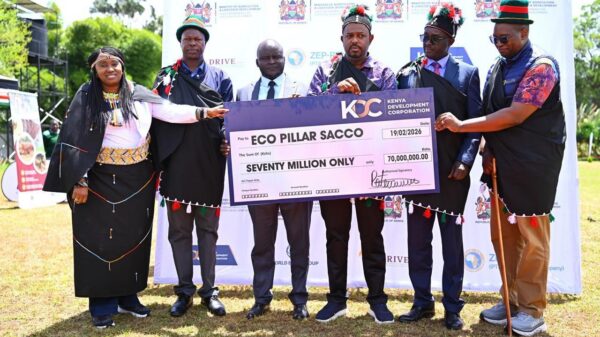




















NAIROBI, Kenya, May 13 – The Kenya Development Corporation (KDC), through the State Department for Livestock and with the support of the World Bank, has injected Sh519 million into Kenya’s Arid and Semi-Arid Lands (ASALs).
The DRIVE Program targets more than 20 counties, including Marsabit, Isiolo, Laikipia, Samburu, Narok, Kajiado, and Kwale.
It will support a wide range of livestock-related sectors such as fodder production, feedlots, meat processing, leather, aggregation, and livestock trade.
“With over KSh 519 million disbursed so far to enterprises and value chain actors across more than 20 counties including Marsabit, Isiolo, Laikipia, Samburu, Narok, Kajiado, and Kwale; we are unlocking long-term value in historically marginalized regions,” said Norah Ratemo, Director General of Kenya Development Corporation (KDC).
On his part, Principal Secretary for Investment Promotion Abubakar Hassan asserted that the DRIVE initiative is anchoring government’s shift from aid to enterprise.
He added that it is a practical blueprint for de-risking frontier economies and crowding in private capital through blended finance, concessional lending, and strategic partnerships.
“Through initiatives like DRIVE, we are unlocking high-impact investments in livestock production, agribusiness, water infrastructure, and climate-smart agriculture, while aligning national policies with county priorities. This is how we actualize the Bottom-Up Economic Transformation Agenda by turning potential into prosperity.”
The World Bank noted the importance of these firsthand accounts in shaping future investments and ensuring the initiative continues to respond effectively to local needs.
The State Department for Livestock continues to provide technical support and policy guidance to potential investors, with the aim of making ASAL regions more attractive for sustainable agribusiness ventures.
Stakeholders at the meeting emphasized the need for continued collaboration to build on the momentum and scale up efforts that promote long-term growth in the livestock sector across ASAL regions.