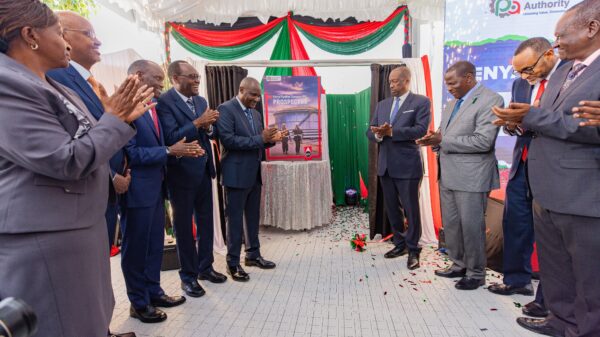
























NAIROBI, Kenya, May 13 – The national government has released Sh1.13 billion to county governments for the establishment of county aggregation and industrial parks (CAIPs).
Trade and Investments Cabinet Secretary Rebecca Miano revealed that each county will receive Sh62.5 million during Phase 1 of the project set to spur economic growth in the counties.
The project, which is in a bid to promote the government’s bottom-up economic transformation agenda, will be implemented by the national government in collaboration with county governments.
“This welcome shot in the arm for County Aggregation and Industrial Parks will spur economic growth in the counties, will spur economic growth in the counties and rekindle the momentum of one of Kenya’s most revolutionary post-independent pro-people projects,” said CS Miano.
The two levels of government are focusing on implementing CAIPs in Migori, Mombasa, Busia, Meru, Bungoma, Kirinyaga, Homa Bay, Machakos, Siaya, and Kiambu counties in the 2023–2024 financial year.
Other counties include Murang’a, Trans Nzoia, Embu, Uasin-Gishu, Nandi, Nakuru, and Garissa.
The Trade CS stated that the CAIPs will enhance manufacturing and boost agro-industrial investments to enhance competitiveness in a sustainable manner in the agriculture sector.
According to her, industrial parks will not only help increase farmers’ income but will also lead to the creation of more decent jobs, particularly for the unemployed youth, which will promote productivity at the farm level.
“The spirit and letter of CAIPs is tattooed in Vision 2030 whose intent seeks to transform Kenya into an industrialized middle-income economy offering a better quality of life to all her citizens. The Vision envisages a Kenya that can produce manufactured goods for consumption in eastern and central Africa besides making inroads to the global market,” she added.
The ministry targets increasing manufacturing sector contributions to GDP from the current 7 percent to 15 percent by 2027 and to 20 percent by 2030.
It also aims to increase exports from 10 percent of the GDP to 30 percent by the year 2025.