

























ADDIS ABABA, Feb. 17 (Xinhua) — Africa’s over-reliance on road transport for the movement of people and goods is challenging the realization of smart and resilient infrastructure on the continent, a senior African Union (AU) official has said.
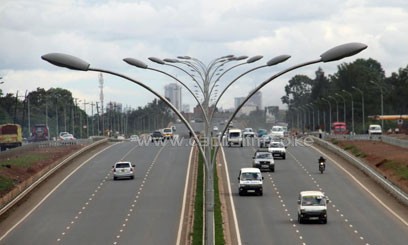
“Over-reliance on old vehicles, poor connectivity and low levels of quality road infrastructure is a major challenge,” said AU Commissioner for Infrastructure and Energy Amani Abou-Zeid while addressing the media on Friday on the margins of the ongoing AU Summit at the AU headquarters in Addis Ababa, the capital of Ethiopia.”
“In many parts of Africa, transporting goods between cities and countries takes days rather than a few hours, which consequently has impacts on the carbon footprint from this sector,” she added.
Noting the critical need to diversify Africa’s transport system, the AU commissioner underscored ongoing efforts under the pan-African bloc to facilitate a meaningful shift in Africa’s mode of transport.
She said one of the flagship projects within the AU to support this continental aspiration is the African integrated railway network, which envisages upgrading and modernizing existing railway lines and building new and efficient railway lines to reduce the huge pressure on road transport.
“Our priority actions in 2024 include supporting urban mobility initiatives on the continent such as the improvement of public transport with emphasis on electric mobility initiatives and the use of digital solutions for better efficiencies,” she said.
She said one of the priorities for the AU and its member countries in streamlining the transport sector is ensuring all modes of transport are well developed and integrated to support the needed connectivity, calling for enhancing infrastructure in Africa through the Program for Infrastructure Development in Africa, which includes the development of five key priority railway links, nine trans-African highway links, 40 smart transport corridors, 19 ports, and smart airports that seamlessly connect to rail and public transport.
“Improvements in connectivity from this integrated multimodal transport system will help to reduce the carbon footprint per unit of service from the transport sector,” she said.