











BEIJING, China, Oct 24 – China’s economy grew 3.9 percent year-on-year in the third quarter, according to official data released Monday, beating forecasts a day after President Xi Jinping was re-elected to a historic third term as leader.
Beijing last week delayed the release of the third-quarter growth figures — along with a host of other economic indicators — as the country’s leaders gathered in Beijing for the five-yearly Communist Party Congress.
China had been expected to announce some of its weakest quarterly growth figures since 2020, with its economy hobbled by Covid-19 restrictions and a real estate crisis.
In the previous quarter, growth in the world’s second-largest economy collapsed to 0.4 percent compared with the previous year, the worst performance since 2020. The country posted 4.8 percent growth in the first quarter of 2022.
But Monday’s data, published six days later than scheduled, showed a slight rebound, with China posting growth higher than the 2.5 percent predicted by a panel of experts surveyed by AFP.
It did, however, show a marked rise in unemployment from last month, a figure officials blamed on the pandemic.
Many economists continue to think China will struggle to attain its 2022 growth target of around 5.5 percent, and the International Monetary Fund (IMF) has lowered its GDP growth forecast to 3.2 percent for 2022 and 4.4 percent for next year.
AFP’s panel of experts predicted average growth of three percent in 2022, far below the 8.1 percent seen in 2021.
That would equal China’s weakest growth rate in four decades, excluding 2020, when the global economy was hammered by the emergence of the coronavirus.
“The big policy challenge is accepting that the economy has reached a state of maturity that means growth numbers are likely permanently reset to the zero-to-4.5 percent range for the coming decade,” Clifford Bennett, chief economist at ACY Securities, told AFP.
– Zero-Covid –
Beijing’s zero-Covid policy, which continues to weigh heavily on the economy, appears no closer to loosening than before the weekend’s Party Congress.
China is the last of the world’s major economies to continue following the strategy, which imposes tight travel restrictions, mass PCR testing and obligatory quarantines.
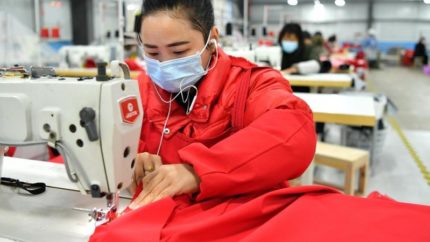
It involves sudden and strict lockdowns — including of businesses and factories — which has disrupted production and weighed heavily on household consumption.
But despite the impact on the economy, “there is no clear sign of a significant easing of the zero-Covid strategy”, Nomura’s Ting Lu said, noting that, if anything, the opposite had happened.
In the week leading up to the Congress, state media published multiple editorials warning the policy should not be relaxed, and officials have pounced on recent outbreaks across the country with increased curbs.
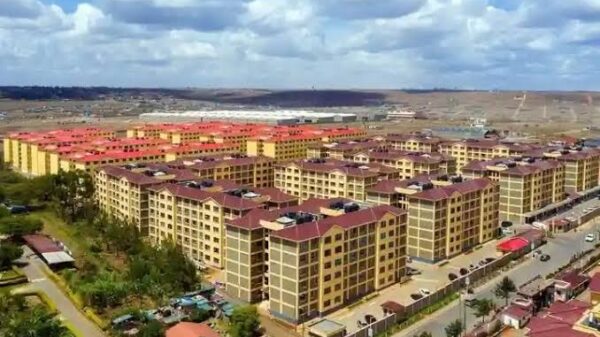
Meanwhile, China is also battling an unprecedented crisis in its real estate sector — historically a driver of growth and representative of more than a quarter of the country’s GDP when combined with construction.
Following years of explosive growth fuelled by easy access to loans, Chinese authorities launched a crackdown on excessive debt in 2020.
Property sales are now falling across the country, leaving many developers struggling and some owners refusing to pay their mortgages for unfinished homes.
Despite the problems, “many economic indicators have actually recovered reasonably well from the mass lockdowns of March and April”, according to analyst Thomas Gatley of Gavekal Dragonomics.
Car sales held strong in September, driven by strong demand for electric clean vehicles.
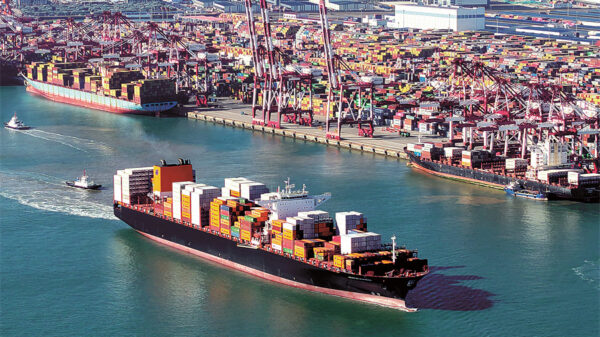
August exports increased by 7.1 percent compared with the previous year, and Beijing has invested in infrastructure to support activity.
However, “those pillars of growth are becoming more fragile”, Gatley said.