
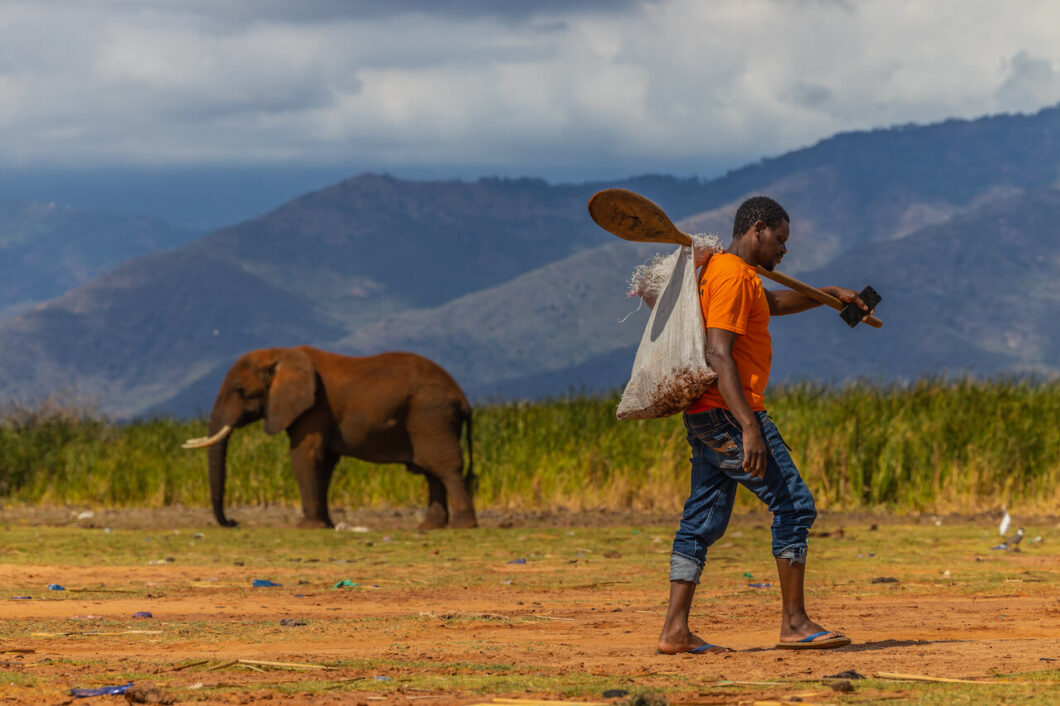
On the edge of Kenya’s vast Tsavo West National Park lies Lake Jipe – one of the country’s most important wetlands and home to hippos, crocodiles and unique birdlife. But beyond its tranquil setting, this freshwater lake also holds a remarkable secret—a harmonious and unique coexistence between humans and elephants. At the center of this tale is Manolo, a wise bull elephant, and his band of equally legendary companions.
Story by Save the Elephants researcher, Zachary Mutinda,
Save the Elephants (STE) researchers were first to uncover the extraordinary bond shared between Manolo (aged 40) and the fishing community of Mikocheni living near Lake Jipe. GPS tracking data from his collar put on in 2018 indicated that he was spending an unusually large amount of time in the lake. Curiosity piqued; the researchers embarked on a journey to investigate. What they discovered was a testament to the inherent connection between humans and nature and the fascinating world of elephant behaviour.
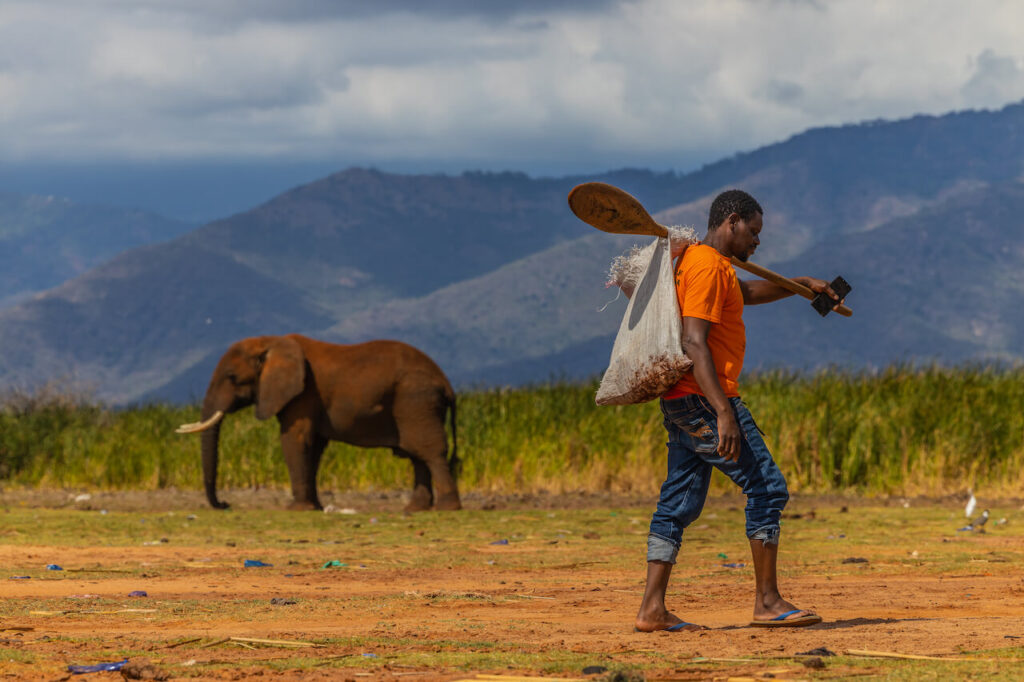
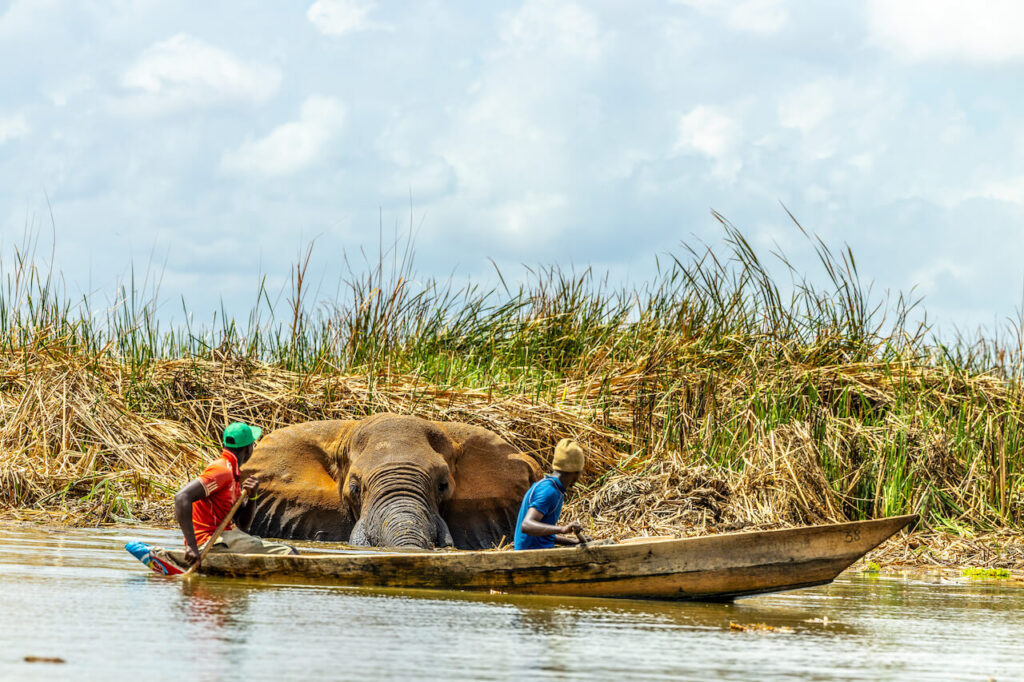
Manolo and his companions had found a special route through a local fishing village, granted safe passage by the community itself. They traversed the village every day, walking amidst small groups of children, boda boda riders, and women selling fish. This daily ritual was a testament to the mutual respect and tolerance that had been nurtured over time.
Intrigued by this extraordinary relationship, further research was conducted by Save the Elephants to gauge the locals’ attitudes towards the elephants. STE’s study showed that the residents of Mikocheni appeared to be living in a state of ‘passive coexistence’ with these mighty pachyderms. Most remarkable was that although the elephants occasionally disrupted their fishing activities, the community had never resorted to killing them in retaliation.
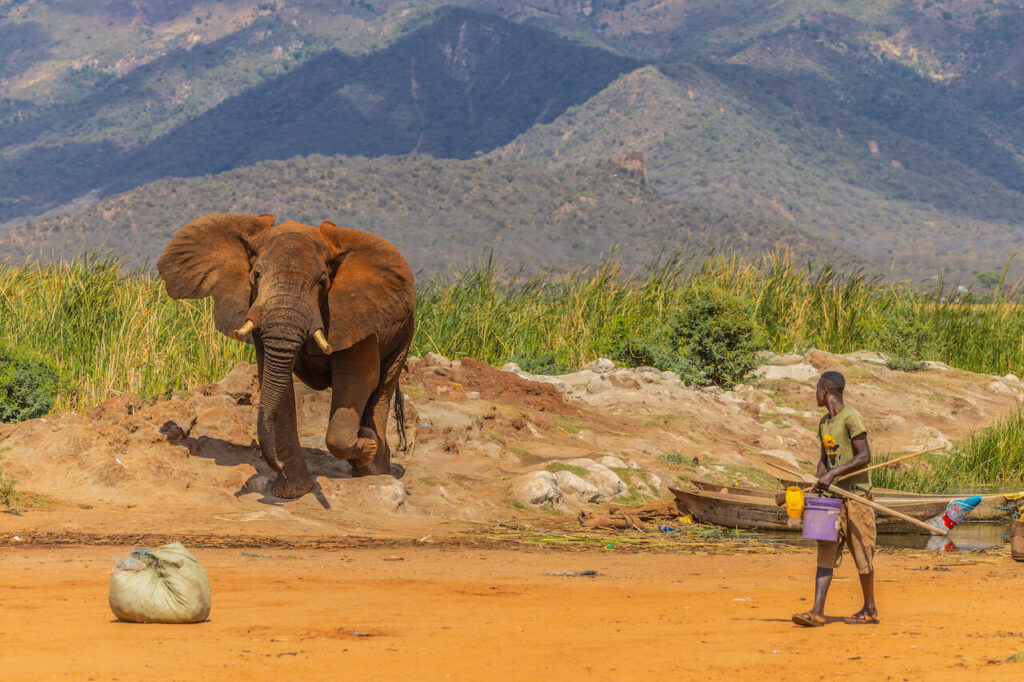
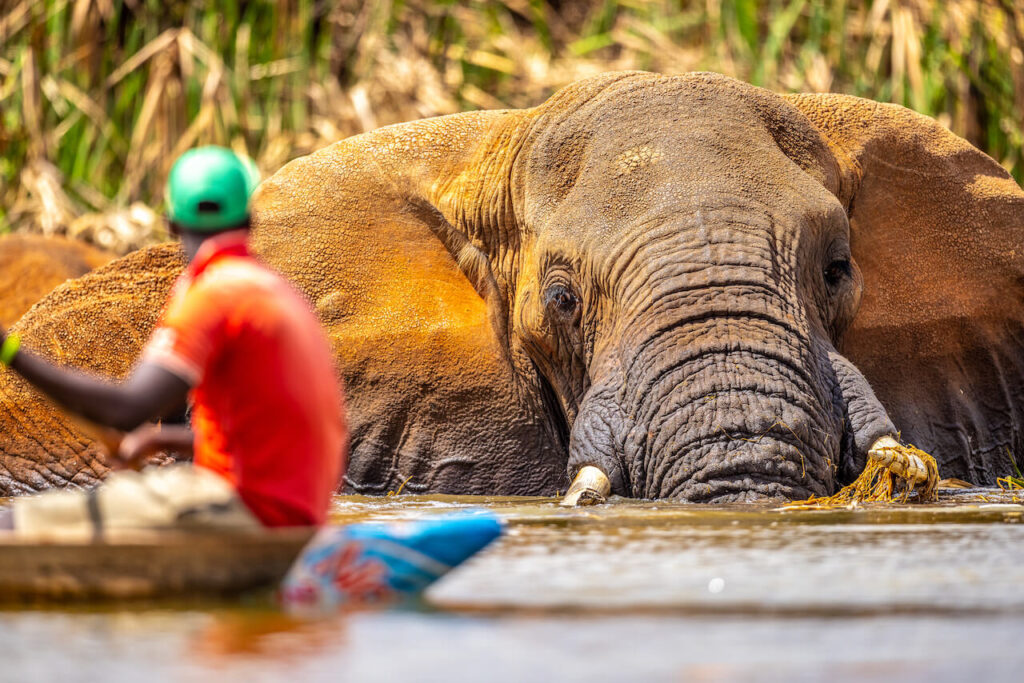
Working with a research assistant, Alphonse Maira, from Kachero village, I observed elephants and people interacting with each other every day – on the lake shore, inside the lake and near their homes – like the way pastoralists interact with their cattle. One community member described the elephants as ‘brothers’ … “They are our brothers, we know their timing, we know their behaviours and we live in harmony despite the threats to our livelihoods.”
However, the situation at Lake Jipe is not without challenges. The area, which is an important dry season refuge for elephants, has undergone severe ecological degradation over the years. Poverty is driving children into fishing and the lack of sustainable alternative livelihoods has pushed the community to fishery overexploitation and illegal charcoal and wood sales. Lake Jipe needs intervention, awareness and restoration programmes to protect and restore its ecological balance.
Nevertheless, the Jipe community remains steadfast in its commitment to cultivating peaceful interactions with the elephants. They recognize the elephants’ significance and refuse to let them disappear. Fishermen boast of the elephants’ swimming prowess in their search for bullrush roots and take pride in sharing the waters with these wonderful creatures. Collaborating with Save the Elephants, the community is actively engaged in developing alternative livelihoods and solutions to prevent any potential escalation in conflicts.

For now, Lake Jipe stands as a testament to the fact humans and elephants can coexist. It is a beacon of hope, urging us to strive for a future where such coexistence flourishes.