
























NAIROBI, Kenya, Feb 12 – Kenya’s green finance boom is often framed as a breakthrough moment: banks scaling up climate lending, corporates issuing sustainability bonds, and investors pivoting toward environmentally aligned assets. On paper, billions of shillings are now classified as “green.”
But climate finance is not defined by labels. It is defined by where capital ultimately lands, who can access it, and which climate risks remain unfunded.
A closer look at Kenya’s sustainable finance ecosystem reveals a more complex reality.
Climate capital is expanding rapidly yet it is concentrating around sectors and firms capable of absorbing large-scale, commercially viable investment.
The result is a financial system accelerating infrastructure decarbonization while many of the country’s most climate-exposed communities remain outside structured finance channels.
Banking: Big Numbers, Targeted Sectors
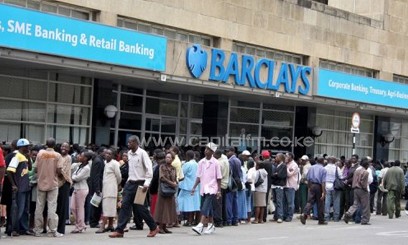
The largest identifiable flows of green capital are moving through commercial banks, with KCB Group emerging as one of the most aggressive climate financiers.
“KCB Group disbursed KES 53.2 billion in green loans, growing its green portfolio to 21.32 percent last year from 15 percent in 2023,” the lender disclosed in its 2025 sustainability report.
The expansion is being reinforced by a $150 million (Sh19.3 billion) financing package from the African Development Bank Group.
Of this, $100 million will bolster KCB’s Tier II capital to help channel at least 25 percent of its loan book to green projects by 2031, spanning renewable energy, infrastructure and agriculture.
A further $50 million provides trade guarantees to reduce non-payment risks in climate-aligned sectors.
“We are proud to partner with KCB as this facility is a testament to our shared commitment to advancing Africa’s green transition and ensuring that economic growth goes hand in hand with environmental stewardship,” said Alex Mubiru, AfDB Director General for East Africa.
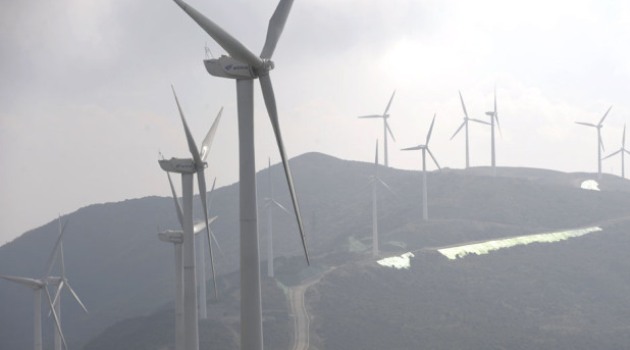
The sectors receiving this financing renewable energy, e-mobility, infrastructure and commercial agriculture are central to Kenya’s long-term decarbonization strategy.
They are also structured, revenue-generating industries that meet traditional banking risk thresholds.
This distinction matters.
Green capital is disproportionately flowing toward projects that are commercially bankable rather than socially urgent.
Renewable power plants and electric transport fleets can service debt.
Flood protection in informal settlements cannot. Drought resilience for pastoralist communities often depends on public or concessional funding rather than commercial loans.
KCB’s screening of Sh578 billion in loans under environmental and social frameworks signals growing climate awareness in credit decisions.
Yet screening measures exposure and risk management not necessarily emissions reduction or adaptation outcomes. That gap between allocation and measurable impact remains one of the most significant blind spots in green finance.
Safaricom: Climate Bond or Cost Strategy?
Safaricom’s green bond issuance marked a milestone in Kenya’s capital markets.
The issuance was oversubscribed, attracting Sh41.4 billion in applications, with retail investors accounting for 96 percent of demand a strong signal of appetite for sustainability-linked assets.
“Proceeds from the Green Bond will finance and/or refinance the portfolio of eligible green projects, reinforcing Safaricom’s sustainability agenda. Under Kenyan law, interest earned on these green bonds is tax-exempt, allowing investors to enjoy the full benefit of their returns and maximizing value.”
Proceeds are earmarked for solar-powered network sites, energy-efficient infrastructure and data center upgrades.
These investments reduce diesel dependency and lower carbon intensity. They also reduce operational costs and improve network resilience.
“Beyond environmental impact, the funds will broaden Safaricom’s funding base, strengthen financial resilience, and fuel strategic investments aligned with its vision to become Africa’s leading purpose-led technology company by 2030.”
That dual outcome highlights a recurring tension in corporate climate finance. When sustainability projects also deliver cost savings, companies benefit from both cheaper capital and improved efficiency. The question is not whether this alignment is legitimate; it often is, but whether such financing delivers climate outcomes beyond corporate optimization.
Safaricom’s green bond framework commits to reporting and transparency. However, the long-term credibility of its climate claims will hinge on clear disclosure of emissions reductions directly attributable to bond-funded projects not just capital deployed.
Equity Group: Climate Risk in Rural Economies
Equity Group has taken a more structural approach, embedding environmental and social risk assessment across its lending architecture rather than relying heavily on labelled green instruments.
“This milestone reinforces our leadership in transparent, impact-based reporting, anchoring finance in accountability, purpose, and strengthened governance,” the bank stated in its sustainability disclosures.
Equity’s exposure is deeply tied to agriculture and SME lending sectors where climate shocks are immediate and disruptive.
Financing smallholder farmers introduces volatility, weak collateral structures and unpredictable weather patterns.
Here, green finance looks less like large-ticket infrastructure and more like resilience support.
Yet small-scale adaptation is difficult to package into headline-friendly financing volumes.
As a result, socially significant climate support often appears modest when compared to the billion-shilling renewable energy deals dominating sustainability announcements.
Britam: Pricing Climate Risk
Unlike banks, insurers influence climate finance through risk pricing and capital allocation.
Through agricultural insurance and weather-index products, insurers can enable resilience by cushioning climate shocks. They also signal risk, increasing premiums where exposure rises.
“During the year under review, Britam paid claims amounting to Sh15 million to 300 vulnerable households in Tana River County under the Index-Based Flood Insurance; over 2,800 pastoralists in drought-prone counties benefited from the Index-Based Livestock Insurance and over 7,500 smallholder farmers were covered against weather risks and pests/diseases under the Index-Based Crop Insurance,” said Britam in its 2024sustaibnability disclosure.
“The insurer also lists its efforts at e-waste management pointing out the recycling of 1,356 kgs of decommissioned electronic equipment, and the implementation of the E–Claims and E–Contracts initiatives to reduce paper waste. There were also bold efforts to reduce the consumption of electricity and fuel and a drive towards a circular economy.”
But insurance-led sustainability has limits. Pricing climate risk protects financial systems and stabilizes portfolios; it does not necessarily reduce emissions or reverse environmental degradation.
Nor does ESG branding in asset management automatically translate into measurable environmental outcomes.
Britam’s sustainability initiatives reflect growing institutional engagement with climate issues.
Yet across the insurance and investment sector, consistent impact metrics remain uneven.
Where the Money Concentrates
Across banking, telecommunications and insurance, a pattern emerges. Kenya’s green billions are flowing most heavily into infrastructure and corporate transition renewable energy plants, telecom decarbonization, electric mobility and commercial agriculture.
These investments are important. Kenya’s power mix is already among Africa’s cleanest, and scaling renewables strengthens energy security. Telecom decarbonization reduces diesel reliance. Climate-resilient agriculture protects export earnings.
But climate vulnerability in Kenya is not concentrated in boardrooms or utility-scale projects.
It is concentrated in flood-prone informal settlements, drought-stricken arid counties and low-income households dependent on biomass fuels.
These areas struggle to attract structured climate finance because they fall outside conventional risk-return models. Their solutions often require public investment, blended finance or grant-based support.
The Accountability Gap
The most pressing challenge facing Kenya’s green finance surge is impact measurement.
Green lending frameworks typically track allocation whether funds are directed toward eligible sectors.
They do not consistently measure environmental outcomes in standardized, comparable terms.
Emissions reductions, resilience gains and biodiversity restoration are rarely quantified with uniform metrics.
This creates space for green finance to grow faster than climate accountability.
Kenyan regulators have introduced sustainability reporting guidelines, aligning with global ESG disclosure standards. However, enforcement capacity and outcome verification mechanisms are still evolving.
Capital Behaving Rationally
Kenya’s green finance boom is, fundamentally, capital behaving rationally.
Money flows to projects capable of repayment. Climate solutions aligned with commercial incentives receive funding first.
Banks and corporates are responding to investor pressure, regulatory shifts and cost realities.
But private finance alone is unlikely to solve Kenya’s most socially complex climate challenges.
The country’s green billions are reshaping corporate strategies and infrastructure investment.
They are accelerating decarbonization where markets exist.
The deeper question is whether Kenya’s climate economy can evolve beyond infrastructure and corporate transition into the informal, rural and socially fragile sectors where climate impacts are most severe.
For now, the money is moving.
Whether it is moving to where it is most needed or simply to where it is easiest to invest remains the defining question of Kenya’s green finance era.