

























NAIROBI, Kenya, Nov 26 – The Government has been urged to reform the fertilizer subsidy programme to give farmers more freedom to choose products and suppliers based on their needs.
A new joint report by the Competition Authority of Kenya (CAK) and the World Bank shows that the shift from the National Value Chain Support Programme (NVSP) to the National Fertilizer Subsidy Programme (NFSP-2) has reduced farmers’ ability to select fertilizers and suppliers competitively.
Under the previous NVSP, farmers received cash-value vouchers redeemable at private agrodealers, enabling importers, distributors and retailers to freely import fertilizer and set market-driven prices. But the Government adopted NFSP-2 after the 2020 fertilizer crisis triggered by COVID-19 disruptions, global conflicts and rising input costs.
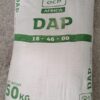
Under NFSP-2, mainly distributed by the National Cereals and Produce Board (NCPB) and a few private firms, the Government signs framework agreements with selected importers to sell fertilizer at fixed, below-market prices. Importers commit to supplying specified fertilizer types at agreed prices, after which the Government compensates them per bag sold.
As of June 2025, subsidised fertilizer under NFSP-2 accounted for 30–40 percent of national sales.
The report recommends modifying NFSP-2 to allow more last-mile retailers to participate and to rely more on market price signals. It notes that the earlier voucher-based model allowed smallholder farmers to choose products and suppliers more freely, enabling efficient firms to gain market share by offering better value.
The report also calls for greater transparency if NFSP-2 is retained. It proposes awarding the next round of contracts through competitive bidding – either for the lowest retail price under a fixed subsidy or the lowest subsidy required.
Better targeting, the authors say, would improve benefits for vulnerable farmers and enhance programme effectiveness.
They further urge stronger anti-cartel enforcement by CAK to prevent bid-rigging and other anticompetitive practices.