






















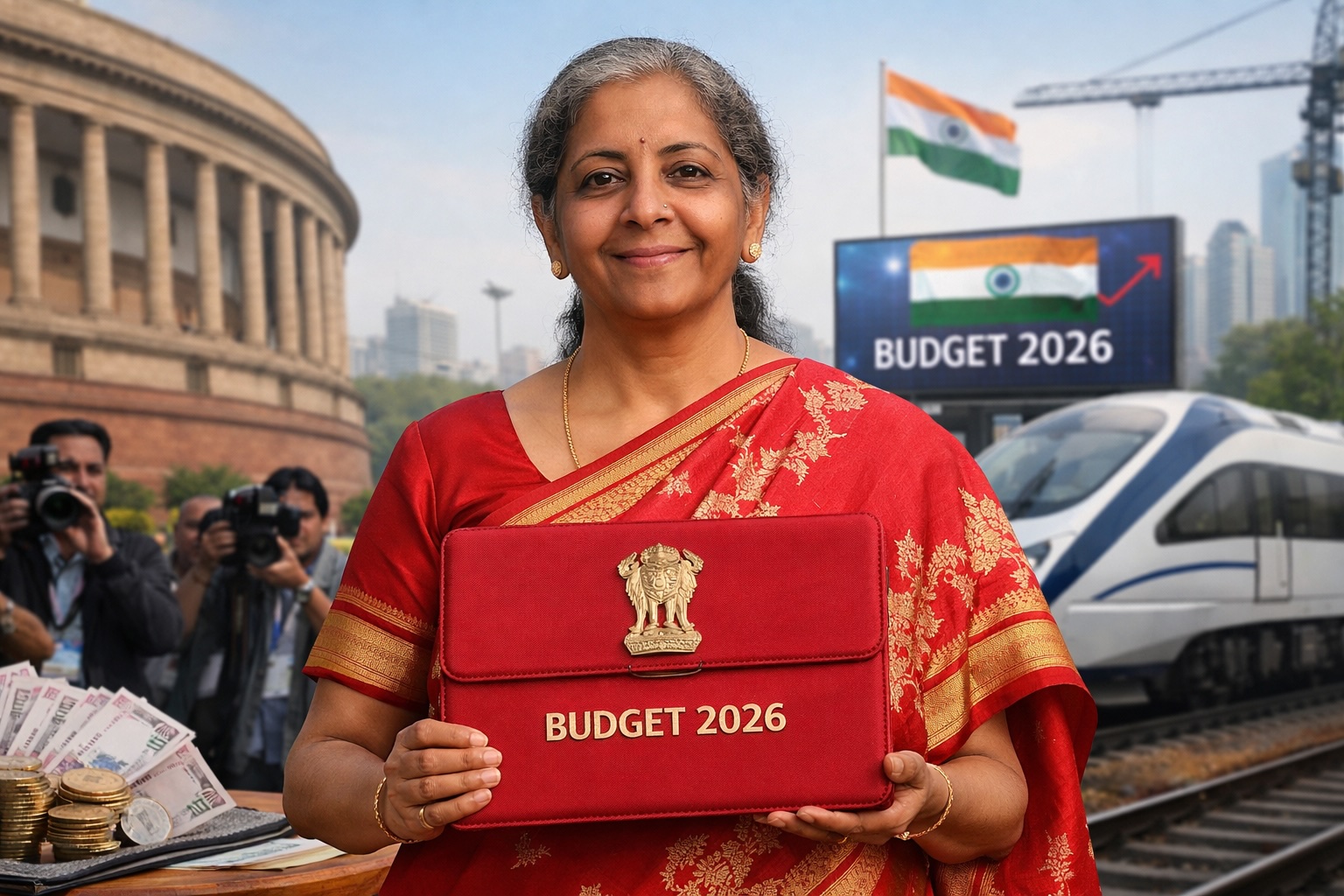

Feb 2 – India’s 2026 Budget, presented in Parliament on Sunday by Finance Minister Nirmala Sitharaman, unveiled an ambitious mix of fiscal consolidation, infrastructure expansion and sector-specific incentives aimed at accelerating growth under the government’s long-term “Viksit Bharat” vision.
Despite the wide-ranging reform measures, domestic stock markets reacted negatively, weighed down largely by an increase in the Securities Transaction Tax (STT) on Futures and Options trading.
The budget outlines a substantial boost to capital expenditure, continued fiscal discipline and efforts to deepen India’s bond markets. Among the headline announcements was the launch of seven new high-speed rail corridors connecting major cities including Delhi, Mumbai, Pune, Hyderabad, Chennai, Varanasi and Siliguri.
The new corridors are expected to significantly reduce travel time and improve mobility for millions of commuters, reinforcing infrastructure as a central pillar of economic expansion.
Support for IT and Financial Services
Sitharaman also introduced measures aimed at strengthening India’s technology sector, particularly midsized IT firms facing headwinds in their largest export market, the United States.
The threshold for availing safe harbour benefits has been raised from Rs 3 billion to Rs 20 billion, a move designed to ease compliance burdens and improve operational flexibility for companies in the sector. The government continues to position IT services as a key growth driver for the economy.
In the financial services sector, the minister announced reforms across banking and investment frameworks, including the formation of a high-level committee on banking to support India’s transition toward becoming a $10 trillion economy by 2047 — the centenary of its independence.
The broader Viksit Bharat agenda targets accelerated growth across critical sectors such as education, healthcare, employment, technology and sustainability.
Incentives for Global Investment
In a move aimed at attracting global digital infrastructure players, the finance minister proposed a tax holiday until 2047 for foreign companies that provide global cloud services using data centres located in India.
However, such companies must serve Indian customers through an Indian reseller entity to qualify for the incentive.
The budget also introduced a one-time, six-month voluntary disclosure window for eligible taxpayers — including students, young professionals and returning non-resident Indians — allowing them to regularise limited undisclosed foreign income or assets within prescribed thresholds, with immunity from penalties and prosecution.
Boost to Medical Tourism
Healthcare featured prominently in the reform package, with the announcement of five regional medical hubs to be developed through public-private partnerships.
These integrated complexes will combine medical services, research and education facilities, including Ayush centres, diagnostic infrastructure, rehabilitation units and medical value tourism facilitation services.
According to Sitharaman, the hubs are designed to strengthen India’s position as a global medical tourism destination while generating employment opportunities for healthcare professionals.
While markets reacted cautiously to the tax changes affecting derivatives trading, the budget underscores the government’s long-term strategy of pairing fiscal discipline with infrastructure investment, financial sector reform and global capital attraction as India pushes toward its 2047 development target.