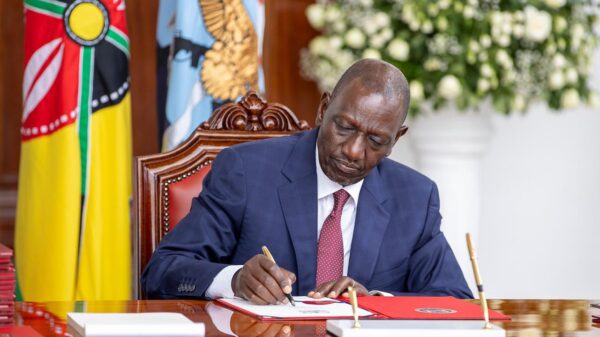




























NAIROBI, Kenya, Feb 10 – The government will begin granting private sector investors representation on the boards of state-linked companies as part of broader corporate governance and capital markets reforms aimed at attracting private capital, President William Ruto has said.
Ruto, who was speaking during the launch of Safaricom’s Zidi Trader App, said the move would address long-standing governance gaps in State corporations with mixed ownership, where boards have historically been fully appointed by government despite the presence of private shareholders.
“This week, as part of our reform process and our commitment to corporate governance, we will be doing what we did with Kenya Pipeline, and we will be doing it with KenGen and Kenya Re,” Ruto said.
Under the new framework, private investors will be allowed to nominate board members in proportion to their shareholding, a shift the President said would enable investors to play a more active role beyond providing capital.
“Wherever we have private sector ownership, they should be represented in the boards to the extent of their ownership.”
Ruto said the reforms are intended to end politically driven board appointments, which he argued have weakened performance, accountability and investor confidence in some state-linked firms.
He added that the changes form part of a wider strategy to restore confidence in Kenya’s corporate governance framework, deepen capital markets and attract long-term private investment into public enterprises.
The President reiterated that newly established public funds, including the National Infrastructure Fund and the Sovereign Wealth Fund, would be insulated from political influence, with politicians and recent public servants barred from managing or sitting on their boards.
According to the head of state, a mandatory five-year cooling-off period would apply to former public sector officials before they can be considered for appointment, as part of efforts to professionalise the governance of strategic institutions.
Historically, appointments to boards of State corporations in Kenya have often been used to reward political allies, supporters and unsuccessful electoral candidates, rather than being based strictly on expertise or merit.
Presidents and ministers have routinely appointed friends, party loyalists and former political aspirants to parastatal boards.
In recent years, the government has sought to reform these practices through legislation.
A proposed Government-Owned Enterprises Bill (2025) seeks to tighten board appointments by anchoring them on merit, transparency and professional qualifications, while barring individuals affiliated with political parties in the previous five years from serving as directors.